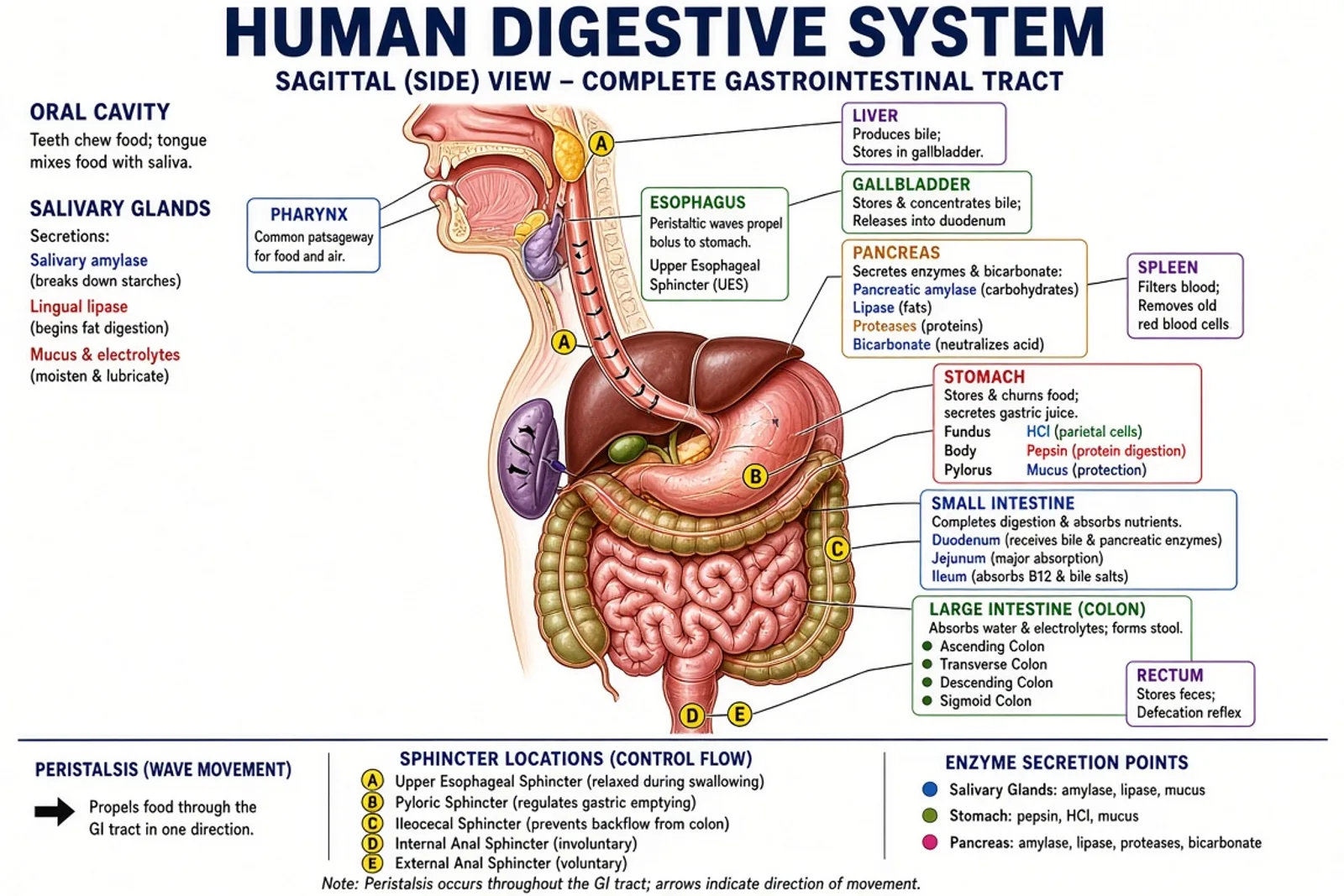
A digestive-system figure can emphasize gross anatomy, the route of ingested material, accessory-organ secretions, or nutrient absorption. Do not force all four goals into one crowded image. For an anatomy overview, trace the oral cavity, pharynx, esophagus, stomach, small intestine, large intestine, rectum, and anus, then place the liver, gallbladder, and pancreas clearly. For a physiology figure, use a second panel for peristalsis, secretions, or absorption. Generated medical imagery is a draft and requires review against an authoritative anatomy source.
Human Digestive System Diagram — AI Generator
Draft a human digestive system diagram showing the continuous gastrointestinal tract and selected accessory organs. Choose an anterior or sagittal view, define the level of detail, and verify anatomy, labels, and process arrows before teaching or publishing.
- Choose anterior or sagittal anatomy before prompting
- Trace the GI tract continuously from mouth to rectum
- Separate anatomy labels from physiology arrows
- Require qualified review for patient-facing material
Prompt
Create a labeled human digestive system diagram in a clear anterior cutaway view. Show the oral cavity, pharynx, esophagus, stomach, duodenum, jejunum, ileum, cecum, appendix, ascending colon, transverse colon, descending colon, sigmoid colon, rectum, liver, gallbladder, and pancreas. Use a single arrow path for movement through the GI tract and separate leader lines for labels. Clean medical textbook style, white background, no diagnostic claims, and no unprovided enzyme details.
Scientific illustration resources
Prompt the subject, then verify the science
Use the matching prompt guide to refine this draft. Before publishing, check every label, structure and relationship against an authoritative source or a qualified subject expert.
Related images
More medical entries from the same generator
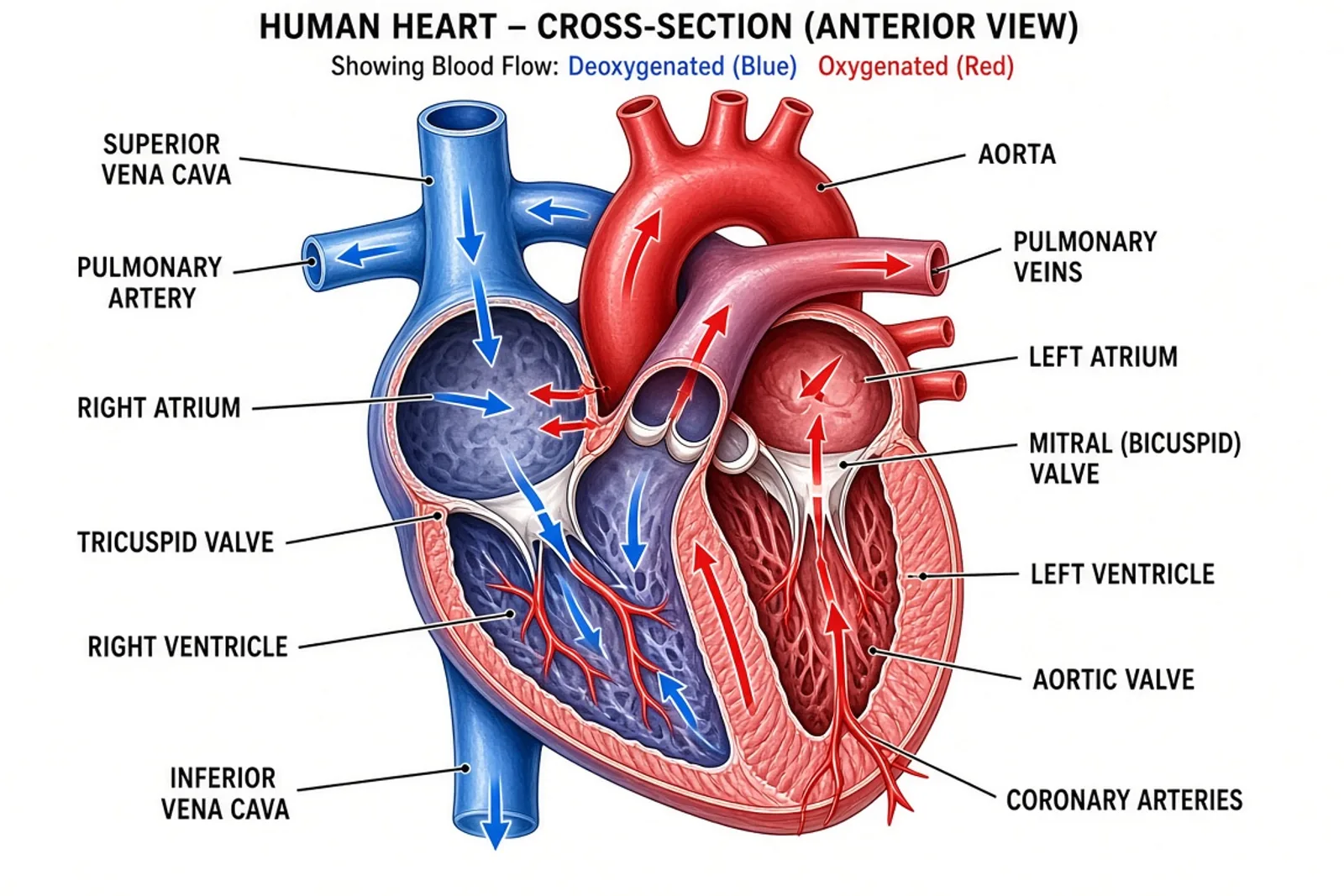 Human Heart Diagram — AI GeneratorView · medical
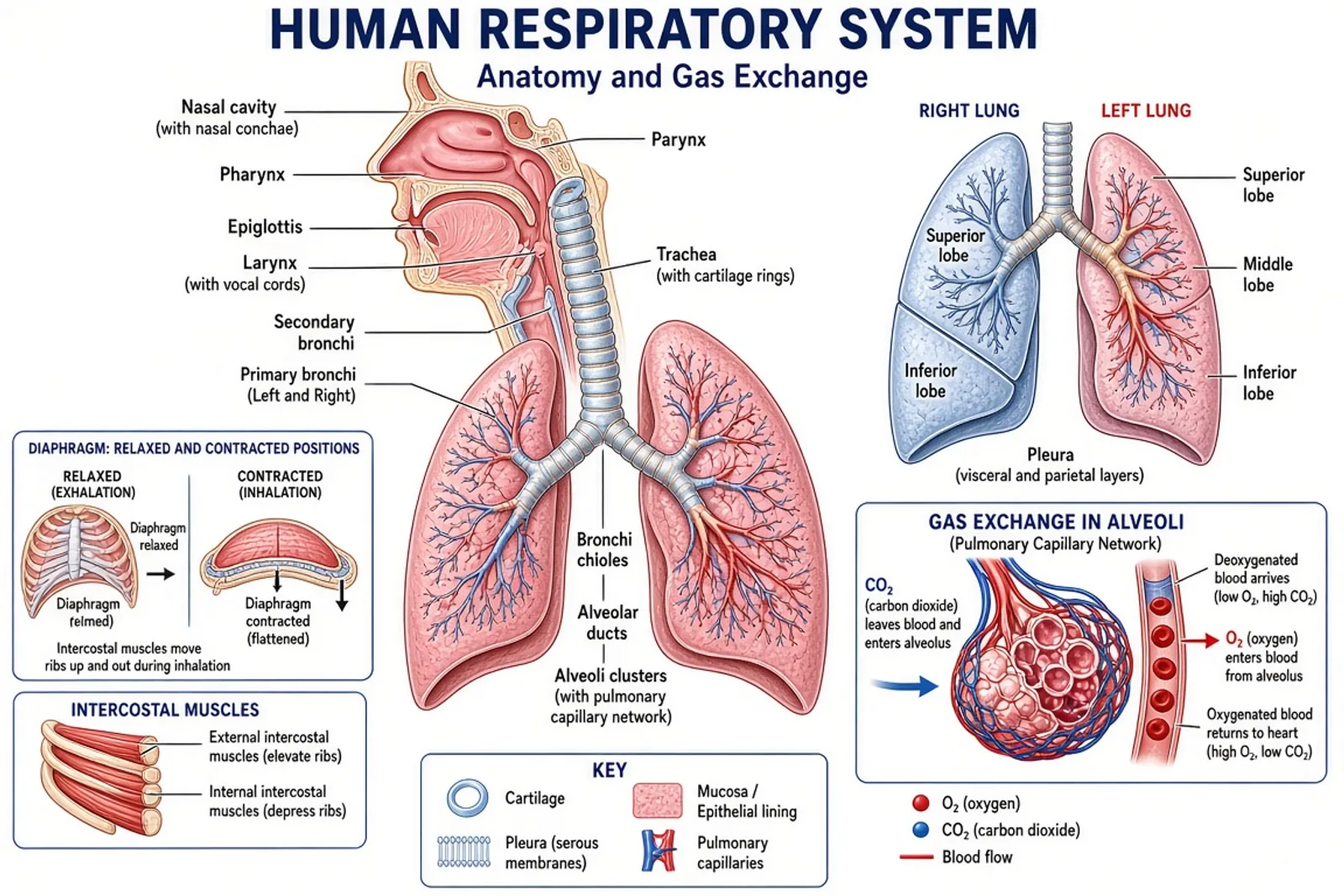 Human Respiratory System Diagram — AI GeneratorView · medical
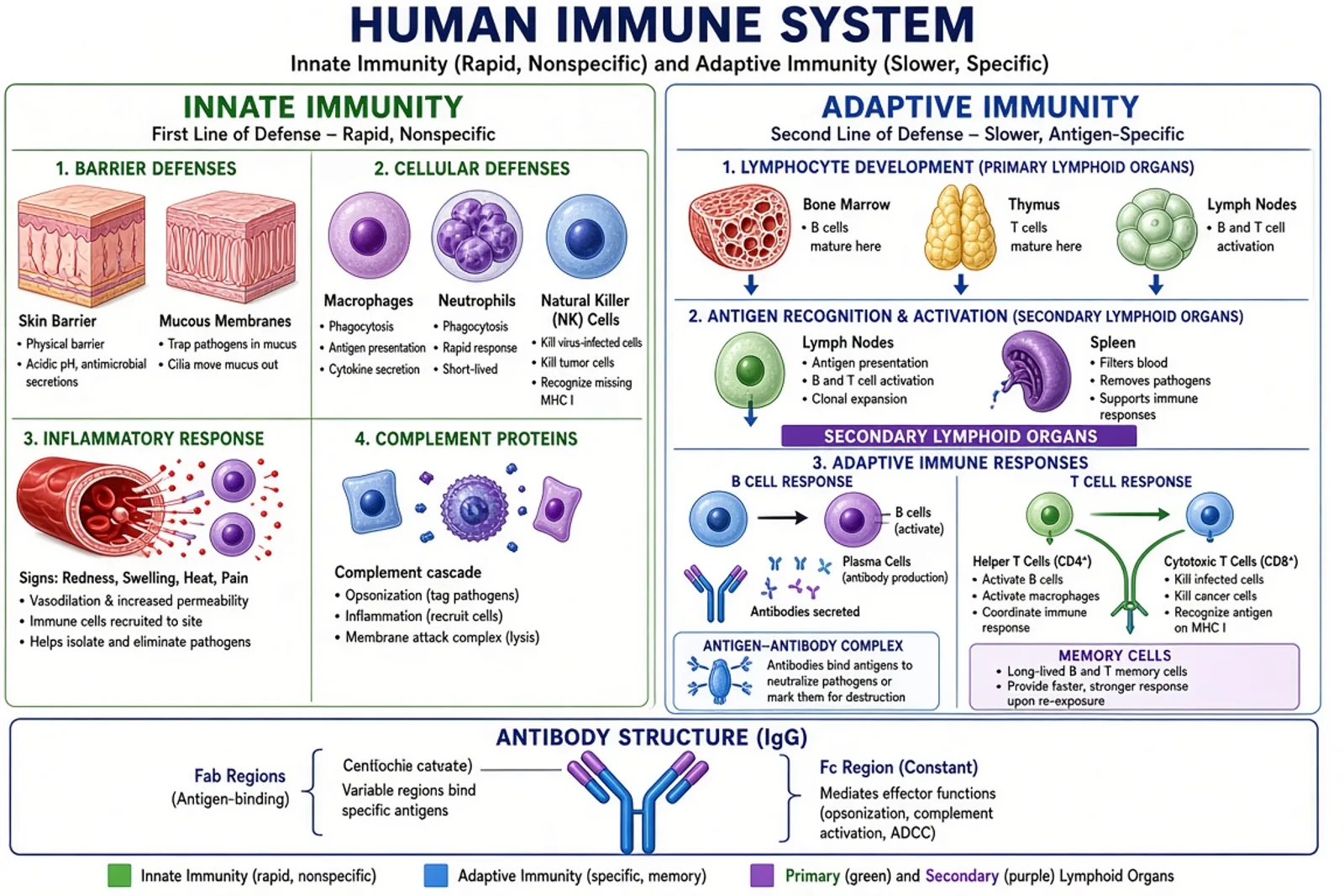 Human Immune System Diagram — AI GeneratorView · medical
Frequently asked questions
Which organs should a digestive system diagram label?
A complete overview labels the mouth, pharynx, esophagus, stomach, small-intestine regions, large-intestine regions, rectum, and anus, plus the liver, gallbladder, and pancreas as accessory digestive organs.
Should the diagram include the spleen?
The spleen may appear for anatomical orientation, but it is not a digestive organ. If shown, label its relationship clearly so learners do not infer that it is part of the gastrointestinal tract.
Can I use an AI digestive diagram for patient education?
Only after qualified clinical review. Confirm organ relationships, laterality, terminology, flow, and the surrounding explanation, and never present generated art as a scan or patient-specific image.