<think>The user wants me to translate an article fragment about AI product photography from English to Japanese. Let me translate it naturally while keeping all markdown syntax, URLs, and formatting intact.</think>
以前は、清潔な商品写真を撮るにはスタジオを予約する必要がありました。AI商品写真はそんな常識を変えます。商品のそこそこ良い写真を1枚アップロードするだけで、白背景のメイン画像、生活感のあるシーン画像、マーケットプレイス向けのバリエーション画像を生成できるのです。このガイドでは、ECコマースで重要となる3つのモード――白背景、生活感ある配置、Amazonスタイルのリスティング画像――について、実際に使えるプロンプトと避けるべきミスをご紹介します。
<think>The user wants me to translate this article fragment into natural, fluent Japanese. Let me carefully translate it while keeping all markdown syntax, URLs, and brand names intact.
Let me work through this:
- Keep markdown intact ✓
- Keep URLs as-is ✓ (the URL with /ai-images/product-photography should remain)
- Keep brand "GLMImage" untranslated - though it doesn't appear in this fragment
- Natural fluent Japanese
- No preamble or commentary
Let me translate:
Why AI product photography works now
→ なぜ今、AI商品写真が通用するのか
Two things changed. First, editing models got good at the hard part — keeping the product identical while rebuilding everything around it. The shape of the bottle, the label position, the logo colors: these have to survive the edit or the image is useless for a real store. Second, the cost dropped far enough that generating ten scene variations costs less than one studio hour.
→ 2つの変化がありました。1つ目は、編集モデルが難しい部分——商品を同一に保ちながら、その周囲を再構築すること——に長けるようになったことです。ボトルの形状、ラベルの位置、ロゴの色は、編集を経ても維持されなければなりません。そうでなければ、実際の店舗には使えない画像になってしまいます。2つ目は、10種類のシーンをバリエーション生成するコストが、スタジオ1時間分より低くなるほどまで下落したことです。
The typical ecommerce catalog has three image jobs. The main image needs a pure white background and nothing else. The secondary images need context — the product in a kitchen, on a desk, in someone's hand. And the marketplace versions need to follow specific rules. AI handles all three from the same source photo, which is why AI product photography became one of the most used workflows on our site.
→ 一般的なEコマースカタログには、3つの画像業務があります。メイン画像は純粋な白背景に商品だけが必要です。サブ画像にはコンテキストが必要です——キッチンに置かれた商品、 deskの上の商品、誰かの手に持まれた商品など。マーケットプレイス向け画像は特定のルールに従う必要があります。AIは同じソース写真からこれら3つすべてを処理できます。これが、AI商品写真が私たちのサイトで最も利用されているワークフローの1つになった理由です。
What it does not replace: the original photo of your actual product. You still need one honest shot. Everything downstream is derived from it.
→ AIが置き換えられないもの:実際の商品のオリジナル写真。1枚の誠実なショットはまだ必要です。それ以降のすべては、そこから派生したものです。
Let me refine the Japanese to be more natural and fluent.</think>
なぜ今、AI商品写真が通用するのか
2つの変化がありました。1つ目は、編集モデルが難しい部分——商品を同一に保ちながら、その周囲すべてを再構築すること——に長けるようになったことです。ボトルの形状、ラベルの位置、ロゴの色:これらは編集を経ても維持されなければなりません。さもなければ、実際の店舗には使いものにならない画像になります。2つ目は、10パターンのシーンをバリエーション生成するコストが、スタジオ1時間分より安くなるほどまで下がったことです。
一般的なECカタログには、3つの画像業務があります。メイン画像は純粋な白背景に商品だけが写っている必要があります。サブ画像にはコンテキストが求められます——キッチンに置かれた商品、机上にある商品、誰かの手に持まれた商品。そしてマーケットプレイス向け画像は、特定のルールに準拠する必要があります。AIは同じソース写真からこれら3つすべてを処理できます。それが、AI商品写真が私たちのサイトで最も利用されているワークフローのひとつになった理由です。
AIが置き換えられないもの:実際の商品のオリジナル写真です。1枚の正直なショットはやはり必要で、そこから先にあるすべてのものは、その写真から派生したものです。
<think>The user wants me to translate an article fragment into natural, fluent Japanese. Let me carefully translate this while following all the rules:
- Keep all markdown syntax intact
- Keep URLs, image paths, and HTML tags exactly as-is
- Keep code blocks untranslated
- Keep "GLMImage" untranslated
- Use native, fluent Japanese
- Output only the translated markdown
Let me translate this carefully:
The white background main image
- This is the money shot for marketplaces.
- Amazon's main image rules are strict and enforced: pure white background (RGB 255,255,255), the product filling roughly 85% of the frame, no added text, no graphics, no watermarks, no props.
- Getting this wrong means a suppressed listing.
The workflow: upload your sharpest product photo, choose the white-background mode, generate. The model isolates the product, rebuilds the edges, and drops it on clean white. A useful prompt addition when you have an odd-shaped product: "keep the original camera angle, rebuild soft natural contact shadow under the product." That contact shadow is what separates a believable cutout from a floating sticker.
Check three things before uploading: straight edges on glass and metal, logo colors unchanged, and no halo of the old background along the contour. Zoom to 200% — that is where bad cutouts show.
Let me translate this naturally into Japanese:</think>
白背景のメイン画像
これはマーケットプレイス向けの最重要ショットです。Amazonのメイン画像ルールは厳格に運用されており、純粋な白背景(RGB 255,255,255)、商品をフレームの約85%に収めること、テキスト・グラフィック・ウォーターマーク・小道具の追加は一切禁止されています。これを間違えると、リスティングが非公開にされます。
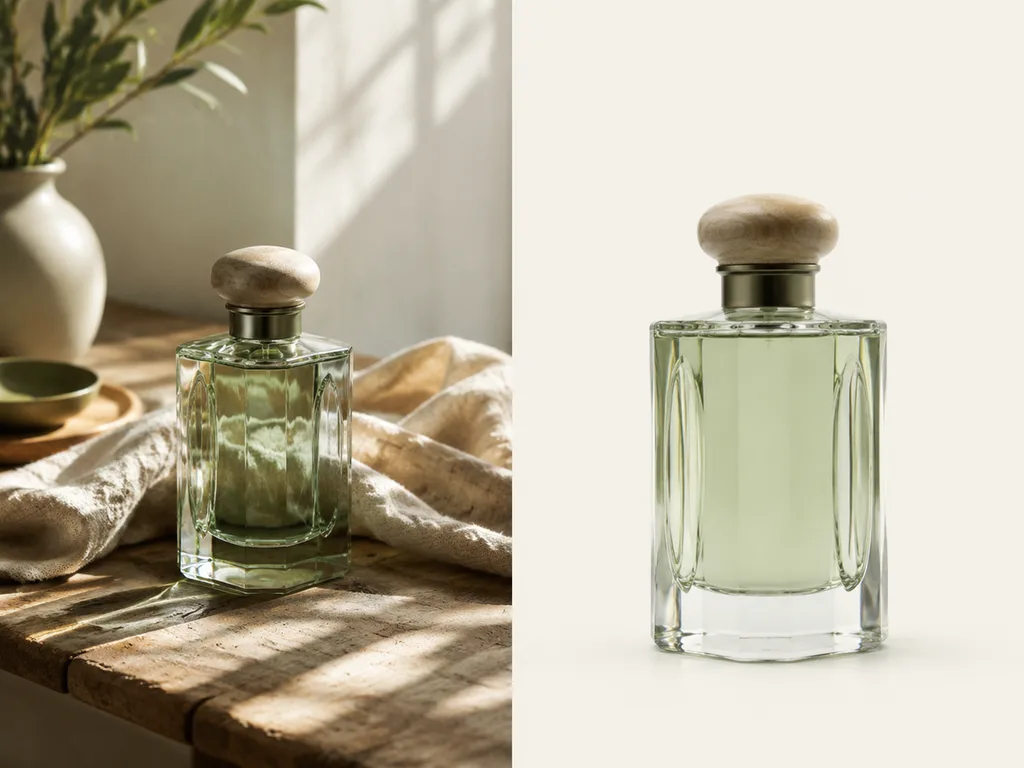
ワークフローは次のとおりです。最もシャープな商品写真をアップロードし、白背景モードを選択して生成します。モデルが商品を切り出し、エッジを再構築して、清潔な白の上に配置します。形状が特殊な商品がある場合に便利なプロンプトの追加例:「keep the original camera angle, rebuild soft natural contact shadow under the product.」(元のカメラアングルを維持し、商品下に柔らかく自然な接地影を再構築してください。)この接地影こそが、リアルな切り抜きと浮いているステッカーを区別するポイントです。
アップロード前に3点を確認してください。ガラスや金属部分の直線がまっすぐであること、ロゴの色が変化していないこと、輪郭に沿って元背景のハロー(縁取り)が残っていないこと。200%までズームしてください。そこに粗悪な切り抜きの問題が現れます。
<think>The user wants me to translate a blog fragment about lifestyle product photography into Japanese. I need to keep all markdown syntax intact, keep URLs unchanged, keep "GLMImage" untranslated, and produce natural Japanese.
Let me translate this carefully.</think>
撮影なしで実現するライフスタイル商品写真
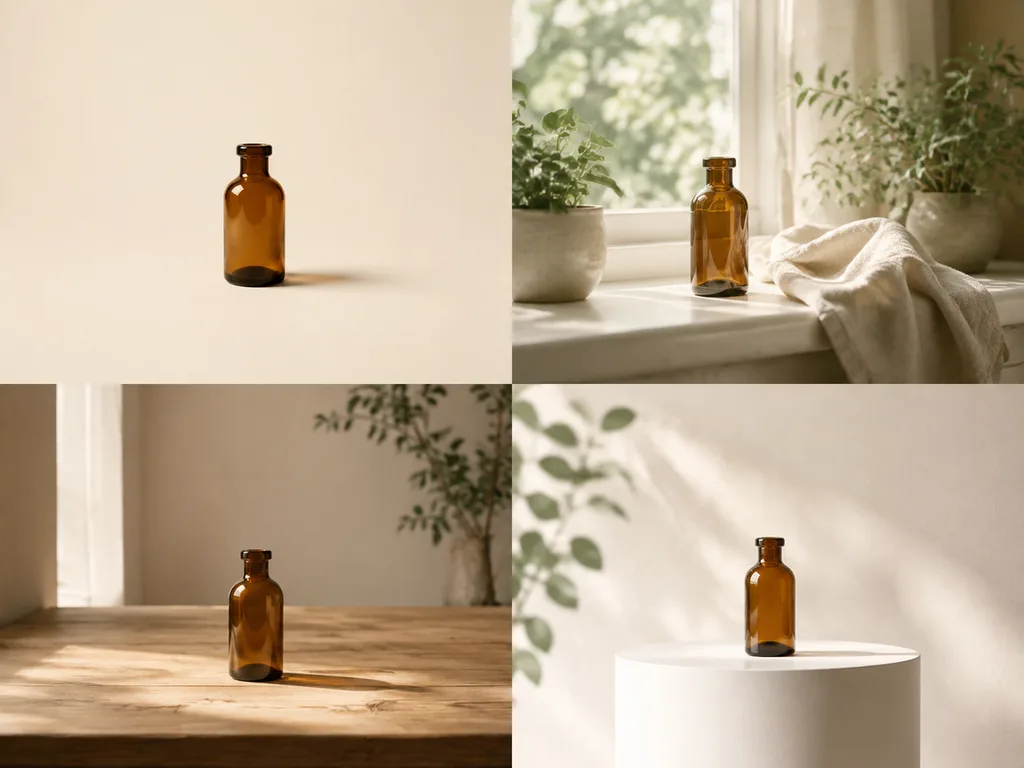
ライフスタイル画像は「文脈」を売ります。朝の光が入る浴室の棚に置かれたスキンケアボトル。ノートパソコンの隣にあるデスクの上のヘッドホン。木製のテーブルに袋からこぼれ落ちるコーヒー豆。これらを撮影するには小道具、場所、そしてカメラマンが必要でした——が、それは過去の話です。

プロンプトでは商品を説明するのではなく、シーンを描写します。商品はそのまま固定し、その周囲を記述します。「大理石のキッチンカウンターに商品を置く。左から差し込む柔らかな窓からの光。背景に少しピンぼけのレモン数個とリネンタオル」といった具合です。手、マグカップ、植物などサイズの目安になるものを添えると、大きさの感覚が正しく伝わります。そして従来の商品撮影の鉄則を一つ守ってください——商品がフレーム内で最もシャープに写ることです。
季節ごとのキャンペーンでは、同じ商品を4つのシーン——夏のテラス、秋のキッチン、ホリデーテーブル——で生成し、どの文脈がコンバージョンを生むかA/Bテストしましょう。これだけで一つのキャンペーンに十分なビジュアル素材が得られます。
<think>The user wants me to translate an article fragment about Amazon product images into natural, fluent Japanese. Let me carefully translate this while:
- Keeping ALL markdown syntax intact
- Keeping URLs, image paths, and HTML tags exactly as-is
- Keeping code blocks untranslated
- Keeping "GLMImage" untranslated
- Using natural Japanese
- Outputting only the translated markdown
Let me translate the content:
- "Amazon product images that pass review" → 審査を通過するAmazon商品画像
- The content explains the layout strategy for Amazon listings
- Technical requirements section
- The image alt text should be translated (but keep URL intact)
- Internal link reference should be kept
Let me draft this:
審査を通過するAmazon商品画像
メイン画像以外にも、Amazonではセカンダリ位置にインフォグラフィックや比較ブロックを使用できます。最も安全な配置は、2番目と3番目のポジションにライフスタイル画像と特徴のコールアウトを配置し、4番目にサイズやスケールを示す参考画像を、5番目に同梱内容を配置することです。
覚えておくべき技術要件:ズーム機能を有効にするには、最も長い辺が少なくとも1000ピクセル必要です。可能であれば1600ピクセル以上が望ましいです。フォーマットはJPEGが安全です。画像モデルが生成した実テキストは小さいサイズで文字化けする可能性があるため、コールアウトテキストについては、AIで背景グラフィックを生成し、CanvaやFigmaで文字を追加してください。これにより文字が鮮明に保たれ、再生成せずに誤字を修正できます。
リスティング写真にまず整理すべき散らかり(余分な小道具、反射、手が映り込んでいるなど)がある場合は、新しいシーンに商品を配置する前にAIオブジェクトリムーバーで処理してください。
This looks good. Let me review once more for natural Japanese flow.
Actually, "コールアウト" might be better as "キャッチコピー" or just left as コールアウト since it's commonly used in design contexts. I'll keep コールアウト.
"同梱内容" is good for "what's in the box"
"参考画像" works for "size or scale reference"
Let me check the alt text - it's describing the image, so I should translate it to Japanese for consistency.
The flow looks natural and fluent in Japanese. Let me finalize.</think>
審査を通過するAmazon商品画像
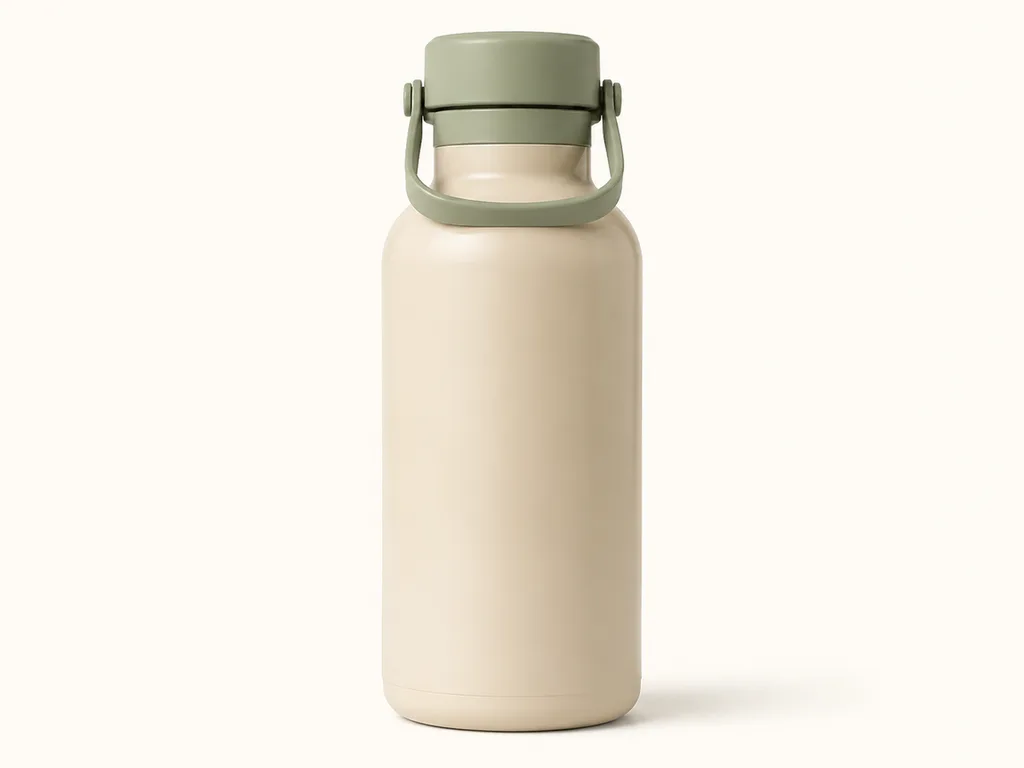
メイン画像以外にも、Amazonではセカンダリ位置にインフォグラフィックや比較ブロックを使用できます。最も安全な配置は、2番目と3番目のポジションにライフスタイル画像と特徴のコールアウトを配置し、4番目にサイズやスケールの参考画像を、5番目に同梱内容を示す画像を配置することです。
覚えておくべき技術的な要件として、ズーム機能を有効にするには、最も長い辺が少なくとも1000ピクセル以上必要で、可能であれば1600ピクセル以上ある方が望ましいです。フォーマットはJPEGが安全です。画像モデルが生成した実テキストは小さいサイズで文字化けする可能性があるため、コールアウト用のテキストについては、AIで背景グラフィックを生成し、CanvaやFigmaで文字を重ねるのがおすすめです。そうすれば文字が鮮明に保たれ、再生成を行わずに誤字を修正できます。
リスティング写真にまず整理すべき散らつき(余計な小道具、反射の映り込み、フレーム内の手など)がある場合は、新しいシーンに商品を配置する前にAIオブジェクトリムーバーで処理してください。
<think>The user wants me to translate an article fragment about product photography prompts into natural, fluent Japanese. I need to keep all markdown syntax, URLs, image paths, HTML tags, code blocks, and the brand word "GLMImage" exactly as-is. Let me translate this carefully.
Key considerations:
- "Prompts that actually work" - heading
- Product photography prompt terminology
- Keep the URL intact: /blog/ai-packaging-label-design-product-labels-mockups
- Keep "GLMImage" untranslated (though it doesn't appear in this fragment)
- Use natural Japanese phrasing
Let me translate:
"Prompts that actually work" → 「実際に効くプロンプト」or 「本当に機能するプロンプト」
"four slots" → 4つの要素
"the product (fixed), the surface, the light, and the mood" → 商品(固定)、表面、光、雰囲気
"Weak:" → 弱い例:
"Better:" → 良い例:
"the perfume bottle standing on polished travertine, single soft light from upper right, warm minimal mood, background falls off to a soft cream gradient, gentle reflection under the bottle."
This is a product description - I should translate it naturally as an example.
"clean Scandinavian pharmacy aesthetic" → クリーンなスカンジナビアの薬局的美学
"muted earth tones, matte finishes" → くすんだアースカラー、マット仕上げ
"Consistent prompt language across a catalog is what makes fifty generated images look like one brand." → カタログ全体で一貫したプロンプトの言葉遣いが、50枚の生成画像をまるで一つのブランドのように見せる要因です。
"When a scene needs a second physical object — packaging, a gift box — the AI packaging design guide covers generating the packaging itself first."
Let me put this all together in natural Japanese.</think>
実際に機能するプロンプト
商品写真のプロンプトには4つの要素があります。商品(固定)、置き場所、光、雰囲気。この4つをすべて埋めてください。
弱い例:「テーブルの上の香水ボトル、素敵なライティング。」
良い例:「磨かれたトラバーチンの上に立つ香水ボトル、右上から差す一本の柔らかい光、暖かみのあるミニマルな雰囲気、背景は柔らかいクリーム色のグラデーションに溶け込み、ボトルの下には穏やかな反射。」
ビジュアルアイデンティティを持つブランドの場合は、それを明示してください。「クリーンなスカンジナビアの薬局的美観」や「落ち着いたアースカラー、マット仕上げ」などです。カタログ全体でプロンプトの言葉遣いを統一することが、50枚の生成画像をまるで一つのブランドのように見せるための鍵となります。
シーンに2つ目の物理的なオブジェクト——パッケージやギフトボックスなど——が必要な場合は、AIパッケージデザインガイドで、まずパッケージ自体を生成する方法を確認してください。
<think>The user wants me to translate an article fragment about AI product photography costs into natural, fluent Japanese. Let me carefully translate this while following all the rules.
Key points to preserve:
- Markdown syntax intact
- URLs, image paths, HTML tags unchanged
- Code blocks untranslated (none here)
- "GLMImage" brand untranslated
- Natural Japanese expression
- Complete translation, no summarization
Let me translate:
"## What AI product photography costs" → "## AI商品写真のコストについて"
"Studio product photography runs from tens of dollars per image for basic white-background work to several hundred for styled lifestyle sets, plus the shoot day itself."
→ スタジオでの商品写真は、白背景の基本的なもので1枚あたり数十ドル、スタイリングされたライフスタイルセットでは数百ドルかかり、さらに撮影日そのものの費用も加算されます。
"Generation-based workflows price per image at a few cents, and the expensive part becomes your judgment: picking which of five candidates ships."
→ 生成ベースのワークフローは1枚あたり数セントという価格設定で、高額になるのはあなたの判断、つまり5つの候補の中からどれを出荷するか選ぶ部分です。
"That trade makes small catalogs the sweet spot — a 20-SKU shop can carry a full image set per SKU for what one studio day used to cost."
→ このトレードオフにより、小規模なカタログが最適なケースになります。20SKUのショップなら、スタジオでの撮影1日分の費用で、SKUごとにフル画像セットを揃えることができます。
"Large catalogs still benefit for seasonal refreshes and marketplace variations rather than replacing the entire library."
→ 大規模なカタログでも、画像ライブラリ全体を置き換えるのではなく、季節ごとのリフレッシュやマーケットプレイス向けのバリエーション作成にはメリットがあります。
Let me refine this for natural Japanese flow.</think>
AI商品写真のコストについて
スタジオでの商品写真は、白背景の基本的なものでは1枚あたり数十ドル、スタイリングされたライフスタイルセットでは数百ドルかかり、さらに撮影日そのものの費用も加算されます。一方、生成ベースのワークフローは1枚あたり数セント程度なので、コストが高くなるのは「どの候補を採用するか」というあなたの判断、すなわち5つの候補の中から出荷するものを選ぶ工程になります。
このトレードオフにより、少量SKUのカタログが特に狙い目になります。20SKUのショップであれば、かつてのスタジオ撮影1日分の費用で、SKUごとにフル画像セットを揃えることが可能です。大量のSKUを抱えるカタログでも、画像ライブラリ全体を置き換えるのではなく、季節ごとの刷新やマーケットプレイス向けのバリエーション作成に利用する形で恩恵を受けられます。
<think>The user wants me to translate an article fragment about a product photography workflow into natural, fluent Japanese. I need to:
- Keep all markdown syntax intact
- Keep URLs and HTML tags as-is
- Keep code blocks untranslated (no code blocks here)
- Keep "GLMImage" untranslated
- Use natural Japanese expression
- Output only the translated markdown
Let me translate this carefully:
- "A repeatable workflow" → 反復可能なワークフロー or 再現性のあるワークフロー
- "Shoot or select one clean, well-lit photo per product" → 商品ごとに明るく清潔な写真を1枚撮影または選ぶ
- "phone cameras are fine" → スマホのカメラでも問題ありません
- "Generate the white-background main image" → 白背景のメイン画像を生成する
- "verify edges and logo at 200% zoom" → 200%にズームして輪郭とロゴを確認する
- "Write two lifestyle scenes per product" → 商品ごとにライフスタイルシーンを2つ作成する
- "that match your brand's palette" → ブランドのパレットに合った
- "Build the marketplace set" → マーケットプレイス用のセットを組み立てる
- "main, two lifestyle, scale reference, box contents" → メイン、ライフスタイル2枚、サイズ参考、箱の中身
- "Track which scenes convert" → どのシーンがコンバージョンにつながるかを記録する
- "regenerate the losers next season" → 成果の出なかったシーンを次のシーズンで再生成する
- "The whole loop for one product takes under an hour" → 商品1つあたりの一連の作業が、信頼できるプロンプトパターンがあれば1時間以内に完了します
- "once you have prompt patterns you trust" → 信頼できるプロンプトパターンがあれば
Let me write this out naturally in Japanese.</think>
再現性のあるワークフロー
- 商品ごとに明るく清潔な写真を1枚撮影または選ぶ — スマホのカメラでも問題ありません。
- 白背景のメイン画像を生成し、200%にズームして輪郭とロゴを確認する。
- ブランドのパレットに合ったライフスタイルシーンを商品ごとに2つ作成する。
- マーケットプレイス用のセットを組み立てる:メイン、ライフスタイル2枚、サイズ参考、箱の中身。
- どのシーンがコンバージョンにつながるかを記録し、成果の出なかったシーンは次のシーズンで再生成する。
信頼できるプロンプトパターンが手元にあれば、商品1つあたりのこの一連の流れは1時間以内に完了します。商品写真のワークフローを試す →
<think>The user wants me to translate a FAQ section about AI-generated product images for e-commerce into natural, fluent Japanese. I need to keep all markdown formatting intact, keep URLs and HTML tags as-is, keep "GLMImage" untranslated, and output only the translated markdown.
Let me translate each FAQ question and answer:
- "Do marketplaces allow AI-generated product images?" - "マーケットプレイスはAI生成の商品画像を許可していますか?"
- Amazon requires... - Amazonは...
- Keep the product real, edit the context. - 商品は実際のままに、背景や雰囲気を編集しましょう。
- "Will the white background pass Amazon's checker?" - "白い背景はAmazonのチェックを通過しますか?"
- If the tool outputs true white (255,255,255)... - ツールが純白(255,255,255)を出力し...
- "Can I fix a bad logo after generation?" - "生成後にロゴの崩れを修正できますか?"
- Sometimes, by regenerating with "keep label and logo exactly unchanged" in the prompt. - プロンプトに「ラベルとロゴを一切変更しない」を加えて再生成すれば直ることがあります。
- If a logo keeps drifting, generate the scene and composite the real label in Figma — an hour of editing beats fifty failed generations. - ロゴがどうしても安定しない場合は、シーンだけ生成してFigmaで本物のラベルを合成しましょう。1時間の編集作業が、50回の失敗した生成に勝ります。
- "One photo per product, or several?" - "商品は1枚の写真だけでいいですか、複数必要ですか?"
- Start with one straight-on shot. - まずは真正面からの1枚から始めましょう。
- Add a 45-degree angle shot for products with texture or unusual shape — shoes, ceramics, hardware. - 質感や独特な形状を持つ商品には、45度の角度からのショットを追加しましょう。靴や陶器、金物類などです。
- "Where do lifestyle images convert best?" - "ライフスタイル画像が最も効果を発揮するのはどこですか?"
- Product detail pages above the fold and paid social. - ファーストビューに表示される商品詳細ページと、有料のソーシャル広告です。
- Marketplace secondary slots tend to favor feature callouts over pure lifestyle. - マーケットプレイスの二次的な枠は、純粋なライフスタイル画像よりも特徴を強調した画像が好まれる傾向があります。
Let me refine these translations to be more natural and fluent in Japanese.</think>
よくある質問
マーケットプレイスはAIが生成した商品画像を許可していますか?
Amazonでは、メイン画像は実際の商品を正確に表すものが求められます。実物の商品写真の背景やシーンを編集することは一般的ですが、商品そのものを架空のものとして生成することは認められていません。商品は実物のままに、周囲のコンテキストだけを編集しましょう。
白い背景はAmazonのチェックを通過しますか?
ツールが純白(255,255,255)を出力し、商品がフレームの約85%を埋めていれば、通過するはずです。アップロード前には必ずエディタで四隅のピクセルを確認してください。白以外の色になってしまっていることが、実は最も多いリジェクトの理由です。
生成後に崩れたロゴを修正できますか?
プロンプトに「ラベルとロゴは一切変更しない」と加えて再生成すれば、修正できることがあります。それでもロゴが安定しない場合は、シーンだけを生成し、Figmaで本物のラベルを合成しましょう。1時間の編集作業が、50回の失敗した生成よりずっと効率的です。
商品は1枚の写真だけで良いですか?複数必要ですか?
まずは真正面から撮った1枚から始めましょう。質感や独特な形状を持つ商品――靴や陶器、金物など――には、45度の角度からのショットを追加すると効果的です。
ライフスタイル画像が最もコンバージョンを生むのはどこですか?
ファーストビューに表示される商品詳細ページと、有料のソーシャル広告です。マーケットプレイス内の二次的な掲載枠は、純粋なライフスタイル画像よりも、機能や特徴を強調したコールアウト画像が好まれる傾向があります。