What Is a Medical Illustrator?
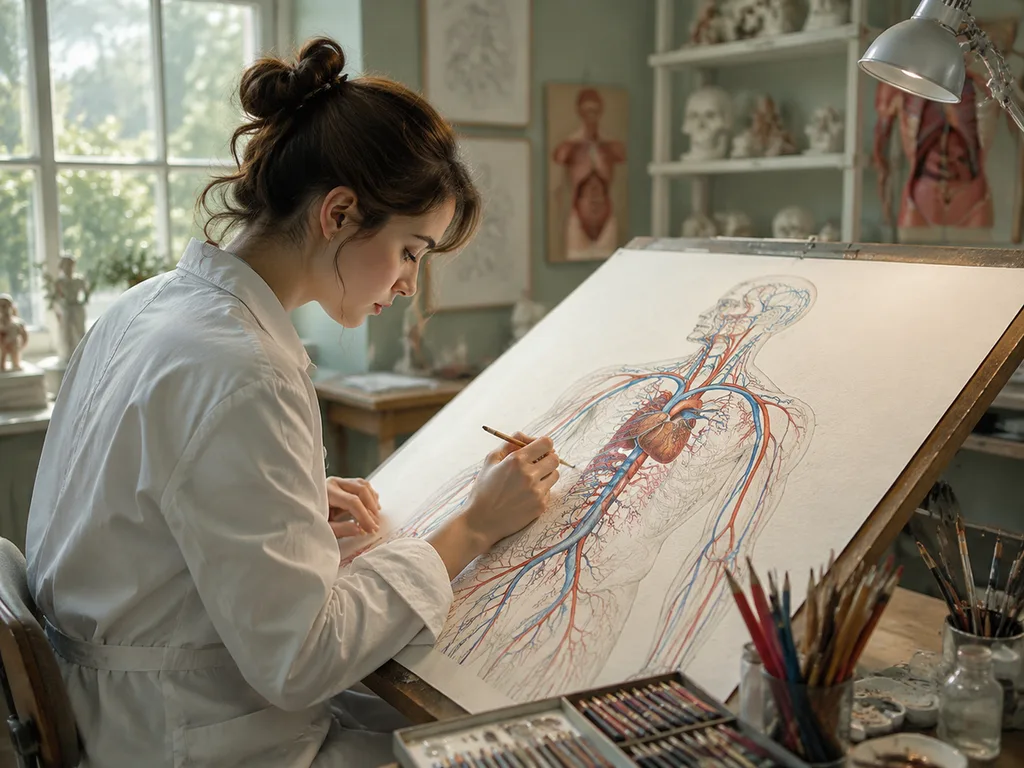
A medical illustrator is a specialized artist who creates visual materials for the healthcare and life sciences industries. Anatomy plates, surgical diagrams, patient education handouts, journal figures, trial exhibits — anything where a picture explains what words can't carry alone. The job sits at the intersection of fine art and biomedical science: you need to be able to draw accurately and understand what you're drawing.
The field is small and highly trained. According to the Association of Medical Illustrators (AMI), there are only four accredited graduate programs in North America, each accepting between 7 and 20 students per year. Board certification is voluntary but widely respected — it requires passing a written exam and a portfolio review.
The employment outlook is strong. Healthcare and science visualization demand keeps pace with new discoveries, treatments, and technologies, and that demand is growing.
What Do Medical Illustrators Actually Do?
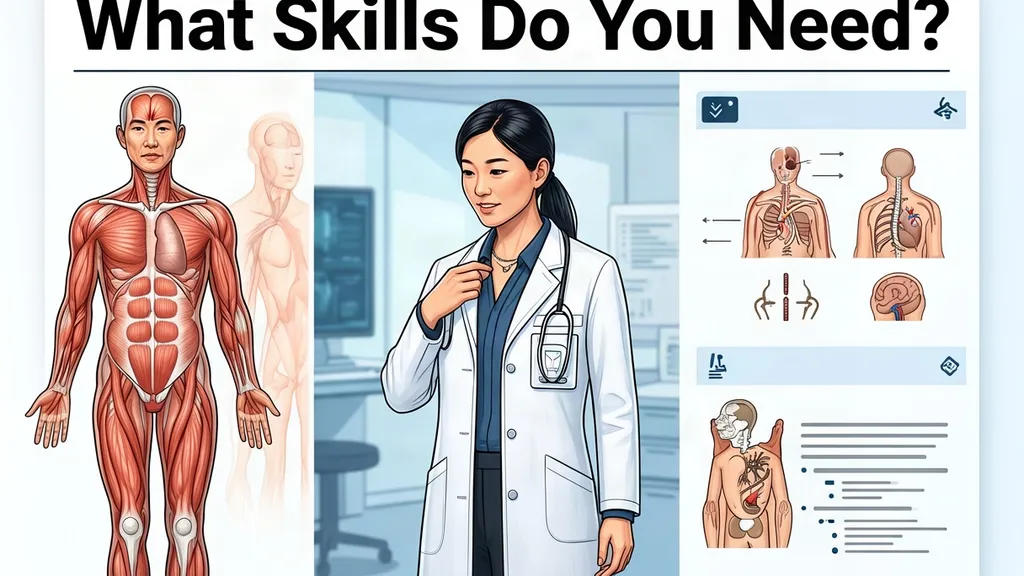
The day-to-day varies by employer, but here's a realistic picture:
In a hospital or medical school, you might produce surgical procedure illustrations for training materials, patient education graphics that help explain conditions to non-specialist audiences, or anatomical reference plates for curricula. You work closely with surgeons, anatomists, and medical writers.
In a pharmaceutical or biotech company, you create mechanism-of-action diagrams for drug development communications, visual materials for regulatory submissions, and marketing assets that need to be both accurate and persuasive.
In publishing or media, you produce figures for medical textbooks, journal articles (often under tight deadlines for breaking research), or documentary and film projects that need medically accurate visuals.
As a freelancer, you piece together work from several of the above — a textbook here, a legal exhibit there, a pharma sales aid somewhere else. Many salaried medical illustrators supplement their income with freelance projects.
Medical Illustrator Salary: What Can You Actually Earn?
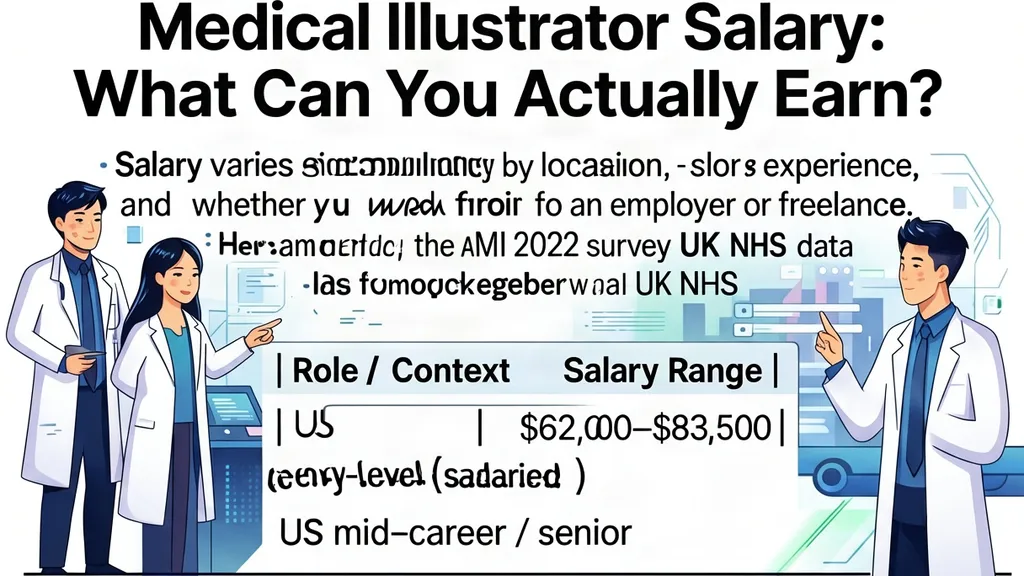
Salary varies significantly by location, experience, and whether you work for an employer or freelance. Here are the real numbers from the AMI 2022 survey and UK NHS data:
| Role / Context | Salary Range |
|---|---|
| US entry-level (salaried) | $62,000–$83,500 |
| US mid-career / senior | $83,500–$104,000 |
| US art director / creative director | $104,000–$170,000+ |
| US self-employed median | $85,000 (up to $300,000 for top earners) |
| UK NHS junior (trainee) | £20,000–£24,000 |
Those with interdisciplinary skills — particularly UX design for apps and AR/VR experiences — are in higher demand and can command premium rates. Self-employment is common in the field; success depends on business skills as much as artistic ability.
What Skills Do You Need?
You don't need to be a practicing physician, but you need to genuinely understand anatomy, physiology, and the scientific reasoning behind what you're illustrating. Specific skills that matter:
Artistic and technical
- Strong foundational drawing skills — not necessarily fine art, but accurate, controlled line work
- Proficiency in digital illustration software (Adobe Illustrator, Photoshop, Procreate, and increasingly, 3D tools like Blender)
- An understanding of color theory and visual hierarchy
Scientific
- In-depth knowledge of anatomy and physiology
- Ability to read and interpret scientific literature, surgical notes, and clinical documentation
- Comfort working with subject-matter experts who will scrutinize every vessel and layer
Professional
- Project management and communication skills — you often work to brief from clients or researchers
- Business literacy if freelancing: pricing, negotiation, client management
A common path is an undergraduate degree in illustration or graphic design followed by a master's in medical illustration (the accredited programs cover both the science coursework and the professional studio practice).
AI Tools and Medical Illustration: What's Actually Changed in 2026
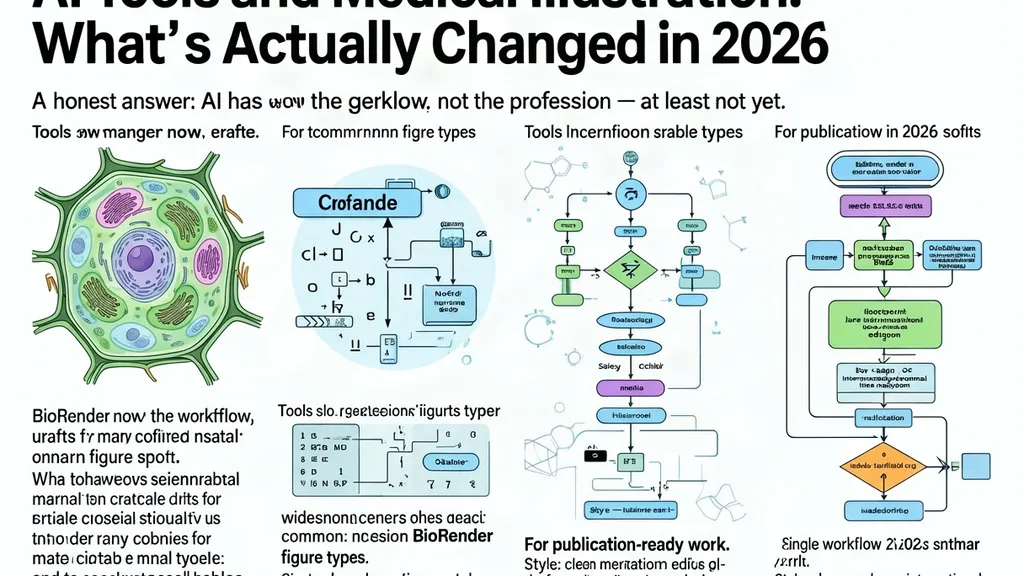
The honest answer: AI has changed the workflow, not the profession — at least not yet.
Tools like BioRender now generate usable drafts for many common figure types — cell biology diagrams, mechanism illustrations, flowchart-style graphics. For publication-ready work, the workflow in 2026 is often: AI generates the draft → human illustrator polishes and verifies. The AI gets you 70% of the way; the illustrator handles the detail that a journal editor, a surgeon, or a court exhibit reviewer will actually scrutinize.
Here's what that means in practice:
- Publication figures for journals: AI drafts work for early-stage mockups and internal review. Final submission figures almost always need a human to verify anatomical accuracy and ensure the illustration meets the specific journal's style guide.
- Patient education materials: AI-generated anatomy plates are increasingly usable with appropriate review — especially for general-audience materials where a physician hasn't signed off on every structure.
- Surgical and clinical illustrations: Still require expert verification. No editor at a medical publisher will accept an AI-generated operative illustration without a qualified reviewer confirming the approach and layering are correct.
- Text-to-image for medical illustration: Specialized tools like the scientific illustration generator can produce labeled anatomy plates from a text prompt — useful for lesson planning, draft figures, and content where the subject matter expert can check the result. Try the medical illustration generator →
The professionals who are thriving in 2026 are the ones treating AI as a productivity tool in their existing workflow, not as a replacement for the underlying scientific knowledge.
How to Get Started
If this career sounds like a fit, here's a practical path:
-
Build the art foundation. A portfolio of accurate biological or anatomical work is your primary entry requirement. Focus on clean line work, correct proportions, and visible-labeling conventions.
-
Study the science. Take anatomy and physiology seriously. Medical illustrators who can't speak the language of the researchers and clinicians they work with won't last long.
-
Look at the accredited programs. The AMI lists four accredited graduate programs in North America. Applications are competitive because the programs are small. Each accepts 7–20 students per year.
-
Get the software skills. Adobe Illustrator is effectively the industry standard. Blender, Photoshop, and a 3D tool are increasingly relevant. If you're exploring AI-assisted workflows, experiment with BioRender and SciDraw AI to understand what they do well and where they still fail.
-
Consider certification. The Board of Certification of Medical Illustrators offers a two-part exam (written + portfolio). Certification is voluntary but adds credibility, particularly with institutional clients.
-
Join the community. The AMI publishes a careers directory and holds annual conferences. Medical-artist communities online are active and a good way to understand what the day-to-day actually looks like before committing to the training path.
Is Medical Illustration a Good Career in 2026?
If you genuinely love the combination of art and science, yes — but go in with clear eyes:
- The field is small, which means stable but not rapidly expanding
- AI has compressed the entry-level market for routine figure work; the professionals who are doing well are the ones who leveled up into specialty niches (AR/VR, interactive medical media, regulatory illustration)
- The training path is long (4–6 years of higher education for the fully qualified route), and the freelance market is competitive
- The highest earners are not the most talented artists — they're the ones who combine strong illustration skills with business acumen
For the right person, it's a genuinely satisfying career: you make things that help people understand medicine, you work on remarkable subjects, and the work is visually interesting in a way most design jobs aren't. The path is long, but the destination is worth it for those who finish it.
Frequently Asked Questions
Is a medical illustrator a doctor?
No. Medical illustrators are artists first. They work with doctors and scientists to translate medical information into visuals, but they are not themselves medical professionals.
Can AI replace medical illustrators?
Not in the near term for publication-quality work. AI tools are useful for drafts and certain commercial applications, but verified anatomical accuracy and clinical-grade illustration still require a trained human. The field is adapting to use AI as a productivity tool, not a replacement.
What's the difference between a medical illustrator and a scientific illustrator?
Medical illustration is a subset of scientific illustration, focused specifically on anatomy, medicine, and clinical applications. Scientific illustration is broader — it covers any visual explanation of science, including botany, zoology, chemistry, and physics.
How long does it take to qualify?
Plan on 4–6 years: a 4-year undergraduate degree in a relevant field, then a 2-year accredited master's program in medical illustration.
Try AI-Generated Medical Illustrations
Want to see what AI can do with anatomical illustration? Try the scientific illustration generator → — enter a description of the anatomy you need, and the model produces a labeled plate for review.
For image editing and refinement workflows: Explore the image-to-image tool →
<!-- scientific-authority-bridge:start -->
Medical illustrator vs. medical illustration
A medical illustrator is the trained practitioner; medical illustration is the visual work they produce. Read what medical illustration is and where it is used for the deliverable-focused explanation.
For non-clinical concepting, you can create a labeled scientific illustration draft. Published medical work still requires qualified anatomical review.
<!-- scientific-authority-bridge:end -->