How to Draw Animals: A Wildlife Illustration Guide
Drawing animals accurately — zoological illustration when it is done for reference — means rendering an animal's form, proportions, and identifying features so clearly that a reader can recognize the species and trust the details. A field guide that helps you tell two similar birds apart, or a textbook figure showing a fish's fins and gills, lives or dies on whether the artist got the diagnostic details right. This guide covers a construction method that fixes proportion first, the observation practice behind it, texture and scale techniques, and the mistakes beginners make most.
What an Accurate Animal Illustration Gets Right
A few things separate a useful animal illustration from a decorative one.
- Proportion and posture. Body-to-limb ratios, head size, neck length, the way the animal actually stands or swims. This is the first thing a knowledgeable viewer checks.
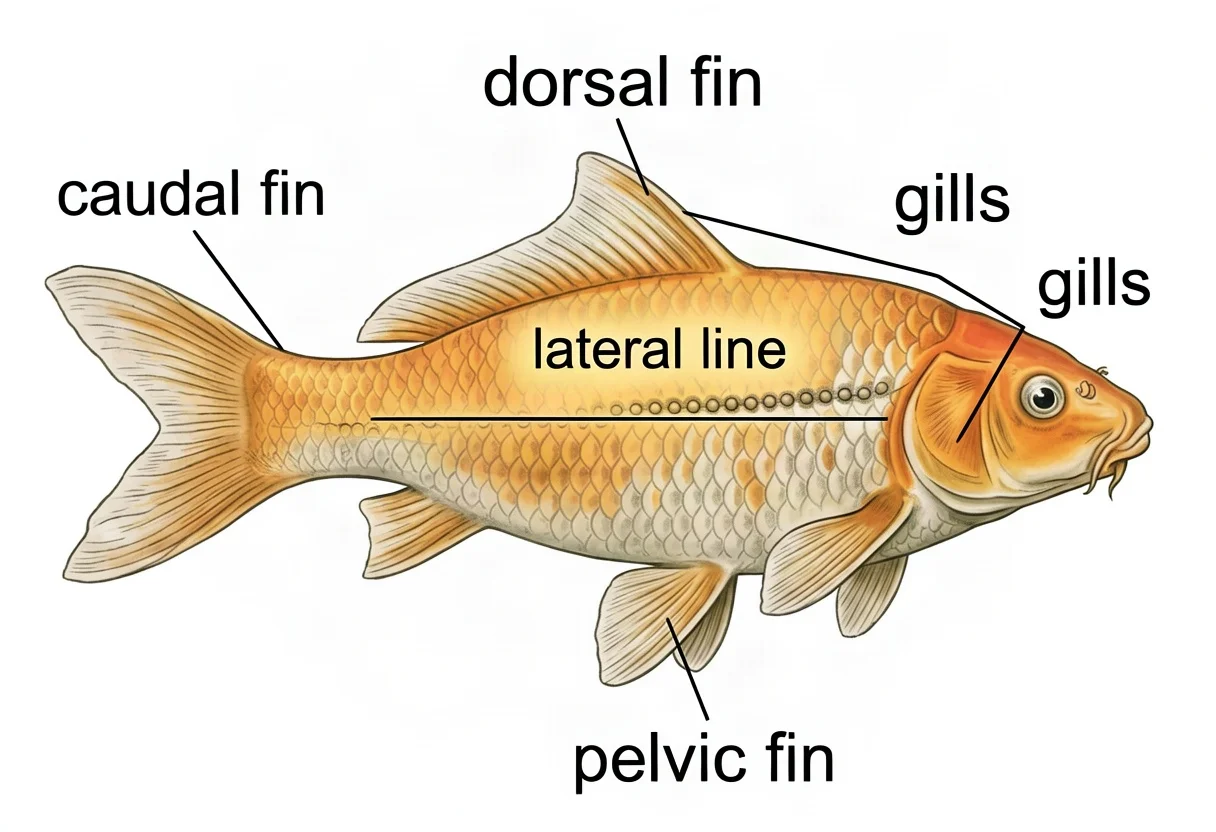
- Diagnostic features. The things that identify the species — beak shape, fin count, antler branching, scale pattern, markings. These get priority over background.
- Surface texture and pattern true to the animal — fur direction, feather layout, scale arrangement.
- Labels for the parts when the image is for instruction: dorsal fin, lateral line, primary feathers, and so on.
Photography captures one instant; an animal illustration can combine the features that matter into one clear, labeled view.
The Construction Method: Skeleton, Muscle, Contour
Professional animal artists build the drawing from the inside out, in three passes. The method exists because animal anatomy misleads the eye: fur and skin hide the structure that determines proportion.
Pass one — the simplified skeleton. Sketch the gesture as a line, then hang the bare bones on it: skull, spine, ribcage, pelvis, limb bones. You are not drawing an anatomically complete skeleton — you are placing the joints, because joints set the limits of the pose and the length relationships. A drawing whose knees and elbows are in the wrong places cannot be fixed later with detail.
Pass two — the muscle masses. Block in the big muscle groups as simple volumes — haunch, shoulder, neck mass, belly. This pass turns the skeleton into a body and catches proportion errors the skeleton pass missed, like a torso too long for the legs.
Pass three — the contour. Only now do you draw the outer form and the surface: fur, feathers, scales, markings. Because proportion is already locked, you can spend this pass entirely on the diagnostic detail.
The alternative — starting at the eye and rendering outward — produces polished fragments joined to a broken body. The construction method feels slower for the first ten minutes and is faster by the end of the first hour.
Observation Practice Before You Draw
Accuracy is a looking skill more than a hand skill, and it is trainable.
Gesture studies — thirty-second sketches of a moving animal, from video or at a zoo — teach posture and weight. Quantity matters more than finish; a page of rough gestures teaches more about how a species moves than one careful drawing. Memory drawing sharpens attention: look at the animal for ten seconds, then draw from memory, then check. The gap between what you drew and what was there is exactly the information you were not seeing. Specimen study — museum skins, shells, skeletons, or a well-photographed reference set — slows the subject down so you can measure it. And keep a field notebook with annotations: species, date, proportions noted in head-lengths, the features that confused you. The notebook habit is where field-guide artists come from.
Getting Proportion and Scale Right
Measure before you render. Hold a pencil at arm's length and sight-size the animal against it, using one body part as the unit — head length for mammals, body depth for fish. Count how many units the body runs, where the legs attach, where the eye sits relative to the skull. Draw what you counted, not what you remember.
In scientific plates, scale is stated, not implied. A scale bar or a "×1.5 natural size" note beside the figure is the convention, and it is what separates a reference illustration from a picture. Negative space helps too: checking the shapes between the legs and around the silhouette catches proportion errors faster than staring at the animal does.
Feathers, Fur, and Scales
Texture is where most drawings go generic, and the fix in every case is to draw the structure, not the texture effect.
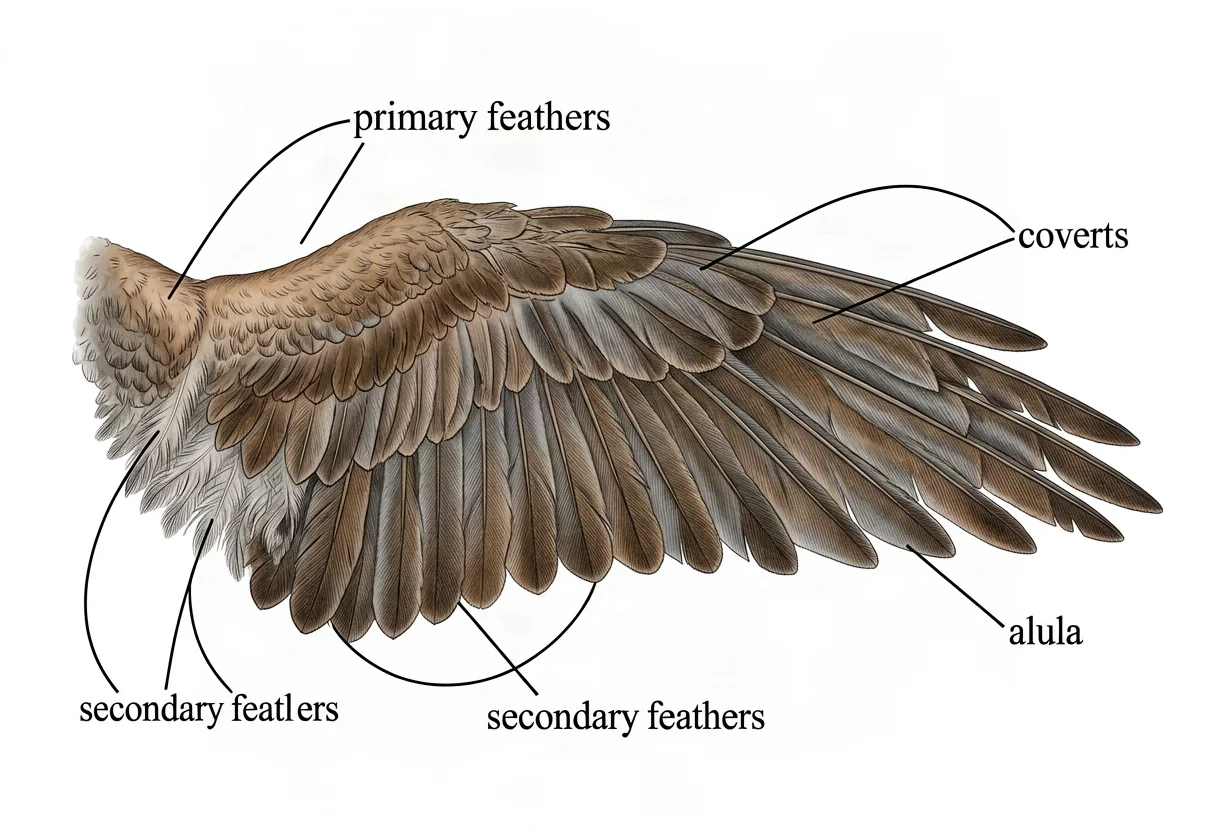
Feathers grow in tracts, not as a uniform coat. A bird wing reads correctly when you place the feather groups — primaries, secondaries, coverts, alula — and draw each group as a layer with its own direction, rather than hatching individual plumes across the whole wing. Fur is drawn in direction masses: find where the hair grows from and where it parts, indicate the clumps at the boundaries, and let the interior of a mass stay quiet. Scales follow the form of the body — rows curve around the torso and the tail, shrinking toward the extremities. Draw the rows first as contour lines, then the scales within them. In all three cases, restraint at the edges and accuracy at the growth pattern is what makes the texture read as real.
Field-Guide Style vs. Anatomical Style
These are the two common zoological modes. Field-guide style shows the whole animal in a clear, characteristic pose, often in flat color — the format of bird and mammal guides. Anatomical style shows internal or partial structures — a skeleton, a dissected view, a labeled limb — for teaching. Many subjects benefit from both: a field-guide illustration for recognition, an anatomical one for understanding.
Common Beginner Mistakes
The same short list accounts for most failed animal drawings. Starting with the eye and rendering it to perfection before the body exists — the resulting head is beautiful and the wrong size. Ignoring the far legs, which flattens the animal into a sticker. Bending joints the wrong way or inventing extra ones, because the skeleton pass was skipped. Drawing fur or feathers as uniform texture instead of growth groups. Copying a single posed photo rather than checking several references, which bakes one individual's quirks in as species traits. And for instructional work, forgetting labels until the end, when there is no clean path left for a leader line.
The Accuracy Bar — and the Time a Plate Takes
Correct proportions and posture, true diagnostic features, faithful surface texture: if a knowledgeable viewer can identify the species from the illustration and trust the details, it is accurate. The bar moves with the use — a field-guide figure must nail the identifying features; an anatomical plate is checked structure by structure. A careful hand-drawn plate takes several hours to days depending on complexity; digital tools speed revision, and an AI draft takes seconds but is verified, not trusted. For the wider discipline, see what scientific illustration is and our botanical illustration guide for the plant-side method.
Can AI Draw Animals Accurately?
For lesson figures, study aids, and article art, yes — describe the species and the labels you want, and a model can produce a clean, labeled animal illustration quickly. For a published field guide or research figure, review the morphology carefully and treat the output as a draft. The risk with AI animal illustration is "plausible but wrong" — a fin in the wrong place, a miscounted digit — so verification matters more here than with a generic image.
Try the scientific illustration generator → (zoological mode)
FAQ
Should I draw animals from photos or from life?
Both, with a preference for life when possible. Photos flatten and distort, especially with long lenses; life shows posture and proportion honestly. For AI assistance, use photos as the reference to check the generated result against.
What is the difference between zoological illustration and wildlife art?
Zoological illustration prioritizes accuracy and identification — often with labels — for reference and education. Wildlife art prioritizes mood, composition, and beauty. They overlap, but the priority order differs.
Which animals are best for beginners to practice on?
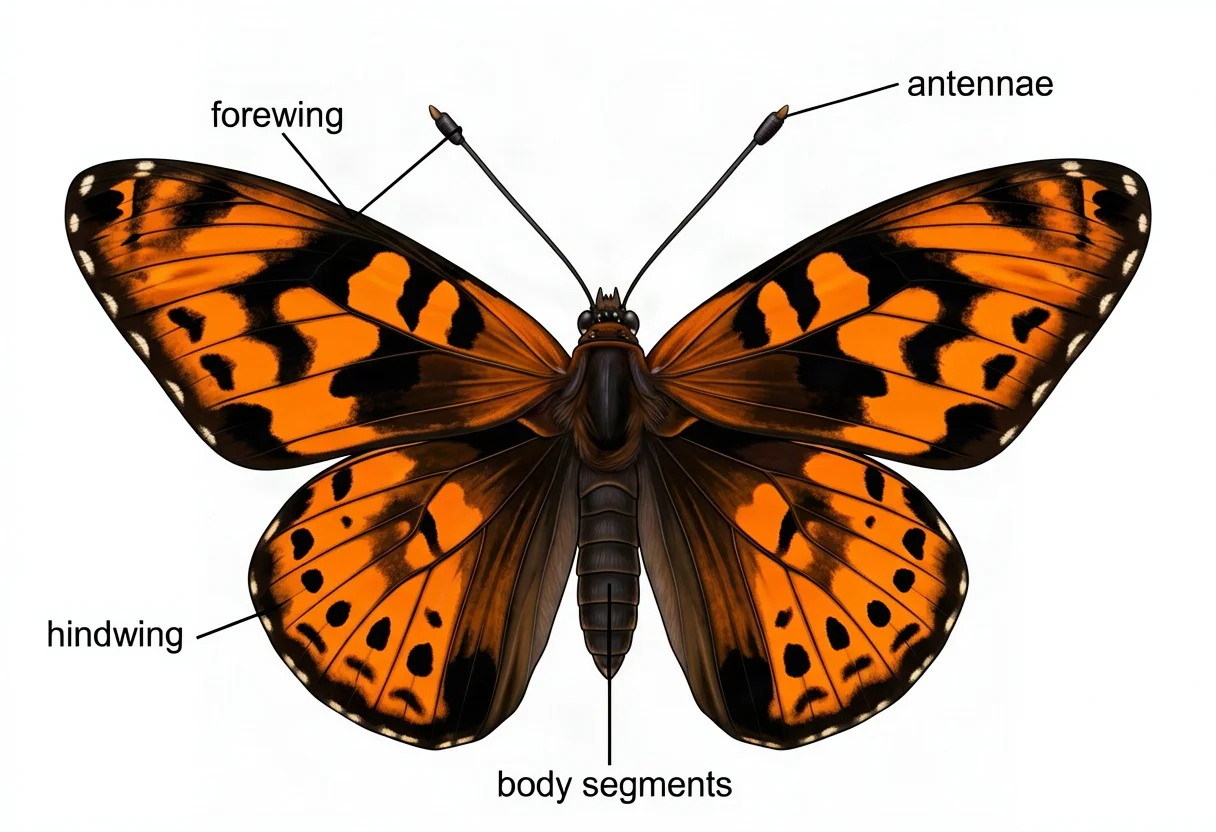
Fish and insects reward precision without demanding gesture — they hold still, and their diagnostic features (fin rays, wing veins, segment counts) are countable. Birds and mammals add posture and feather/fur structure, so they come better after the measurement habit is built.
Can AI draw animals accurately enough for education?
For lesson figures, study aids, and article art, yes — describe the species and labels. For published field guides or research figures, review the morphology carefully and treat the illustration as a draft to correct.