What Is Botanical Illustration?
Botanical illustration is the practice of drawing plants — flowers, leaves, fruit, stems, and roots — accurately enough that a reader can identify the species and trust the details, with labels that name each part. It is the format you see in field guides, floras, textbooks, and on natural-history museum walls, and it is still the standard for plant reference two centuries after photography arrived.
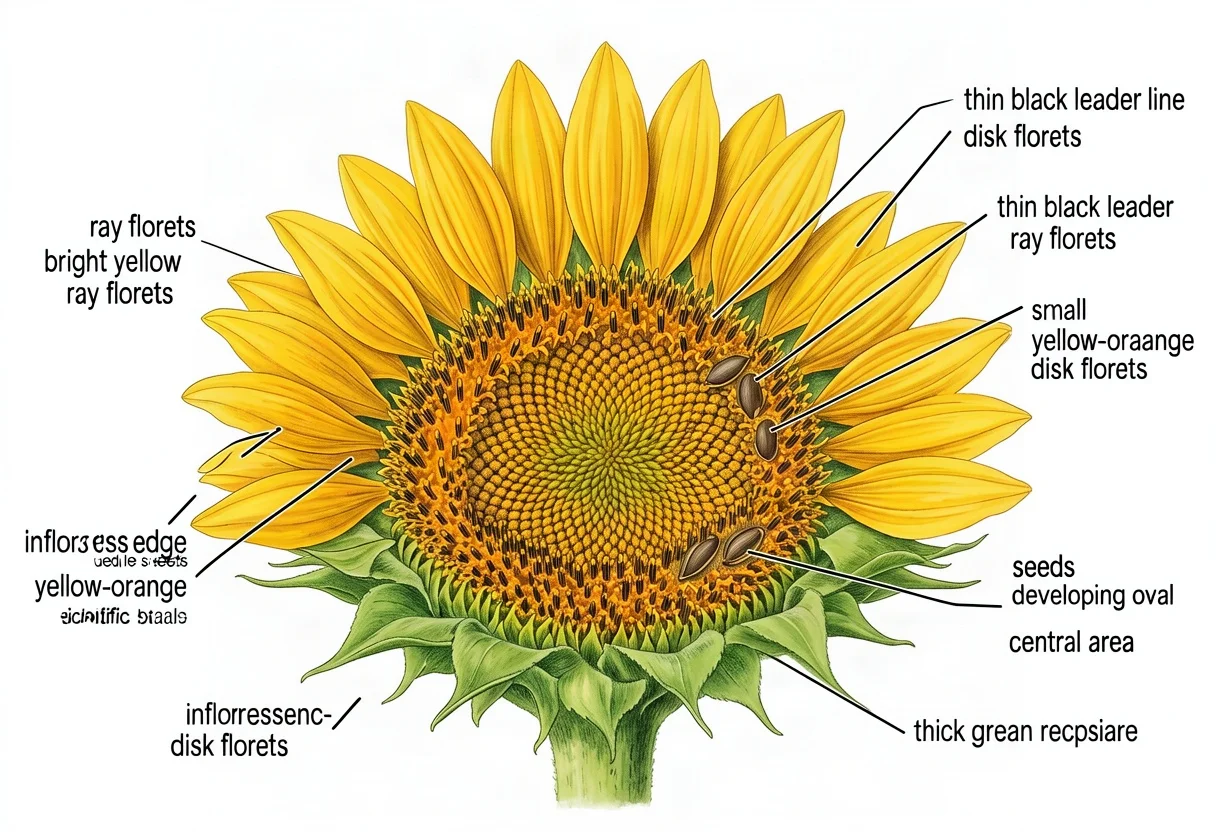
A photograph captures one instant from one angle; a botanical illustration can combine the key features into a single, labeled view — the bud, the open flower, and the fruit together, each at the right scale and each named. That control is the whole reason the discipline survived the camera.
How Is Botanical Illustration Different from Botanical Art or Photography?
- Accuracy first. If a plant has five petals, a botanical illustration shows five — not "about five." Counts, proportions, and shapes stay true to the species.
- It labels the parts. Leaves, petals, stamen, pistil — each is named with a thin leader line, so the image teaches structure, not just shape.
- It is diagnostic. The features that distinguish one species from another get prominence; decoration comes second, or not at all.
Botanical art, by contrast, leans on composition and beauty and may bend accuracy for the sake of the picture. Photography is literal but cannot combine views, isolate a single structure, or label it. A botanical plate sits between the two: faithful like a photograph, composed and labeled like a diagram.
A Short History, and the Names Worth Knowing
Botanical illustration is old on purpose. Long before a camera could document a plant, a drawing was the only way to show a specimen to someone in another country, and the drawing had to be precise enough to be useful. Basilius Besler's Hortus Eystettensis (1613) documented an entire garden in over three hundred engraved plates; the herbals before it were the working references of apothecaries.
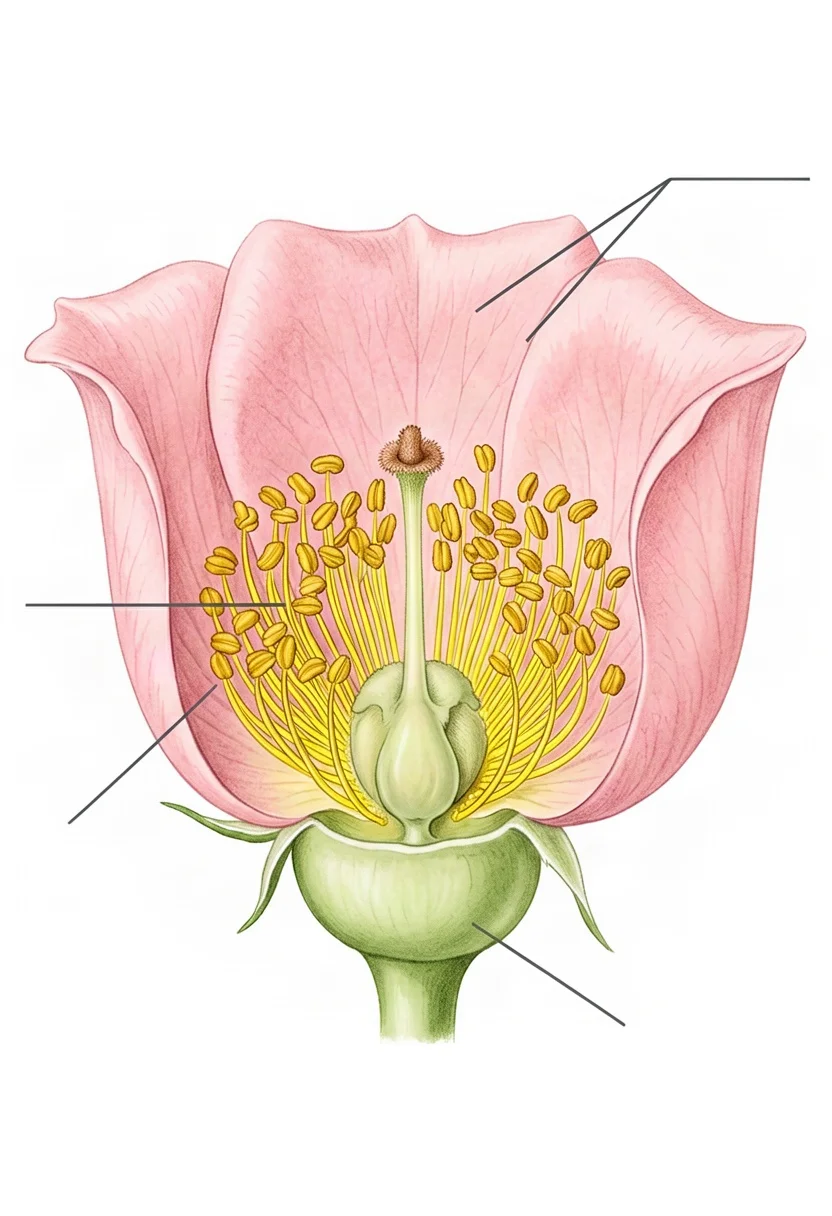
The discipline's classic period ran through the 18th and 19th centuries. Georg Dionysius Ehret painted plants for Linnaeus and his circle while the classification system itself was being invented. Pierre-Joseph Redouté, working for the Empress Joséphine at Malmaison, produced the rose plates that are still reproduced on stationery today. Ferdinand Bauer drew the plants of Australia and the Mediterranean and, unable to carry color into the field, numbered his pencil drawings against a coded color chart so the plates could be finished accurately afterward. Maria Sibylla Merian's earlier studies of insects and their host plants set the standard for showing interaction, not just form.
Photography did not end any of this, because a photo of a pressed, dried specimen is a poor thing — flat, faded, missing the parts that were never collected. A plate can restore the living form and arrange the life cycle on one sheet. The tradition continues in modern hands: Margaret Mee painted the plants of the Amazon across decades of expeditions in the 20th century, and working illustrators still produce plates for floras and monographs now, in watercolor or on a tablet.
How a Botanical Plate Is Actually Constructed
Professional botanical illustration is not one drawing but a set of studies assembled into a plate. The sequence matters.
- The habit drawing comes first. The illustrator draws the whole plant — or a typical branch — at final size, establishing proportion and posture. This is the anchor; everything else arranges itself around it.
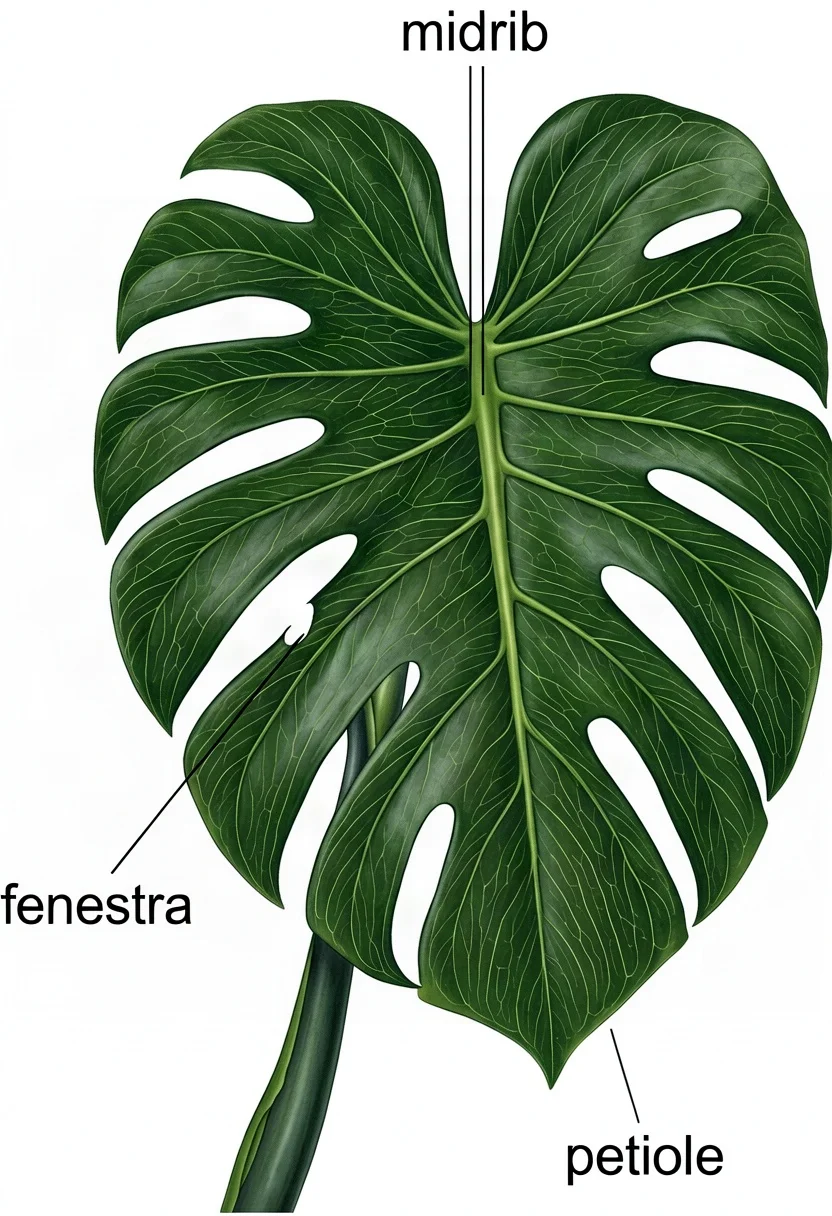
- Detail studies come next. Separate studies capture the leaf (both faces), the flower in full bloom, the fruit, the seed, and the root collar, each measured against the habit drawing so relative sizes stay true.
- The dissection follows. The flower is cut open — a longitudinal section through the center, plus a cross-section where the ovary matters — and the parts are laid out and enlarged: sepals, petals, stamens, pistil. Dissections are drawn several times natural size, and the magnification is stated.
- Composition. Studies are arranged on the plate — habit as the centerpiece, dissections and details around the margins — with enough white space that no important part overlaps another.
- Rendering and labels. Flat, descriptive tone or color; then leader lines and names, kept outside the plant's silhouette, never crossing.
A common shortcut is to skip the studies and draw everything at once. The result is usually a plate whose centerpiece is fine and whose details are invented — the exact failure the study sequence exists to prevent.
Common Mistakes in Botanical Illustration
A few habits ruin an otherwise careful plate. Starting with one perfectly rendered leaf usually leaves no room for the rest of the plant, so proportions collapse — block in the whole first. Heavy, expressive shading fights the purpose, because shadow hides the structure the plate exists to show. And skipping the labels makes the plate a picture rather than a reference; in this discipline, labels are part of the composition, not an afterthought. The deeper cause behind most errors is drawing what you assumed rather than what is there.
How Accurate, and How Long Does a Plate Take?
The bar moves with the use. A field-guide plate must get the diagnostic features right — the ones a reader uses to name the plant — and may simplify the rest. A plate for a published flora or a conservation report is held to every structure, checked against the specimen by a specialist. A lesson figure or blog visual can land at "mostly accurate" and still be useful.
Time scales with that bar. A simple leaf study takes a few hours; a full plate with habit, dissections, and labels takes days by hand, because every line is a decision about accuracy. Digital tools speed the revisions, and AI changes the curve entirely — a clean, labeled draft plate from a description takes seconds, which matters for the jobs that could never wait a week.
Where Botanical Illustration Is Used Today
Field guides remain the most visible use, letting readers tell two similar species apart. Beyond them: taxonomic floras and monographs, where a new species is formally described with a plate; conservation and environmental-impact documents; botanical-garden interpretive panels and signage; textbooks and popular science publishing; and the licensing market, where classic plates and new work appear on prints and products. Herbaria keep illustrators on call for structures that photography flattens — orchid dissections, grass ligules, seed surfaces.
The discipline also sustains an exhibition culture. The Royal Horticultural Society in the UK and organizations like the American Society of Botanical Artists hold juried shows where work is judged on botanical accuracy as much as artistry, and their medal standards read like checklists of everything in this article: correct parts, clean dissections, true color, legible labels. For a learner, a society's exhibition requirements are one of the best free rubrics of what a finished plate should contain.
Prompting Botanical Illustration with AI
When you generate a botanical plate, the prompt works best when it follows the same logic a working illustrator uses. State the species; state the view; state the parts and labels; state the style.
A workable pattern: "Botanical illustration of [species], full habit with leaves and flower, dissection of the flower below right, labeled: petal, sepal, stamen, pistil, leaf margin; watercolor on white, flat lighting, textbook plate style."
Then verify. Count the petals against a real reference, check how the leaves attach (opposite or alternate), and check the flower symmetry (radial or bilateral). AI reliably produces the look of a plate; the numbers are where it drifts, so the numbers are what you check. For the wider discipline this belongs to, see what scientific illustration is; for a longer tutorial, our botanical illustration guide, and for the same method applied to animals, how to draw animals.
Try the scientific illustration generator → (botanical mode)
FAQ
Is botanical illustration the same as botanical art?
Not quite. Botanical illustration prioritizes accurate, identifiable, labeled structure for reference. Botanical art prioritizes beauty and may trade accuracy for composition. Many pieces do both, but the goal differs.
Do I need to know botany to start?
No, but you will pick up basic terms fast — leaf shapes, flower parts, arrangement patterns. Careful observation matters more than vocabulary at first: count the parts, note how leaves attach, check the vein pattern.
Can a photograph replace a botanical illustration?
Not for reference. A photo is one angle in one light, often of a pressed specimen; a plate can combine views, isolate parts, enlarge dissections, and label them. The two complement each other.
What makes a botanical illustration accurate?
Correct part counts, true proportions, real morphology for the species, and labels that match the structures shown. If a reader can identify the plant from the plate, it did its job.