Vintage Scientific Illustration: Gallery and Prompt Guide
Vintage scientific illustration is the plate style of the 18th and 19th centuries: an engraved or etched subject built from fine hatching, a sepia or otherwise limited palette, and labels set in copperplate italics with hairline leader lines. It was born from the printing limits of the era, and it survives because it signals care — a reader sees a well-made plate and assumes the subject was studied slowly. This guide covers what defines the vintage scientific illustration look, a gallery of example plates, the prompt patterns that reproduce the style with GLMImage, and where the style fits modern work.
What defines the vintage scientific illustration style?
Four traits do most of the work, and all four trace back to how plates were actually printed.
Engraving line. Copperplate engraving and etching build tone with fine, even, parallel hatching, because presses of the era could not reproduce continuous tone cheaply. Crosshatching goes darker; single hatching stays light. No airbrush, no gradients — the line pattern is the shading.
A limited, aged palette. Sepia and iron-gall ink tones on cream or slightly foxed paper, sometimes one muted hand-tinted accent — a watercolor-thin green on a fern, a wash of ochre on a beetle's shell.
Copperplate labels. Titles in engraved serif capitals, part labels in italic script, connected to the subject by hairline leader lines. The lettering is cut into the plate like everything else, so it reads as part of the artwork, not stamped on afterward.
Composed symmetry. The subject sits centered with generous margins, often framed by a decorative rule or border that presents the plate like a document. The layout says reference plate, not snapshot.
Our longer piece on what natural history illustration is covers how these plates documented ecosystems and processes; the short version is that the style and the science grew up together, which is why the look still reads as trustworthy. For the full historical treatment, see the natural history vintage illustration guide.
Vintage scientific illustration gallery
Six plates that show the range of the style. Each was produced with the prompt patterns in the next section, and each pairs a subject with the labeling convention of its field.
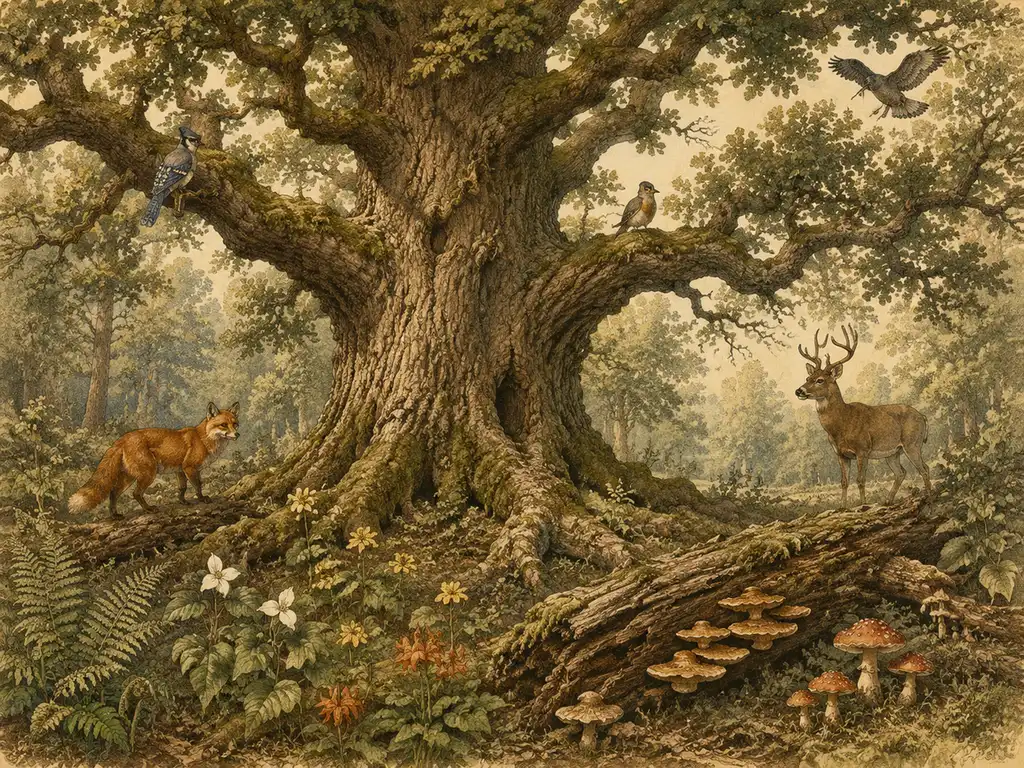
1. Ecosystem plate. The classic natural-history composition: one scene that arranges producers, consumers, and decomposers so the energy relationship reads at a glance. Vintage plates handled these as composed tableaux — every organism posed legibly, not scattered naturally.
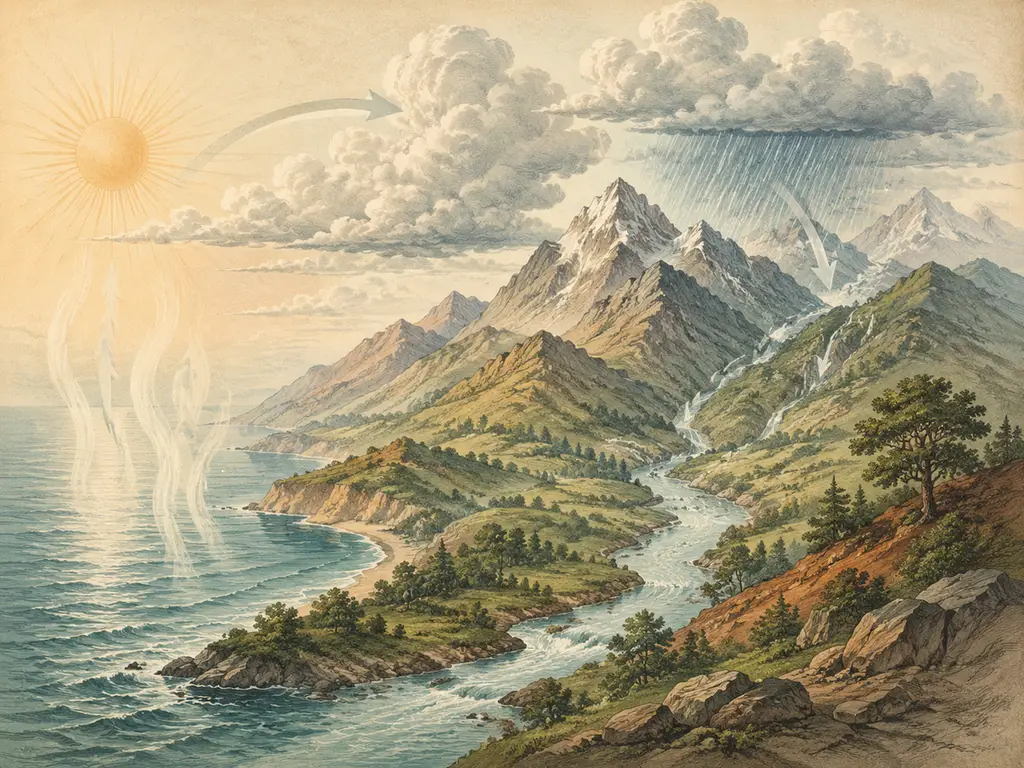
2. Process plate: the water cycle. Cycles were a staple of the era because a plate can show all stages at once — evaporation, condensation, precipitation, runoff — in a way a photograph never could. Arrows and labels carry the logic.
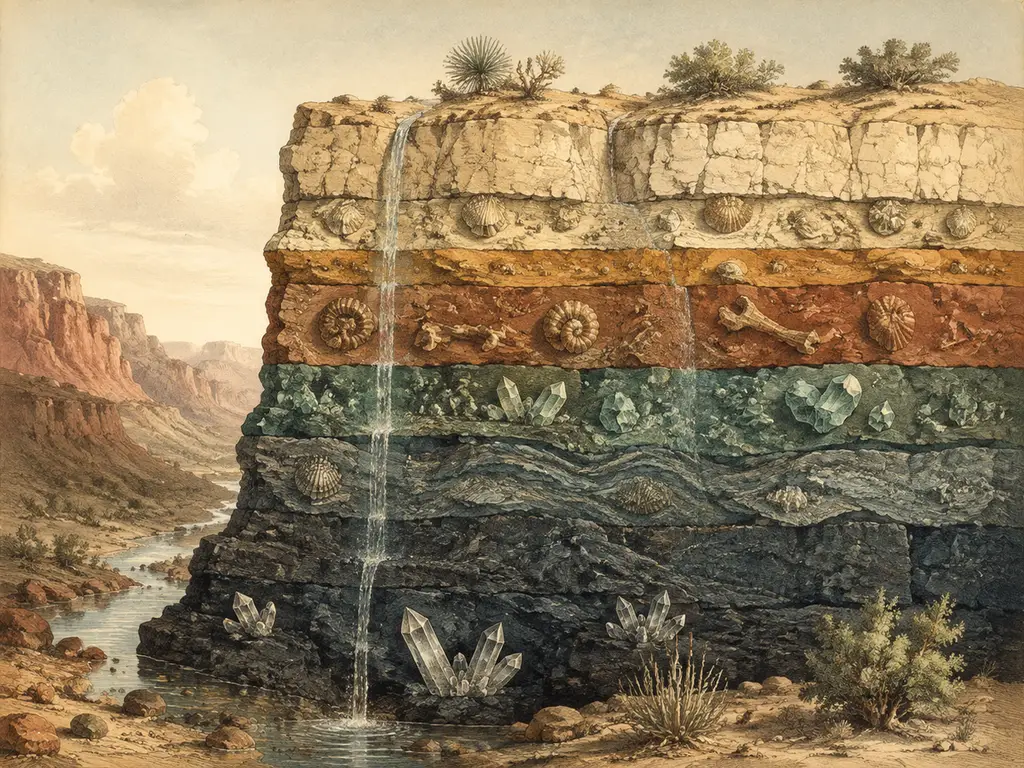
3. Geological cross-section. Strata plates stacked rock layers oldest to youngest with era names ruled alongside. The convention — layered bands, hairline boundaries, a numbered margin — is still how geology is drawn today, just with cleaner type.
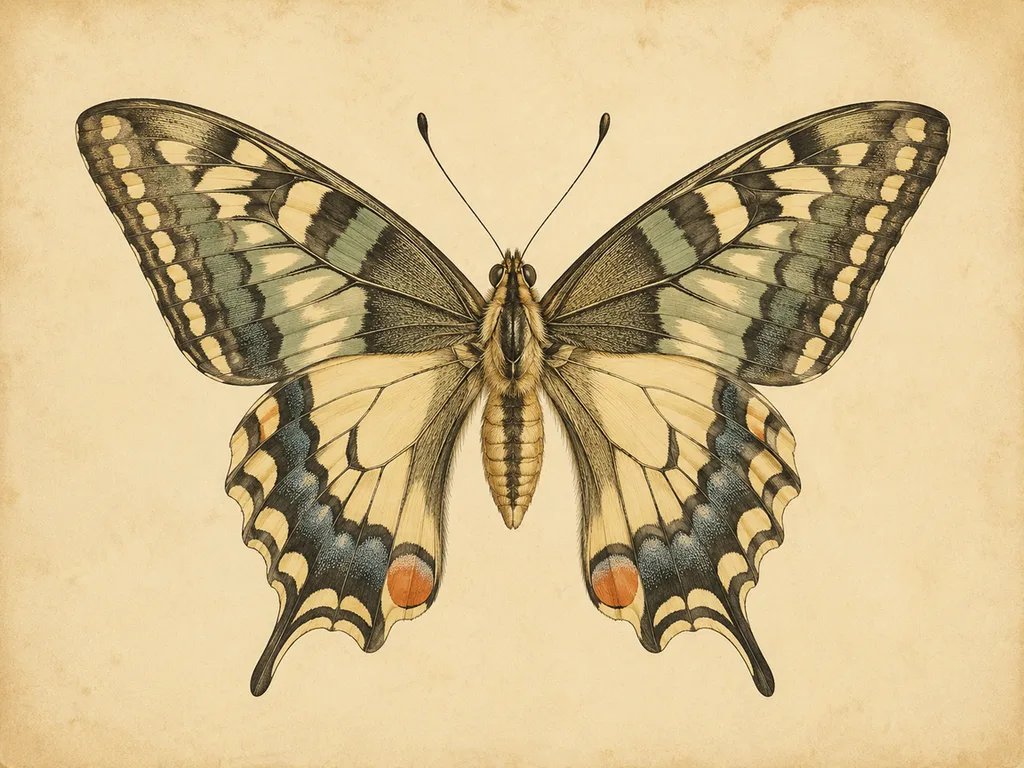
4. Zoological anatomy plate. A single specimen with its diagnostic parts named — the butterfly wing plate below labels forewing, hindwing, antennae, and body segments. This is the format of the great entomological folios, one species per sheet, wings spread.
5. Specimen engraving. The quietest kind of vintage plate: one bird or mammal rendered in crosshatched line, a habitat hint behind it, a Latin name in copperplate script beneath. No diagram, just close observation. These single-specimen sheets endure because they do one job perfectly — the binomial names the organism, the pose shows the diagnostic silhouette, and nothing else competes for attention. Modern field guides still borrow the format almost unchanged.
<!--IMG: 19th-century copperplate engraving of a heron wading in marsh grass, fine crosshatching, sepia tones, italic serif labels — vintage scientific illustration plate-->
6. Botanical plate with detail study. The botanical convention pairs the whole plant with dissections at the bottom edge — a magnified seed case, a dissected flower — each with its own small label. Two scales of documentation on one sheet: the habit drawing tells you where the species grows and how it stands, while the detail insets carry the identification characters a photograph would bury. It is the densest information-per-square-inch layout in the vintage tradition, and the hardest to fake without real structure behind it.
<!--IMG: vintage botanical plate of a fern frond with a magnified sori detail inset, engraving hatching, aged cream paper, italic serif labels-->
How to prompt vintage scientific illustration with GLMImage
The pattern that works: era + technique + subject with its parts + explicit labels + palette + finishing. Missing any one of those leaves the model guessing, and what it guesses is usually a modern flat style.
Concrete prompts, each ready for the scientific illustration generator:
- "19th-century copperplate engraving of a sunflower, showing ray florets, disk florets, stem and leaf; label each part in italic serif; fine parallel hatching, sepia tones on aged cream paper"
- "Vintage zoological plate: heron standing in marsh grass, engraved crosshatching, muted watercolor tint on the plumage, label each visible part, Latin name in copperplate script beneath"
- "Antique geological plate: strata cross-section from oldest to youngest, label each layer with its era, sepia ink, hairline leader lines, thin ruled border"
- "18th-century anatomical engraving of a human heart in section, label chambers and valves in italic serif, monochrome ink on aged paper, crosshatched tone"
- "Vintage astronomy plate: phases of the moon arranged in a circle, engraved line work, label each phase in copperplate italics, cream background"
A few habits improve the hit rate. Name the labels explicitly — the model labels what you list, in roughly the order you list it. Technique words change the line character: "copperplate engraving," "etching," and "lithograph" each produce different marks, and "stipple" gives you the dotted tonal look of stipple engravings. Ask for the paper, not just the ink — "aged cream paper" or "foxing at the edges" grounds the whole palette. And generate two or three variants before judging; the first plate is rarely the best-composed one. For the underlying prompt anatomy, the scientific illustration prompt guide breaks the formula down field by field.
One rule survives every tool: verify before you use it. The vintage style is decoration; the accuracy lives in the proportions, relationships, and labels. A beautiful plate with a subtly wrong label is the classic failure mode of AI generation in this style, and it is exactly as dangerous as it was in 1850.
Where vintage scientific illustration is used today
Prints and posters. The most common commercial use — framed botanical and anatomical plates sell steadily because the style matches interiors that modern flat design does not.
Editorial and book design. Science journalism, essay collections, and book interiors use the engraving look to signal craft and seriousness without a photo budget. A sepia plate also sits comfortably beside long-form text in a way a glossy render rarely does — it reads as an artifact rather than an advertisement.
Branding and packaging. Tea tins, botanical spirits, apothecary lines, and coffee roasters lean on sepia plates because the style implies ingredient-level care. (Check that your generated plates carry no license conflict before commercial use — with GLMImage, images you generate are yours to use.)
Education and museums. Field-guide aesthetics and exhibition graphics borrow the look because it reads as authoritative to viewers who have never opened a 19th-century folio.
The honest split: for decorative and editorial uses, style fidelity is the whole job, and a good prompt is enough. For teaching and reference uses, the vintage skin sits on top of the same accuracy requirements as any modern scientific illustration — labels checked, structures counted, relationships verified.
Try the scientific illustration generator — natural-history mode, first image free
FAQ
Why does vintage scientific illustration still look authoritative?
The style came from a production constraint — hatching because continuous tone was unprintable — and constraint reads as deliberateness. Fine, even line work and careful labeling signal that someone studied the subject slowly, which is exactly the impression a scientific plate wants to give.
Can AI reproduce the engraving style well?
Yes — hatching, sepia palettes, and composed layouts prompt reliably, and text-heavy labels render well because GLM-Image was built with a dedicated Glyph Encoder for in-image text (91.16% on the CVTG-2K text-rendering benchmark). The risk is not the style but the science: verify every label and proportion before use.
What is the difference between vintage and modern scientific illustration?
Technique and palette, not purpose. Both must be accurate and labeled. Vintage uses engraving hatching and sepia tones; modern work uses flat color, clean sans-serif labels, or 3D rendering. Style is decoration; accuracy is the job in both.
Where can I see original vintage plates?
Digitized collections are the fastest route — the Biodiversity Heritage Library hosts millions of scanned plates from natural-history literature, and most major museum libraries have browsable digitized folios. Studying the originals is the best prompt research you can do.
Sources
- What is natural history illustration?
- Natural history vintage illustration guide
- Scientific illustration prompt guide
- Biodiversity Heritage Library — biodiversitylibrary.org