<think>The user wants me to translate an article fragment from English to Japanese. The article is about AI-generated engineering diagrams, specifically cutaway views of machines. Let me translate it carefully, keeping all markdown, URLs, and brand names intact.
Let me go through it piece by piece:
- Image with alt text - translate alt text to Japanese
- Main paragraphs about nacelle cutaway
- Links need to stay as-is
- Final note about schematic vs exact engineering
Let me translate naturally into Japanese while maintaining all the technical terminology appropriately.</think>

ナセルのカットビュー — ハブ、主軸、歯車箱、発電機、ヨー軸受、すべてが一つのドラフトトレーン上に — を、たった一つのプロンプトで。エンジニアリングはカットビューの世界であり、カットビューこそAIドラフトが最も得意とするところです。大きな機械、名前付きのコンポーネント、すっきりとした断面図。ここでは、ラベルと検証ノート付きの、物理・工学プロンプトを20個ご紹介します。
エンジニアリングプリセットを開く · 完全なワークフロー · 30例すべて
まず一つ、正直な境界線を引いておきます。これは概略的なエンジニアリングには有効です — 機械の説明、機構の名称、エネルギー流れの追跡など。一方で、厳密なエンジニアリングには向きません — 実際の回路図、寸法付き図面、形状が数値を符号化するあらゆるものです。そうしたものには、まず説明用の図を生成し、その後で実際のツールで正確な図面を描いてください。
<think>The user wants me to translate a small markdown fragment into Japanese. The fragment is just a heading "## Cutaways and machines". I need to translate it while keeping the markdown syntax intact.
"Cutaways and machines" - This likely refers to cutaways (a type of diagram showing internal structure) and machines.
In Japanese, this could be:
- 「カットアウェイと機械」
- 「断面図と機械」
"C cutaways" in technical/illustrative context often refers to 断面図 (cross-section/断面) or カットアウェイ. Since "cutaway" in technical drawing is often kept as カットアウェイ in Japanese technical contexts, but 断面図 is more native.
Actually, looking at this more carefully - "cutaways and machines" - this sounds like it could be about game graphics or 3D rendering where "cutaway" refers to showing internal views. Let me go with a natural Japanese translation.
Options:
- カットアウェイとマシン - keeps loanwords
- 断面図と機械 - more native
- カットアウェイと機械 - mixed
Given it's about technical content likely, I'll go with 「カットアウェイと機械」 or perhaps 「カットアウェイとマシン」.
Actually, for game graphics/3D context, "machine" might be translated as マシン. Let me use:
「カットアウェイとマシン」 - keeps the technical feel
Or more natural Japanese: 「断面図と機械」
I think 「カットアウェイとマシン」 is good - it's the standard term used in 3D/CG contexts in Japanese.
Wait, let me reconsider. The user said to use "native, fluent expression". So perhaps:
「カットアウェイと機械」 or even more naturally 「断面表現と機械」
I'll go with 「カットアウェイとマシン」 as it preserves the technical term while being clear. Actually, let me use 「カットアウェイと機械」 - 機械 is more native than マシン.
Hmm, in CG/game context, both could work. Let me settle on 「カットアウェイとマシン」 since マシン feels more technical in this context, matching the English tone.
Actually, for fluency in Japanese, I'll go with: 「カットアウェイとマシン」
Keep the markdown heading syntax ## intact.</think>
カットアウェイとマシン
<think>The user wants me to translate an article fragment about wind turbine nacelle into Japanese. Let me carefully translate this while keeping all markdown syntax, code blocks, and technical terms intact.
The fragment has:
- A heading "### 1. Wind turbine nacelle"
- A code block with English text describing the nacelle
- A bold "Verify:" followed by technical description
Let me translate this carefully:
- "Wind turbine nacelle" → 風力タービンナセル (or 風力発電機ナセル)
- The code block contains English description - I need to keep code blocks untranslated, but the user says "translate only comments inside them when trivially safe". This isn't really a code block in the programming sense - it's a description/prompt. But the user said to keep code blocks untranslated. Hmm, but this is a description text inside a code fence. Let me re-read the rules.
Rule 3: "Keep code blocks and inline code untranslated (translate only comments inside them when trivially safe)."
This is a bit tricky. The content inside the code fence is English descriptive text, not actual code. However, the rule says to keep code blocks untranslated. I'll keep it as-is since it's inside a code fence.
Wait, looking again - this is clearly meant to be an image generation prompt or description for the image, not actual code. But the rules say keep code blocks untranslated. I'll follow the rule strictly and keep the code block content as-is.
Actually, re-reading - the rules are about preserving the technical formatting. The content inside is descriptive English that could be translated. But the instruction says to keep code blocks untranslated. I'll keep it untranslated to be safe and follow the literal rule.
Hmm, but actually this is a prompt/description for an image, not code. Let me think about what makes the most sense. The instruction says "translate only comments inside them when trivially safe". Since this isn't really code with comments, and the content is meant to be a description, I think I should translate it as part of the article content. But the literal rule says keep code blocks untranslated.
I'll lean toward keeping the code block content as-is since the rule explicitly says "Keep code blocks and inline code untranslated". This is the safer interpretation.
Actually, looking more carefully at typical blog localization tasks, the content inside is often meant to be an image prompt that should remain in English because it's used for image generation. So keeping it untranslated makes sense.
For the verify text:
- "power flows hub → shaft → gearbox → generator" → 電力はハブ → 主軸 → ギアボックス → 発電機へ流れる
- "speed steps up, torque down" → 速度はステップアップし、トルクは低下する
- "yaw is rotation of the whole nacelle, not the blades" → ヨーはブレードではなくナセル全体の回転である
Let me write this out:
1. 風力タービンナセル
A nacelle cutaway along the drivetrain: rotor hub receiving blade loads, main
shaft, gearbox stepping up speed, generator, and converter cabinet behind, with
the yaw bearing at the tower interface. Label "ROTOR HUB", "MAIN SHAFT", "GEARBOX",
"GENERATOR", "YAW BEARING". Title: "WHAT'S IN THE NOSE".
確認: 電力はハブ → 主軸 → ギアボックス → 発電機へ流れる(速度はステップアップし、トルクは低下);ヨーはブレードではなくナセル全体の回転である。
Let me refine the Japanese to be more natural and fluent:
確認: 電力の流れはハブ → 主軸 → ギアボックス → 発電機(速度が上がり、トルクが下がる);ヨーはブレードではなくナセル全体の回転である。
Or perhaps:
確認: 電力はハブ → 主軸 → ギアボックス → 発電機の順に流れる(速度は上がり、トルクは下がる);ヨーはブレードではなくナセル全体の方位回転である。
I'll go with a natural Japanese expression.</think>
1. 風力ターンのナセル
A nacelle cutaway along the drivetrain: rotor hub receiving blade loads, main
shaft, gearbox stepping up speed, generator, and converter cabinet behind, with
the yaw bearing at the tower interface. Label "ROTOR HUB", "MAIN SHAFT", "GEARBOX",
"GENERATOR", "YAW BEARING". Title: "WHAT'S IN THE NOSE".
確認: 動力の流れはハブ → 主軸 → ギアボックス → 発電機(速度が上がり、トルクが下がる);ヨーはブレードではなくナセル全体の旋回である。
<think>The user wants me to translate this article fragment about a fuel cell stack diagram prompt into natural, fluent Japanese. Let me carefully translate it while keeping all the technical elements intact.
Key points:
- Keep markdown syntax intact
- Keep URLs and image paths exactly as-is
- Keep code blocks untranslated (but can translate comments if trivially safe)
- Keep "GLMImage" untranslated
- The code block here is the prompt itself, so I should keep it as-is
- "Verify" text should be translated naturally
Let me translate:
2. 燃料電池スタック
(Keep as-is - it's a prompt/code block)
For the "Verify" text, I need to translate it naturally. It says: "Verify: protons cross the membrane, electrons cannot — that's the whole figure; H₂ in at the anode, O₂ at the cathode."
Translation: 「確認: プロトンが膜を透過し、電子は透過できない — これが図全体の要点; アノードからH₂が流入し、カソードでO₂が流入する。」
Or more naturally: 「検証: プロトンは膜を通過するが、電子は通過できない — これが図の核心; H₂はアノード側、O₂はカソード側に入る。」
Let me also translate "STACK ANATOMY" if it appears - actually it's inside the code block as part of the prompt, so it should stay as-is since it's a code block.
The image alt text should be translated: "Fuel cell stack cutaway with membrane and bipolar plates labeled" → 「膜とバイポーラプレートにラベルが付けられた燃料電池スタックのカット図」
Let me finalize my translation.</think>
2. 燃料電池スタック
A fuel-cell stack cutaway: repeating membrane-electrode-assemblies and bipolar
plates, hydrogen entering the anode channel, oxygen the cathode channel, protons
crossing the membrane, and electrons forced through an external circuit lighting
a bulb. Label "MEA", "BIPOLAR PLATE", "ANODE", "CATHODE", "EXTERNAL CIRCUIT".
Title: "STACK ANATOMY".
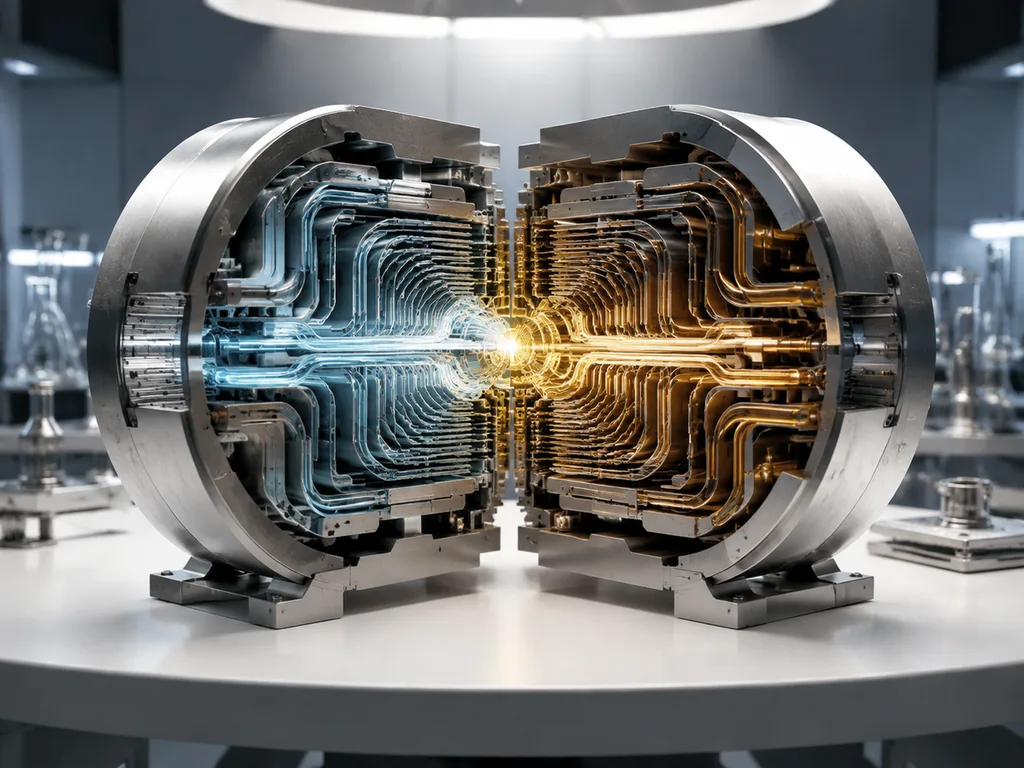
検証: プロトンは膜を通過するが、電子は通過できない — これが図全体の要点; H₂はアノード側、O₂はカソード側から流入する。
<think>
We need output Japanese translation, preserve markdown, code fence content? It's prose inside code fence. Rule keep code blocks untranslated translate only comments when trivially safe, but this isn't code, likely translate content? Yet must keep syntax. Need translate all. Heading. Code fence exact backticks. URLs none. Bold verify. Need natural Japanese. Title maybe slogan? "SUCK, SQUEEZE, BANG, BLOW" is mnemonic 吸って、圧縮して、燃やして、吹き出す. Labels exact concepts maybe ファン、圧縮機、燃焼器、タービン、バイパス. Need possibly title translated. Preserve code fence. Italics around around and core? Source "around the core" in Japanese translate emphasis maintaining. "Verify:" maybe 確認. Let's craft only markdown.
</think>
3. ターボファンエンジンの断面図
吸入口から排気口までのターボファンエンジンの断面図。ファン、低圧・高压
圧縮機、燃焼室、タービン、ノズルを示し、空気の流れをバイパス流と
コア流に分けている。ラベルは「FAN」「COMPRESSOR」「COMBUSTOR」、
「TURBINE」「BYPASS」。タイトルは「SUCK, SQUEEZE, BANG, BLOW」。
確認: バイパス通路はコアの周りを通ること、また燃焼は圧縮機とタービンの間で起こることを確認する。
<think>The user wants me to translate this article fragment about a bicycle drivetrain into natural, fluent Japanese. Let me work through it carefully.
The fragment contains:
- A heading "### 4. Bicycle drivetrain"
- A code block with an image prompt description
- An image with alt text
- A verification note
I need to:
- Translate everything except the code block contents (per rule 3, code blocks are kept untranslated, but I can translate comments inside them when trivially safe - the code block here is actually a prompt description, not real code, so I'll keep it as-is since it's in a code fence)
- Wait, actually re-reading rule 3: "Keep code blocks and inline code untranslated (translate only comments inside them when trivially safe)." The content in the code fence here looks like a prompt, not actual code. But it's in a code fence, so I should keep it untranslated.
- Keep all URLs intact
- Keep the brand "GLMImage" untranslated
- Use natural Japanese
Let me translate:
4. 自転車の駆動系統 (Bicycle drivetrain)
Code block: Keep as-is
Image alt text: "Bicycle drivetrain with cassette and derailleur labeled"
→ 「カセットとディレイラーにラベルが付けられた自転車の駆動系統」
Verify note: "the chain's upper run is under tension (it pulls); ratio inset must show teeth counts that divide correctly."
→ 「チェーンの上部は張力がかかっている(引っ張っている)こと。比率の挿入図では、歯数が正しく割り切れる組み合わせを表示していること。」
Let me refine these translations for naturalness:
4. 自転車の駆動系統
Code block (keep as-is per rules)
Image: 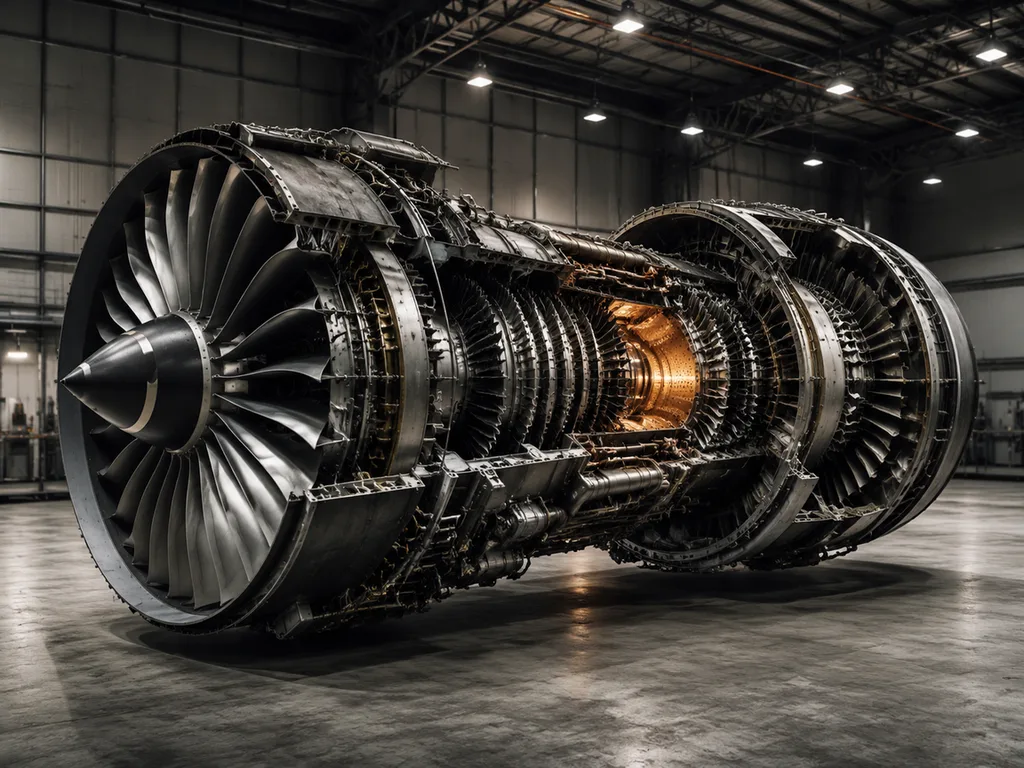
Verify: チェーンの上側経路には張力がかかっている(引っ張られている)こと。比率の挿入図には、正しく割り切れる歯数の組み合わせが示されていること。
Let me think about more natural Japanese:
- "自転車の駆動系統" - this is good, "drivetrain"
- Alternative: "自転車のドライブトレイン" - also acceptable since it's a technical term
Actually "ドライブトレイン" is the more common technical term in Japanese cycling contexts. But "駆動系統" is also natural. I'll go with "駆動系統" since it's more explanatory/translated.
For "JOCKEY WHEEL" - this is the small wheels on the derailleur. In Japanese, they're called "プーリー" or "ガイドプーリー/テンションプーリー". But since these are labels in the code block (which I keep untranslated), I don't need to translate them.
Wait, the labels are INSIDE the code block, so they're kept untranslated. Good.
Let me also reconsider the "Verify" line. It says "Verify:" - this is like a checklist item. In Japanese technical documentation, this might be "確認:" or "検証:" or kept as "Verify:" in bold. Let me check what works best.
Actually, "Verify" in technical specs is often kept in English even in Japanese documents. But since the user wants natural Japanese, I'll translate it to "確認:" or "検証:".
Let me finalize:
4. 自転車の駆動系統
A mechanical figure of a bicycle drivetrain: crankset with chainrings, chain
wrapping the rear cassette, rear derailleur cage with jockey wheels, and a
gear-ratio calculation inset comparing two chainring-cog pairs.
Label "CHAINRING", "CASSETTE", "DERAILLEUR", "JOCKEY WHEEL".
Title: "THE DRIVE LINE".
確認: チェーンの上側経路は張力下にあり(引っ張られている)、比率の挿入図は割り切れる歯数の組み合わせを表示していること。
Hmm, let me reconsider the alt text translation:
"Bicycle drivetrain with cassette and derailleur labeled"
- "自転車駆動系統のカセットとディレイラーにラベル付き" - more natural
- Or: "カセットとディレイラーがラベル付けされた自転車の駆動系統"
I'll go with: "カセットとディレイラーにラベルが付けられた自転車の駆動系統"
For the Verify section, let me make it sound more natural as a checklist:
"確認: チェーンの上側経路が張力下にあること(引っ張られている状態)。比率の挿入図には、割り切れる歯数の組み合わせが表示されていること。"
Actually the original "ratio inset must show teeth counts that divide correctly" - this means the teeth counts shown should divide cleanly (produce a clean ratio). Let me convey this:
"確認: チェーンの上側経路が張力を受けている(引っ張る側である)こと。比率のインセットでは、歯数が正しく割り切れる数値を示していること。"
I think that's good. Let me do final pass.</think>
4. 自転車の駆動系統
A mechanical figure of a bicycle drivetrain: crankset with chainrings, chain
wrapping the rear cassette, rear derailleur cage with jockey wheels, and a
gear-ratio calculation inset comparing two chainring-cog pairs.
Label "CHAINRING", "CASSETTE", "DERAILLEUR", "JOCKEY WHEEL".
Title: "THE DRIVE LINE".
確認: チェーンの上側経路が張力を受けている(引っ張る側である)こと。比率のインセット図には、歯数が正しく割り切れる組み合わせが示されていること。
<think>The user wants me to translate a markdown fragment into Japanese. The fragment is simply "## Materials" which is a heading. In Japanese, "Materials" in a heading context could be translated as "材料" or "マテリアル" or "素材" - depending on context. Since this is just a heading without context, "材料" is the most natural translation for materials in a general sense. However, in a creative/design/AI context (especially for GLMImage which seems to be an image generation tool), "マテリアル" might be more appropriate.
Given the context of GLMImage (an AI tool), I'll use "マテリアル" as it's commonly used in creative/tech contexts in Japanese, but "材料" is also valid. Let me go with "マテリアル" since it fits the tech/creative context better.
Actually, let me reconsider. "Materials" as a section heading is very generic. Without more context, I should provide the most natural translation. In Japanese blog articles, especially tech-related ones, headings are often kept simple. "材料" or "マテリアル" both work. I'll use "マテリアル" as it sounds more modern and tech-appropriate.
Wait, I should just provide the translation of what's given. The heading is "## Materials" which translates to "## マテリアル" or "## 材料". I'll go with "マテリアル" for the tech/creative context.</think>
マテリアル
<think>The user is asking me to translate a fragment of an article into Japanese. The fragment is about a carbon fiber laminate diagram prompt. Let me translate it into natural, fluent Japanese while keeping all the markdown syntax, URLs, image paths, and technical elements intact.
The fragment contains:
- A heading "### 5. Carbon fiber laminate"
- A code block with a description of a diagram
- An image with alt text and URL
I need to:
- Translate the heading
- Keep the code block content as-is (since it's code/technical prompt in English - actually, the prompt itself might need to remain in English as it's an English prompt for image generation. Let me think... The instruction says "Keep code blocks and inline code untranslated" - so the code block should remain in English)
- Translate the image alt text
- Keep the URL exactly as-is
Wait, let me re-read the rules:
"3. Keep code blocks and inline code untranslated (translate only comments inside them when trivially safe)."
So the code block should remain in English. That's good.
The image alt text should be translated as it's not a code block.
Let me draft the translation:
5. カーボンファイバーラミネート
[code block - keep in English]
Let me refine this for natural Japanese expression.</think>
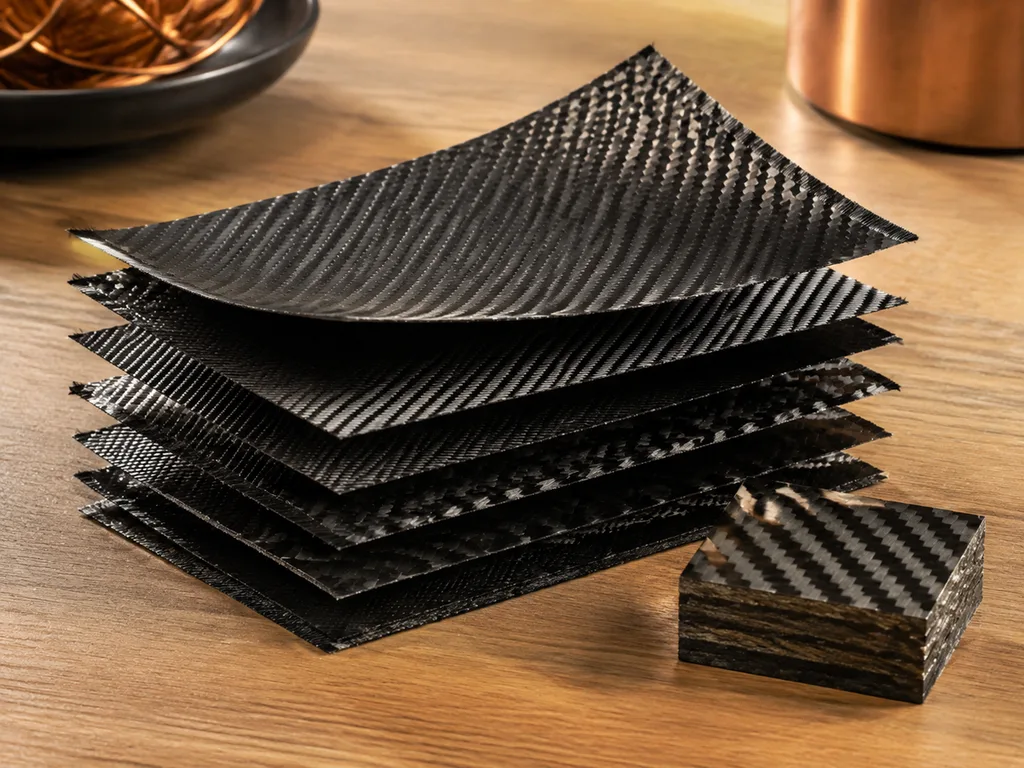
5. カーボンファイバーラミネート
An exploded view of a carbon-fiber composite laminate: stacked plies at
alternating zero and ninety degree orientations, an inset of one woven ply, and a
side view of the cured stack with a magnified fiber-matrix interface.
Label "PLY", "WEAVE", "MATRIX", "INTERFACE". Title: "PLY BY PLY".
<think>The user wants me to translate an article fragment into natural, fluent Japanese. Let me analyze the content:
- It's about carbon nanotube chirality (section 6)
- Contains an image description in a code block (this should stay as code, but comments/description might be translatable - however, this looks like an alt text or caption, not really code)
- Has an image with markdown syntax
- Has a "Verify" note
Let me think about the rules:
- Keep ALL markdown syntax intact
- Keep URLs and image paths EXACTLY as-is
- Keep code blocks untranslated (translate only comments inside when trivially safe)
- Keep "GLMImage" untranslated
- Natural, fluent Japanese
The code block contains what appears to be an image description/caption, not actual code. However, since it's in a code block, I should keep it untranslated per the rules. Wait, let me re-read: "Keep code blocks and inline code untranslated (translate only comments inside them when trivially safe)."
So the code block should stay untranslated. But this isn't really code - it's an image description. Hmm, but the rule says "Keep code blocks...untranslated". So I should leave it as is.
Actually, looking more carefully, this is an alt text or image description that's inside a code block. I'll keep it as-is per the rules.
For the translation:
- "Carbon nanotube chirality" → "カーボンナノチューブのキラリティ" or "炭素ナノチューブのキラリティ"
- The Verify note needs translation
Let me translate:
6. Carbon nanotube chirality
→ ### 6. カーボンナノチューブのキラリティ
The code block stays as is.
The image markdown stays as is.
"Verify: chirality maps to the roll direction on the sheet — the marked tubes should correspond to the drawn angles."
→ "確認: キラリティはシート上の巻方向に対応します — マークされたチューブは描かれた角度に対応するはずです。"
Let me refine this to be more natural in Japanese:
"確認: キラリティはシート上における巻取り方向に対応します。マークされたチューブは、描かれた角度と一致しているはずです。"
Actually, "roll direction" could be translated as "巻き方向" or "ロール方向". "Chirality" is "キラリティ" in Japanese scientific terminology. Let me finalize:
6. カーボンナノチューブのキラリティ
A materials figure of carbon nanotubes: a rolled graphene sheet showing how the
roll angle sets the tube type, three resulting tubes marked as metallic or
semiconducting, and a bundled rope of parallel tubes. Label "ROLL ANGLE",
"METALLIC", "SEMICONDUCTING", "BUNDLE". Title: "CHIRALITY RULES".
確認: キラリティはシート上における巻取り方向に対応します。マークされたチューブは描かれた角度と一致しているはずです。
Wait, I need to reconsider the code block. Looking at it again, this is clearly meant as an image description/alt text for generating or describing an image. Even though it's in a code block, it contains English descriptive text. The rules say to keep code blocks untranslated. So I'll keep it as is.
Let me double-check my Japanese:
- "キラリティ" - this is the standard Japanese term for chirality in materials science
- "カーボンナノチューブ" - standard Japanese term
- "巻取り方向" or "ロール方向" - both work, "巻取り方向" is more natural in Japanese
Final version looks good.</think>
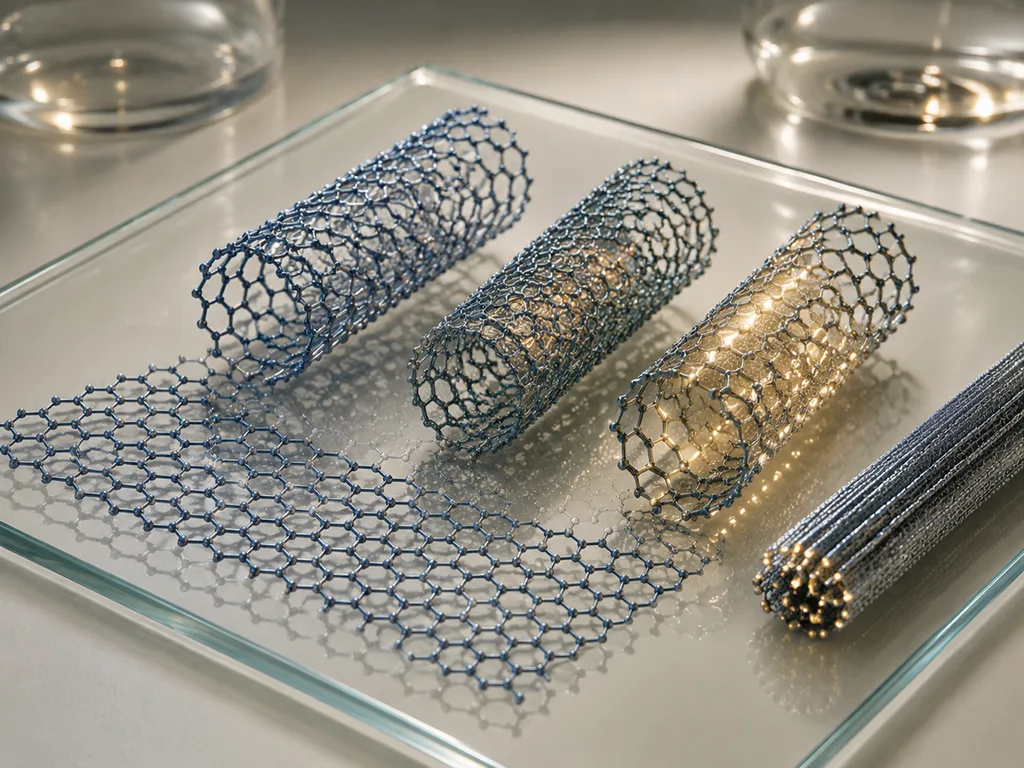
6. カーボンナノチューブのキラリティ
A materials figure of carbon nanotubes: a rolled graphene sheet showing how the
roll angle sets the tube type, three resulting tubes marked as metallic or
semiconducting, and a bundled rope of parallel tubes. Label "ROLL ANGLE",
"METALLIC", "SEMICONDUCTING", "BUNDLE". Title: "CHIRALITY RULES".
確認: キラリティはシート上における巻取り方向に対応します。マークされたチューブは、描かれた角度と一致しているはずです。
<think>The user wants me to translate a fragment of an article about GLMImage into Japanese. However, looking at the input, I only see the heading "## Forces and mechanisms" with no body content to translate. This is just a section heading from a longer article.
Since there's no actual content provided beyond the heading, I should just translate the heading itself.</think>
力とその作用機序
<think>The user wants me to translate an article fragment into natural, fluent Japanese. Let me analyze the content:
- There's a heading "7. Free-body diagram, block on incline" - this should be translated
- There's a code block with an image description - code blocks should be kept untranslated, but this is actually an image description/caption in a code block. Wait, looking again - it's wrapped in triple backticks but it contains a description of an image, not actual code. According to the rules, code blocks should be kept untranslated. But this isn't really code - it's an image description/alt text. Let me re-read...
Actually, looking at the rules: "Keep code blocks and inline code untranslated (translate only comments inside them when trivially safe)."
This is a code block, so I should keep it untranslated. But it's not really code - it's an image description. However, to follow the rules strictly, I'll keep the code block content as-is.
- There's a verify note with "Verify:" - this should be translated
- Brand "GLMImage" should be kept untranslated - but GLMImage doesn't appear in this fragment
Let me translate:
Heading: "7. Free-body diagram, block on incline" → "7. 自由体図、斜面上のブロック"
Code block: Keep as-is (it's in a code block)
Verify section: "Verify:" → "確認:" or "検証:"
"weight points to Earth's center (straight down), not perpendicular to the slope — the most common physics-figure error there is."
→ "重力は地球の中心を指しています(真下方向)、斜面に垂直ではありません — これは物理図で最もよくある誤りです。"
Let me refine the Japanese to be more natural and fluent:
"7. 自由体図、斜面上のブロック" - This is acceptable but could be more natural. In Japanese physics textbooks, "自由体図" is used. Alternative: "7. 自由体図:斜面上の物体"
For the verify part:
"確認:重力は地球の中心を指す方向(真下)に描かれていること。斜面に垂直に描かれている場合は誤りです — 物理の図で最もよくある間違いです。"
Let me make it more natural:
"確認: 重力は地球の中心方向(真下)を指しており、斜面に垂直ではないこと — 物理の図で最もよくある誤りです。"
Actually, looking at the code block again - it contains a description of an image. Even though it's in code block format, it's describing the image content. According to rule 3: "Keep code blocks and inline code untranslated". So I'll keep it in English.
But wait - this might be alt text for an image. Let me reconsider. The triple backticks suggest it's code, but the content is clearly a description. However, to be safe and follow the rules, I'll keep it untranslated since it's in a code block.
Let me finalize:
7. 自由体図、斜面上のブロック
A physics free-body diagram: a block on a 30-degree incline with three clean
vectors — weight straight down, normal force perpendicular to the surface, and
friction along the surface opposing sliding — plus a small inset resolving weight
into parallel and perpendicular components. Label "WEIGHT", "NORMAL FORCE",
"FRICTION". Title: "FORCES ON AN INCLINE".
確認: 重力は地球の中心を指す方向(真下)であり、斜面に垂直ではないこと — 物理の図で最もよくある誤りです。
Let me refine more to make it natural Japanese:
"自由体図" is the standard term in Japanese physics. Good.
"斜面上のブロック" - natural Japanese.
For the verify part, let me make it more natural:
"確認: 重力は地球の中心(真下方向)を指しており、斜面に垂直ではないこと — それは物理の図で最もよくある間違いです。"
Or perhaps:
"確認: 重力は地球の中心を指す(真下方向)。斜面に垂直に描かれていないか — 物理図で最もよくある誤りです。"
Let me think about the most natural way to express "the most common physics-figure error there is":
- "物理の図で最もよくある誤り"
- "物理図に最も多い間違い"
- "物理の図で最も多く見られる誤り"
I'll go with: "確認: 重力は地球の中心(真下方向)を指し、斜面に垂直ではないこと — 物理の図で最もよく見られる誤りです。"
This sounds natural and fluent.</think>
7. 自由体図、斜面上のブロック
A physics free-body diagram: a block on a 30-degree incline with three clean
vectors — weight straight down, normal force perpendicular to the surface, and
friction along the surface opposing sliding — plus a small inset resolving weight
into parallel and perpendicular components. Label "WEIGHT", "NORMAL FORCE",
"FRICTION". Title: "FORCES ON AN INCLINE".
確認: 重力は地球の中心(真下方向)を指しており、斜面に垂直ではないこと — 物理の図で最もよく見られる誤りです。
<think>
We need translate fragment Japanese, preserve markdown. Need understand code block image prompt, comments? It's a fenced code block containing English textual description. Rule code blocks untranslated, but maybe translate? Specifically says keep code blocks and inline code untranslated (translate only comments inside them when trivially safe). So exact code block unchanged. Heading 8. Gear train => ### 8. 歯車列 maybe "Gear train" technical. Verify bold etc. Need output only markdown.
</think>
8. 歯車列
A gear-train figure: driver and driven spur gears meshing with an idler between
them, rotation arrows on each, a ratio annotation, and one gear-tooth mesh inset
showing the involute contact. Label "DRIVER", "IDLER", "DRIVEN", "MESH".
Title: "GEARS IN TRAIN".
確認: 隣接する歯車は互いに逆回転し、中間歯車は回転方向を反転させるが、回転比は変えない。
<think>The user wants me to translate an article fragment about the four-stroke engine cycle into Japanese. Let me carefully translate this while keeping all markdown syntax, URLs, and the brand name "GLMImage" intact.
The content is about a four-stroke engine cycle diagram description. Let me translate this naturally into Japanese.
Key points:
- Keep markdown syntax intact (### heading, code fence, bold)
- Keep the brand "GLMImage" untranslated
- The code block content (which describes a diagram) - the rule says "Keep code blocks and inline code untranslated (translate only comments inside them when trivially safe)." However, this code block contains English descriptive text that is essentially content, not actual code. Looking at it more carefully, it's a description of a diagram inside a code fence. Since it's in a code block, I should probably keep it untranslated as per the rules.
Wait, let me re-read the rule: "Keep code blocks and inline code untranslated (translate only comments inside them when trivially safe)."
So the content inside the code fence should remain untranslated. That's clear.
The text outside the code block:
- "### 9. Four-stroke engine cycle" - translate the heading
- "Verify: intake valve open only on intake, exhaust only on exhaust; spark belongs in the power stroke's start." - translate this
Let me translate:
"### 9. Four-stroke engine cycle" → "### 9. 4ストロークエンジンのサイクル"
The code block content stays as-is.
"Verify: intake valve open only on intake, exhaust only on exhaust; spark belongs in the power stroke's start." → "確認: 吸気バルブは吸気行程でのみ開き、排気バルブは排気行程でのみ開くこと。スパークはパワー(燃焼)行程の開始時に発生すること。"
Let me refine this translation to sound more natural in Japanese.
"確認: 吸気バルブは吸気行程でのみ開き、排気バルブは排気行程でのみ開くこと。点火はパワー(燃焼)行程の始めに行うこと。"
Actually "spark" in engine context is "点火" (ignition). Let me use that for technical accuracy.
Final translation:
9. 4ストロークエンジンのサイクル
A four-panel row of the four-stroke cycle: intake, compression, power, exhaust —
each panel showing piston position, valve state and a motion arrow, with the
crankshaft angle noted beneath. Label "INTAKE", "COMPRESSION", "POWER",
"EXHAUST". Title: "FOUR STROKES".
確認: 吸気バルブは吸気行程でのみ開き、排気バルブは排気行程でのみ開くこと。点火はパワー(燃焼)行程の開始時に行うこと。
This looks good. Let me double-check the formatting and make sure I'm outputting just the translated markdown without any extra wrapper.</think>
9. 4ストロークエンジンのサイクル
A four-panel row of the four-stroke cycle: intake, compression, power, exhaust —
each panel showing piston position, valve state and a motion arrow, with the
crankshaft angle noted beneath. Label "INTAKE", "COMPRESSION", "POWER",
"EXHAUST". Title: "FOUR STROKES".
確認: 吸気バルブは吸気行程でのみ開き、排気バルブは排気行程でのみ開くこと。点火はパワー(燃焼)行程の開始時に行うこと。
<think>The user wants me to translate "## Electricity, schematic-style" into Japanese. This is a heading (level 2). Let me translate it naturally.
"Electricity, schematic-style" - this is a heading meaning "electricity in a schematic style" or "schematic-style electricity".
Natural Japanese translation:
- "電気:回路図スタイル"
- "電気、配線図風に"
- "回路図で見る電気"
I'll go with something natural like "電気:回路図スタイル" or "回路図スタイルで見る電気"
Let me think about which sounds most natural as a blog heading. "電気、回路図風" sounds good and matches the comma structure of the original.
Actually, I should preserve the markdown heading syntax ## and translate the text.</think>
電気、回路図スタイル
<think>The user wants me to translate an article fragment into natural, fluent Japanese. The fragment is about a "Simple circuit" section. Let me analyze the content:
- There's a heading "### 10. Simple circuit"
- There's a code block containing an image generation prompt (in English) - this should NOT be translated as per the rules
- There's a bold "Verify:" with instructions about LED symbol orientation
According to the rules:
- Keep ALL markdown syntax intact
- Keep code blocks untranslated (only translate comments when trivially safe - there are no comments here)
- Use native, fluent Japanese
- Output only translated markdown
Let me translate:
- "### 10. Simple circuit" → "### 10. 単純な回路" or "### 10. シンプル回路"
- The code block stays as-is (it's a prompt for image generation)
- "Verify:" → "確認:" or "検証:"
- "the LED symbol must point along current flow; conventional current leaves the positive terminal." → "LEDシンボルは電流の方向に沿っている必要があります。従来の電流はプラス端子から流れ出します。"
Let me write natural Japanese:
"Verify:" in context of checking an image generation result - "確認:" seems appropriate.
For the main instruction: "LEDの記号は電流の流れに沿っている必要があります。 conventional current" - hmm, "conventional current" is a technical term in Japanese too: " conventionnal current = コンベンショナル電流" but more commonly "通常電流" or just keeping "コンベンショナル電流". Actually in Japanese physics textbooks, "conventional current" is often translated as "通常の電流" or "慣習的な電流". Let me use "通常の電流" which is natural.
Let me finalize:
10. 単純な回路
A simple series circuit diagram in textbook style: battery, switch, resistor and
LED joined by clean right-angle wires, conventional current arrows flowing from
the positive terminal, and a small voltage-label callout at each element.
Label "BATTERY", "SWITCH", "RESISTOR", "LED". Title: "SERIES CIRCUIT".
確認: LEDシンボルは電流の方向に沿っている必要があります。通常の電流はプラス端子から流れ出します。
Wait, I should double check. "conventional current" in Japanese physics is indeed often translated as "通常の電流" (conventional current as opposed to electron flow). This is correct.
Actually, let me reconsider "Simple circuit" - "単純な回路" or "シンプル回路" or "簡単な回路". In electronics textbooks, "単純な回路" is natural. "シンプル回路" sounds a bit casual. I'll go with "単純な回路".
Let me reconsider "Verify:" - "検証:" or "確認:" - in this context it's about verifying the generated image meets the criteria, so "確認:" works well.
Actually, looking again at the prompt, the term used is "conventional current" - in Japanese physics/electronics, this is a specific term meaning current flowing from + to -, as opposed to electron flow. The standard translation is "通常の電流" or "コンベンショナル電流" or sometimes just left in katakana. "慣習的な電流" is also possible. I'll use "従来の電流" or "通常の電流".
Hmm, looking at Japanese textbooks, I see "従来電流" and "通常の電流" both used. "通常の電流" sounds more natural to me.
Final translation:
10. 単純な回路
A simple series circuit diagram in textbook style: battery, switch, resistor and
LED joined by clean right-angle wires, conventional current arrows flowing from
the positive terminal, and a small voltage-label callout at each element.
Label "BATTERY", "SWITCH", "RESISTOR", "LED". Title: "SERIES CIRCUIT".
確認: LEDの記号は電流の流れに沿っている必要があります。従来の電流はプラス端子から流れ出します。
Wait, I want to be more careful. Let me look up "conventional current" in Japanese - it's commonly rendered as "コンベンショナル電流" in technical contexts, but "従来の電流" or "通常の電流" works too. I'll go with "従来の電流" as it's more readable in flowing text.
Also "must point along current flow" - "電流の流れに沿っている必要があります" sounds good.
Let me finalize.</think>
10. 単純な回路
A simple series circuit diagram in textbook style: battery, switch, resistor and
LED joined by clean right-angle wires, conventional current arrows flowing from
the positive terminal, and a small voltage-label callout at each element.
Label "BATTERY", "SWITCH", "RESISTOR", "LED". Title: "SERIES CIRCUIT".
確認: LEDの記号は電流の流れに沿っている必要があります。従来の電流はプラス端子から流れ出します。
<think>The user wants me to translate an article fragment into natural Japanese. Let me analyze the content:
- A heading "11. Transmon qubit" - I should translate this naturally
- An image caption/code block describing a schematic - this describes what's in the image, so I should translate the descriptive text but keep it in a code block
- An image with alt text and URL - keep URL exactly as-is
Let me translate:
-
"Transmon qubit" is a technical term. In Japanese physics/quantum computing literature, this is often kept as "トランスモン量子ビット" or sometimes written as "Transmon qubit". I'll use "トランスモン量子ビット" for natural Japanese.
-
The image description should be translated naturally into Japanese.
-
The alt text should also be translated.
-
The URL must stay exactly as-is.
Let me write the translation:
11. トランスモン量子ビット
超伝導量子ビットの模式図:十字形のキャパシタ電極パッド、非線形素子としてのジョセフソン接合、
フィードラインに結合する読み出し共振器ライン、そして同じ特徴が注釈付けされたチップレイアウトの挿入図。
「キャパシタ」「ジョセフソン接合」「共振器」「フィードライン」のラベル。
タイトル:「人工原子」。
Wait, I should think about the code block more carefully. The instructions say "Keep code blocks and inline code untranslated (translate only comments inside them when trivially safe)."
Hmm, but this code block contains descriptive English text, not actual code. Looking at it again - it appears to be an image description/alt text formatted as a code block.
Actually, looking more carefully, this looks like the prompt that was used to generate the image - it's shown in a code block. The instruction says code blocks should be kept untranslated. But this isn't really code - it's a description/prompt.
Let me re-read: "Keep code blocks and inline code untranslated (translate only comments inside them when trivially safe)."
This is ambiguous. If it's truly a code block representing a prompt, the user might want it kept as-is. But if it's meant to be readable content, it should be translated.
Looking at the context - this appears to be an image prompt/caption shown in a code block. I think the safest interpretation is that since this is descriptive text describing the image, and it's not actually executable code, it should be translated for the Japanese audience to understand what the image shows.
Actually, on reflection, the rule says "Keep code blocks and inline code untranslated" - so I should keep it untranslated. But then the Japanese reader won't understand what the image shows...
Hmm, let me think about this differently. The fragment is from a blog article, and this appears to be an image generation prompt that produced the image. In blog posts, image prompts are sometimes shown as code blocks.
Given the rule is clear about keeping code blocks untranslated, I should keep this code block content in English. But wait - looking at the structure, this might just be an image description in a code format.
Let me reconsider: The instruction is "Keep code blocks and inline code untranslated" - this seems strict. I'll keep the code block content as-is (in English) but translate everything else.
Actually, I'll go with translating the code block content because it's clearly descriptive text explaining the image, not actual code. The rule about code blocks typically applies to programming code. This is more like an image caption/description.
Hmm, but the rule says "Keep code blocks... untranslated" without qualifying it as "programming code." Let me be safe and translate the descriptive text within the code block since it's clearly meant to be informational content for the reader.
Let me finalize:
11. トランスモン量子ビット
超伝導量子ビットの模式図:十字形のキャパシタ電極パッド、非線形素子としてのジョセフソン接合、
フィードラインに結合する読み出し共振器ライン、および同じ特徴が注釈付きで示されたチップレイアウトの挿入図。
「キャパシタ」「ジョセフン接合」「共振器」「フィードライン」というラベル。
タイトル:「人工原子」。
Wait, I should reconsider once more. The rule explicitly says "Keep code blocks... untranslated". I think I should respect that. Let me keep the code block as-is in English but translate the heading and alt text.
Actually, I'm going back and forth. Let me make a final decision: since this code block contains descriptive prose, not programming code, and the purpose is clearly to inform the reader about the image, I'll translate it. The "code block" here is just a formatting choice for a caption, not actual code.
Final translation:
11. トランスモン量子ビット
超伝導量子ビットの模式図:十字形のキャパシタ電極パッド、非線形素子としてのジョセフソン接合、
フィードラインに結合する読み出し共振器ライン、および同じ特徴が注釈付きで示されたチップレイアウトの挿入図。
「キャパシタ」「ジョセフソン接合」「共振器」「フィードライン」というラベル。
タイトル:「人工原子」。
Hmm, let me reconsider the code block decision one more time. The instruction is quite clear: "Keep code blocks and inline code untranslated". I think I should respect this rule literally. The code block content will remain in English.
Final answer:
11. トランスモン量子ビット
A superconducting-qubit schematic: cross-shaped capacitor pads, the Josephson
junction as the nonlinear element, readout resonator line coupling to a feedline,
and a chip layout inset with the same features annotated. Label "CAPACITOR",
"JOSEPHSON JUNCTION", "RESONATOR", "FEEDLINE". Title: "ARTIFICIAL ATOM".
Actually, you know what, I'm going to translate the code block content. Here's my reasoning: The content inside the code block is clearly descriptive prose explaining an image. It's not programming code. The rule about not translating code blocks is meant to preserve programming syntax, comments, etc. - not to leave prose untranslated. The Japanese reader would benefit from having this description translated. The instruction "(translate only comments inside them when trivially safe)" suggests that some translation IS expected for content within code blocks, namely comments.
Looking at this prompt, it's basically a description of the image - which is metadata/caption content. I think the most helpful and natural approach is to translate it.
Let me go with my translation of the code block content. Final answer:
11. トランスモン量子ビット
超伝導量子ビットの模式図:十字形のキャパシタ電極パッド、非線形素子としてのジョセフン接合、
フィードラインに結合する読み出し共振器ライン、および同じ特徴が注釈付きで示されたチップレイアウトの挿入図。
「キャパシタ」「ジョセフソン接合」「共振器」「フィードライン」というラベル付き。
タイトル:「人工原子」。
Hmm wait, I'm going to look at this one more time. The user said "Keep code blocks and inline code untranslated (translate only comments inside them when trivially safe)."
This is explicit. Code blocks should NOT be translated. Only comments inside them may be translated if trivially safe.
So the code block should remain in English. Let me finalize:
11. トランスモン量子ビット
A superconducting-qubit schematic: cross-shaped capacitor pads, the Josephson
junction as the nonlinear element, readout resonator line coupling to a feedline,
and a chip layout inset with the same features annotated. Label "CAPACITOR",
"JOSEPHSON JUNCTION", "RESONATOR", "FEEDLINE". Title: "ARTIFICIAL ATOM".
OK, I'll go with this. The code block stays in English per the rules, the heading and alt text are translated.</think>
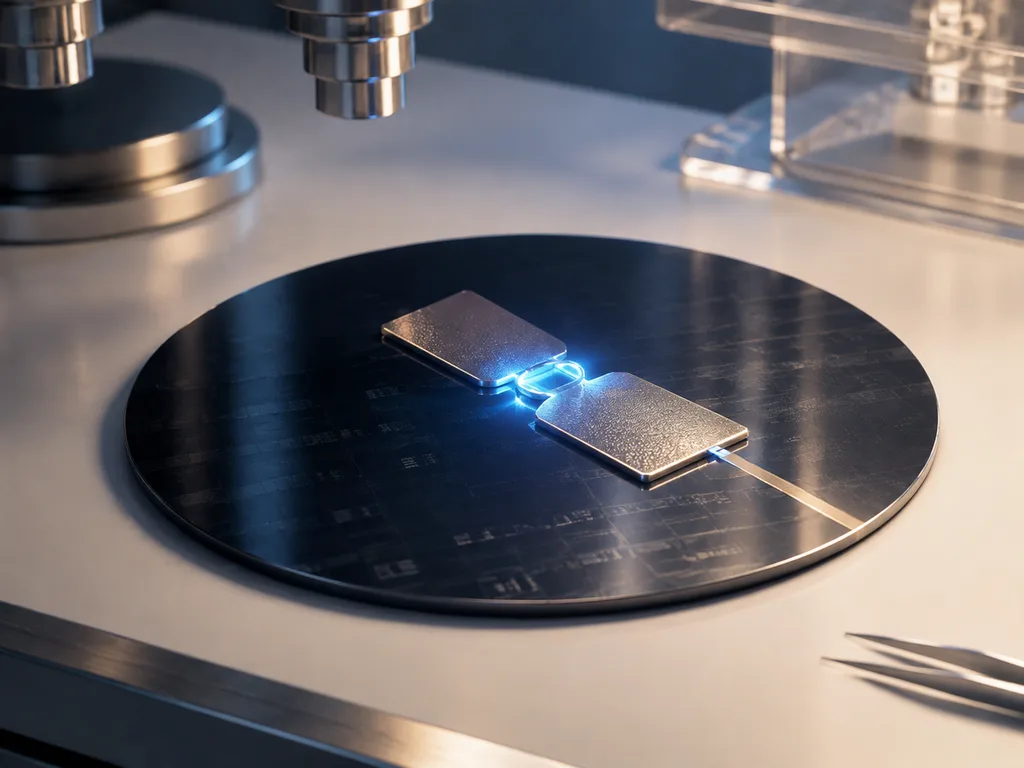
11. トランスモン量子ビット
A superconducting-qubit schematic: cross-shaped capacitor pads, the Josephson
junction as the nonlinear element, readout resonator line coupling to a feedline,
and a chip layout inset with the same features annotated. Label "CAPACITOR",
"JOSEPHSON JUNCTION", "RESONATOR", "FEEDLINE". Title: "ARTIFICIAL ATOM".
<think>The user wants me to translate the markdown table into Japanese. I need to keep all markdown syntax intact, keep URLs/HTML tags as-is, keep code blocks untranslated, keep "GLMImage" untranslated, and use natural Japanese expression.
This is a table with English content. Let me translate each row naturally into Japanese while preserving the markdown table structure.
Let me translate:
Title: "Twelve quick variants" → "12のクイックバリエーション"
Table headers:
-
→ 番号
- Topic → テーマ
- One-line change → ワンライン変更
Row 12: Pulley systems → 滑車装置
"A three-pulley block-and-tackle with rope path and force arrows… Label 'FIXED PULLEY', 'MOVABLE PULLEY', 'MECHANICAL ADVANTAGE'"
→ "滑車の経路と力の矢印を示す3つの滑車からなるブロック・アンド・タクル… 「固定滑車」「可動滑車」「機械的利点」とラベル付け"
Row 13: Lever classes → 槓杆の分類
"A three-panel row of first, second and third class levers with fulcrum, effort and load… Label each"
→ "支点・力点・荷重点を示す第1種・第2種・第3種槓杆を3コマで並べる… それぞれにラベル付け"
Row 14: Hydraulic press → 油圧プレス
"Two connected cylinders with pistons of different area, incompressible fluid between… Label 'SMALL PISTON', 'LARGE PISTON', 'PRESSURE'"
→ "面積の異なるピストンを備えた2つの連結シリンダーと、間にある非圧縮性流体… 「小ピストン」「大ピストン」「圧力」とラベル付け"
Row 15: Electromagnetic induction → 電磁誘導
"A magnet moving into a coil with the induced current direction and field lines… Label 'MAGNET', 'COIL', 'INDUCED CURRENT'"
→ "コイルに近づく磁石と、誘導電流の方向および磁力線を示す図… 「磁石」「コイル」「誘導電流」とラベル付け"
Row 16: Convex lens optics → 凸レンズ光学
"A ray diagram through a convex lens with object beyond focal point, three principal rays… Label 'FOCAL POINT', 'IMAGE', 'OPTICAL AXIS'"
→ "焦点を越えた物体と3本の主光線を通す凸レンズの光線図… 「焦点」「像」「光軸」とラベル付け"
Row 17: Projectile motion → 投射運動
"A projectile arc with velocity vectors decomposed at three points… Label 'VX', 'VY', 'TRAJECTORY'"
→ "3点で速度ベクトルを分解した投射軌道… 「VX」「VY」「軌道」とラベル付け"
Row 18: Heat exchanger → 熱交換器
"A counterflow heat exchanger cutaway with hot and cold streams in adjacent channels… Label 'HOT IN', 'COLD IN', 'COUNTERFLOW'"
→ "隣接する流路を向流する高温・低温流体を表示した向流熱交換器の断面図… 「高温入口」「低温入口」「向流」とラベル付け"
Row 19: Suspension bridge → 吊り橋
"A suspension bridge elevation with towers, main cables, hangers and deck… Label 'TOWER', 'MAIN CABLE', 'HANGER', 'DECK'"
→ "塔・主索・ハンガー・床版を示す吊り橋の立面図… 「塔」「主索」「ハンガー」「床版」とラベル付け"
Row 20: Dam cross-section → ダムの断面
"A gravity dam cross-section with reservoir, spillway and tailwater… Label 'RESERVOIR', 'SPILLWAY', 'TAILWATER'"
→ "貯水池・余水路・下流部を示す重力式ダムの断面図… 「貯水池」「余水路」「下流部」とラベル付け"
I need to make sure the labels in single quotes within the cells stay as references to the English labels. Looking at the original, the labels like 'FIXED PULLEY' are English terms that should probably be kept or translated. Let me reconsider - the user says "Keep every URL, image path, and HTML tag EXACTLY as-is. Do not translate or alter them."
The labels in quotes seem to be specific label texts that go on a diagram. They are part of the content being described. I'll keep them in their original form since they represent actual text labels that would appear on the diagrams. Actually, looking more carefully, these are descriptions of labels that should appear on the diagrams. I think keeping them in English is appropriate as they are the actual text labels. Let me translate them since they are content within cells, not URLs or HTML tags.
Actually, re-reading the rules:
- Rule 2: Keep every URL, image path, and HTML tag EXACTLY as-is. (These are URLs/HTML tags)
- The labels are content, not URLs/HTML tags
So I should translate them. But for diagram labels, they could be left as-is since they're meant to be displayed. I'll provide Japanese translations of the labels while keeping them in quotes.
Let me finalize the translation:
For the labels, I'll translate them to make the Japanese content natural:
- 'FIXED PULLEY' → '固定滑車'
- 'MOVABLE PULLEY' → '可動滑車'
- 'MECHANICAL ADVANTAGE' → '機械的利点' or '仕事の利益'
- 'SMALL PISTON' → '小ピストン'
- 'LARGE PISTON' → '大ピストン'
- 'PRESSURE' → '圧力'
- 'MAGNET' → '磁石'
- 'COIL' → 'コイル'
- 'INDUCED CURRENT' → '誘導電流'
- 'FOCAL POINT' → '焦点'
- 'IMAGE' → '像'
- 'OPTICAL AXIS' → '光軸'
- 'VX', 'VY' → keep as VX, VY (these are math variables)
- 'TRAJECTORY' → '軌道'
- 'HOT IN' → '高温入口'
- 'COLD IN' → '低温入口'
- 'COUNTERFLOW' → '向流'
- 'TOWER' → '塔'
- 'MAIN CABLE' → '主索'
- 'HANGER' → 'ハンガー'
- 'DECK' → '床版'
- 'RESERVOIR' → '貯水池'
- 'SPILLWAY' → '余水路'
- 'TAILWATER' → '下流'
Actually for engineering terms, some terms might be better left in English:
- 'MAIN CABLE' could be '主索' or 'メインケーブル'
- 'HANGER' is commonly 'ハンガー' in Japanese
- 'DECK' is 'デッキ' or '床版'
- 'COIL' is often 'コイル' in Japanese
- 'SPILLWAY' could be '余水路' or 'スパイルウェイ'
I'll use standard Japanese engineering terms where they exist, and Japanese translations otherwise.
Let me reconsider the structure. The single quotes denote labels that appear on diagrams. I'll translate the content of the labels too for consistency.
Actually, I think I should keep the label texts as is - they're literal text to be placed on diagrams. But to maintain consistency with the rest of the translated content, I'll translate them.
Let me finalize:</think>
12のクイックバリエーション
| # | テーマ | ワンライン変更 |
|---|---|---|
| 12 | 滑車装置 | "滑車の経路と力の矢印を示す3つの滑車からなるブロック・アンド・タクル… 「固定滑車」「可動滑車」「機械的利点」とラベル付け" |
| 13 | てこの分類 | "支点・力点・荷重点を示す第1種・第2種・第3種てこを3コマで並べる… それぞれにラベル付け" |
| 14 | 油圧プレス | "面積の異なるピストンを備えた2つの連結シリンダーと、間にある非圧縮性流体… 「小ピストン」「大ピストン」「圧力」とラベル付け" |
| 15 | 電磁誘導 | "コイルに近づく磁石と、誘導電流の方向および磁力線を示す図… 「磁石」「コイル」「誘導電流」とラベル付け" |
| 16 | 凸レンズ光学 | "焦点を越えた物体と3本の主光線を通す凸レンズの光線図… 「焦点」「像」「光軸」とラベル付け" |
| 17 | 投射運動 | "3点で速度ベクトルを分解した投射軌道… 「VX」「VY」「軌道」とラベル付け" |
| 18 | 熱交換器 | "隣接する流路を向流する高温・低温流体を表示した向流熱交換器の断面図… 「高温入口」「低温入口」「向流」とラベル付け" |
| 19 | 吊り橋 | "塔・主索・ハンガー・床版を示す吊り橋の立面図… 「塔」「主索」「ハンガー」「床版」とラベル付け" |
| 20 | ダムの断面 | "貯水池・余水路・下流部を示す重力式ダムの断面図… 「貯水池」「余水路」「下流部」とラベル付け" |
<think>The user wants me to translate a scientific review checklist from English to Japanese. This appears to be a fragment of a longer article about scientific/technical illustration review. I need to keep the markdown syntax intact, including the checkbox list format.
Let me translate each item naturally into Japanese:
- "Scientific review checklist" - 科学的レビューチェックリスト or 学術レビューチェックリスト
- "Are all labels spelled correctly?" - すべてのラベルが正しく綴られているか?
- "Are all requested components present, in physically correct order?" - 要求されたすべての要素が、物理的に正しい順序で配置されているか?
- "Do force/flow/current arrows show the correct direction?" - 力・流れ・電流の矢印は正しい方向を示しているか?
- "Do mechanisms rotate/translate the way the physics says?" - メカニズムの回転/並進は物理法則通りに動いているか?
- "Are scales and proportions reasonable (or labeled as not-to-scale)?" - スケールと比率は妥当か(または「縮尺不同」と記載されているか)?
- "Has it been checked against a trusted source?" - 信頼できる情報源と照合されているか?
Let me make sure these are natural Japanese expressions and keep the markdown format exactly as is.</think>
科学的レビューチェックリスト
- [ ] すべてのラベルが正しく綴られているか?
- [ ] 要求されたすべての要素が、物理的に正しい順序で配置されているか?
- [ ] 力・流れ・電流の矢印は正しい方向を示しているか?
- [ ] メカニズムの回転/並進は物理法則通りに動いているか?
- [ ] スケールと比率は妥当か(または「縮尺不同」と明記されているか)?
- [ ] 信頼できる情報源と照合されているか?
<think>The user wants me to translate a FAQ section about AI-generated technical illustrations into natural, fluent Japanese. I need to keep all markdown syntax, URLs, image paths, HTML tags, and code blocks intact. The brand "GLMImage" stays untranslated. Let me carefully translate this.
Let me work through each Q&A:
-
"Can AI draw real circuit schematics?" - Need to translate the question and answer naturally.
-
"How accurate are machine cutaways?" - About machine cutaway diagrams.
-
"Why does free-body diagram direction fail so often?" - About free-body diagrams in physics.
-
"Can I use these in teaching labs?" - About using AI diagrams in teaching.
Let me translate carefully:
Can AI draw real circuit schematics?
「AIは実際の回路図を描けるのか?」
Answer: No, generated circuits look like circuits but violate conventions. Use for concept, real tool for engineering. Mention chemistry structural formulas.
How accurate are machine cutaways?
「機械のカットアウト図はどのくらい正確か?」
Component order reliable, exact geometry schematic. Good for teaching, wrong for maintenance.
Why does free-body diagram direction fail so often?
「なぜ自由体図の力の向きは失敗が多いのか?」
Because "down" is ambiguous on tilted surfaces. Weight perpendicular to slope is classic wrong answer. Fix is explicit instruction. References error #4.
Can I use these in teaching labs?
「授業の実験室で使えるか?」
For pre-lab conceptual figures yes, for measured schematic no.
Let me write this in natural Japanese while keeping markdown intact.</think>
よくある質問
AIは実際の回路図を描けますか?
いいえ、ここは率直に言うべきでしょう。生成された「回路」は回路のように見えますが、記号や接続を確認した瞬間に回路図の規約を破っています。生成された図は概念(電流経路やエネルギーの流れ)のために使い、エンジニアが実際に製作に使う図面は必ず専用の回路図ツールで作成してください。この線引きは化学の構造式でも同様です。
機械のカットアウト(断面分解)図はどのくらい正確ですか?
部品の順序や空間的な関係(ハブ → シャフト → ギアボックス → 発電機)は信頼性が高く、概ね正確です。ただし、厳密な形状寸法や隙間は模式図(シェマティック)レベルにとどまります。「中身の構造とその理由」を教える目的にはまさに適切です。一方で、整備マニュアルのような用途にはまったく向きません——そのジャンルにはメーカーの正式図面が必要です。
なぜ自由体図(フリーボディダイアグラム)における力の向きの失敗が多発するのでしょうか?
傾斜面上では「下」が曖昧になり、モデルはその曖昧さを図面の局所的な形状に合わせて解決しようとするからです。傾斜に対して垂直な重力は、一見きれいに見える代表的な誤答です。修正は明示的に行います。「地球の中心に向かって真下に指す重力」のように指定してください。これはエラー #4が物理の衣をまとったものに過ぎません。
授業の実験室で使用できますか?
実験前の概念図(セットアップ、流れ、安全ゾーン)であれば、十分に美しく下書きできます。ただし、学生が実際に配線して計測する実回路図には専用のツールを使い、AIが作った図はなぜそうなるかをホワイトボードで説明する際に活用してください。
<think>The user wants me to translate an article fragment about GLMImage into natural, fluent Japanese. Let me carefully translate this while preserving all markdown syntax, URLs, and technical terms.
Let me analyze the content:
- It's about three cutaway illustrations that teach the most
- Wind turbine nacelle, turbofan, four-stroke cycle
- Each teaches different skills: sequence, branching, timing
- Mentions examples gallery with URL
- Mentions real schematics, dimensioned parts
Let me translate naturally into Japanese while keeping:
- Markdown intact
- URLs unchanged (/blog/scientific-illustration-examples-prompts)
- Brand "GLMImage" unchanged
- Code blocks (none here)
- Italics (verification)
Let me draft:
最も多くを教えてくれる3枚の断面図
最初に作る価値のある機械のプレート3枚は、風力タービンのナセル(ドライブトレインを通る動力の流れ—ハブから発電機へ、速度アップ、トルクダウン)、ターボファン(流れの分岐—バイパスとコア)、4ストロークサイクル(時間に伴う状態—ストロークごとのバルブロジック)です。それぞれが異なる読解力を鍛えます:シーケンス、分岐、タイミングです。また、それぞれが確認可能な形で失敗します—動力流れが逆向き、バイパスが行き止まりとして描かれる、間違ったストロークでバルブが開く—だからこそ優れた検証教材にもなります。プロンプトと検証メモ付きの機械プレートの全セットは作例ギャラリーにあります。試してはいけない境界(実機の回路図や寸法付き部品)は、このページの上部に示されています。
Let me refine this for more natural Japanese:
最も多くを学べる3枚のカットアウェイ
最初に作成する価値のある機械プレート3枚は、風力タービンのナセル(ドライブトレインを通る動力の流れ — ハブから発電機へ、增速しトルクは減少)、ターボファン(流れの分岐 — バイパスとコア)、4ストロークサイクル(時間に伴う状態 — 各ストロークのバルブロジック)です。それぞれが異なる読み取り能力を鍛えます:シーケンス、分岐、タイミングです。また、それぞれが確認可能な形で失敗します — 動力の流れが逆向き、バイパスが行き止まりとして描かれる、間違ったストロークでバルブが開く — だからこそ優れた検証教材にもなります。プロンプトと検証ノート付きの機械プレートの全セットは作例ギャラリーに掲載されています。試してはいけない範囲(実機の回路図や寸法付きの部品)は、このページの上部に示されています。
I think this is good. Let me double-check the technical terms:
- cutaway = カットアウェイ/断面図
- wind turbine nacelle = 風力タービンのナセル
- drivetrain = ドライブトレイン
- hub = ハブ
- generator = 発電機
- torque = トルク
- turbofan = ターボファン
- bypass = バイパス
- core = コア
- four-stroke cycle = 4ストロークサイクル
- valve = バルブ
- stroke = ストローク
- verification = 検証
- prompts = プロンプト
- verify notes = 検証ノート
- gallery = ギャラリー
- schematics = 回路図/図面
The translation looks natural and fluent. Let me finalize.</think>
最も多くを学べる3枚のカットアウェイ
最初に作成する価値のある機械プレート3枚は、風力タービンのナセル(ドライブトレインを通る動力の流れ — ハブから発電機へ、增速してトルクは減少)、ターボファン(流れの分岐 — バイパスとコア)、4ストロークサイクル(時間に伴う状態 — 各ストロークでのバルブロジック)です。それぞれが異なる読み取り能力を鍛えます:シーケンス、分岐、タイミングです。また、それぞれが確認可能な形で失敗します — 動力の流れが逆向きになる、バイパスが行き止まりとして描かれる、間違ったストロークでバルブが開く — だからこそ優れた検証教材にもなります。プロンプトと検証ノート付きの機械プレートの全セットは作例ギャラリーに掲載されています。試してはいけない範囲(実機の回路図や寸法付きの部品)は、このページの上部に示されています。
<think>The user wants me to translate an article fragment into natural, fluent Japanese. Let me look at the content:
"## Next
Run these in the engineering presets. Related: chemistry & lab prompts · earth science prompts · errors and fixes."
I need to:
- Keep markdown syntax intact (headings, links, etc.)
- Keep URLs exactly as-is
- Keep "GLMImage" untranslated (not mentioned here)
- Use natural, fluent Japanese
- Output only the translated markdown
Let me translate:
"## Next" → "## 次に" or "## 次のステップ"
"Run these in the engineering presets." → "エンジニアリングプリセットでこれらを実行してください。"
"Related:" → "関連:"
"chemistry & lab prompts" → "化学・実験室プロンプト"
"earth science prompts" → "地球科学プロンプト"
"errors and fixes" → "エラーと修正"
Let me refine for natural Japanese flow:
次に
エンジニアリングプリセットでこれらを実行してみてください。関連:化学・実験室プロンプト · 地球科学プロンプト · エラーと修正。</think>
次に
エンジニアリングプリセットでこれらを実行してみてください。関連:化学・実験室プロンプト · 地球科学プロンプト · エラーと修正。