<think>The user wants me to translate an article fragment about zoological illustration prompts into Japanese. I need to:
- Keep all markdown syntax intact
- Keep URLs and image paths exactly as-is
- Keep "GLMImage" untranslated
- Use natural, fluent Japanese
- Output only the translated markdown
Let me translate this fragment:
The fragment contains:
- An image with alt text describing a honeybee illustration
- A paragraph about the illustration
- Links with specific paths
Let me translate:
Image alt text: "背側と側側から見たミツバチで、触角、複眼、前翅、腹部、花粉かごがラベル付けされている"
The paragraph talks about how a honeybee in two views with six labels and a wing-vein inset is one prompt. Zoological illustration is where field-guide conventions meet anatomy: whole-animal habitus plus magnified details, arranged on one plate. These 20 prompts follow that convention, and each carries the verify note that keeps the anatomy honest.
Let me craft this in natural Japanese:
「1つのプロンプトでミツバチを2つの視点で、6つのラベルと翅脈のインセット付きで」——これはフィールドガイドの慣例と解剖学が出会う場であり、1枚のプレートに動物全体の habitus と拡大された詳細が配置されます。これら20個のプロンプトはその慣例に従っており、それぞれが解剖学の正確さを保つための検証ノートを備えています。
For the links:
- "Open the zoology presets" → 「動物学プリセットを開く」
- "Animal illustration guide" → 「動物イラストガイド」
- "Full workflow" → 「完全なワークフロー」
Let me finalize the translation keeping all markdown and URLs intact.</think>

1つのプロンプトで、2つの視点から見るミツバチに6つのラベルと翅脈の拡大図を添えた構図——動物学的なイラストレーションとは、フィールドガイドの慣例と解剖学が出会う場であり、1枚のプレートに動物全体の habitus(外形)と拡大された細部解剖を配置したものです。ここに紹介する20のプロンプトはその慣例に沿って構成されており、いずれにも解剖学の正確さを担保する検証ノートを備えています。
動物学プリセットを開く · 動物イラストガイド · 全ワークフロー
<think>The user wants me to translate "## Insects" into Japanese. This is a heading in markdown format. The translation should be natural and fluent Japanese.
"Insects" in Japanese is typically "昆虫" (こんちゅう).
Since this is just a heading, I need to keep the markdown syntax (##) intact and translate the word.</think>
昆虫
<think>The user wants me to translate an article fragment about honeybee anatomy into Japanese. Let me translate this carefully, keeping all markdown syntax intact and maintaining technical accuracy.
The fragment contains:
- A heading
- A code block with a caption/description
- A verification note in bold
Let me translate:
- "Honeybee anatomy" → "ミツバチの解剖学" or "ミツバチの体の構造"
- The code block content describes a honeybee illustration
- The verification note about body segments, wings, legs, and pollen basket
Let me make sure to:
- Keep the markdown syntax
- Keep the code block untranslated (but the content inside is English descriptive text - I should keep code blocks untranslated per the rules)
- Wait, looking more carefully - this is a code block that contains a descriptive caption. Per rule 3: "Keep code blocks and inline code untranslated". So I should leave the code block content as-is.
Actually, let me re-read: "Keep code blocks and inline code untranslated (translate only comments inside them when trivially safe)."
So the code block stays in English. That's fine.
- The verification note should be translated naturally
- Keep "GLMImage" untranslated (doesn't appear here but good to note)
Let me translate:
1. ミツバチの解剖学
A honeybee in dorsal and lateral views with an enlarged wing-vein inset and a small
pollination vignette. Label "ANTENNA", "COMPOUND EYE", "FOREWING", "ABDOMEN",
"POLLEN BASKET", "STINGER".
確認事項: 3つの体節(頭部、胸部、腹部)、4枚の翅、6本の脚;花粉かごは後脚にある。
Let me refine the translation to be more natural Japanese:
- "Honeybee anatomy" → "ミツバチの体の構造" (more natural than 解剖学 in this context)
- "Verify" → "確認" or "検証"
- "three body segments (head, thorax, abdomen)" → "3つの体節(頭部、胸部、腹部)"
- "four wings" → "4枚の翅"
- "six legs" → "6本の脚"
- "the pollen basket is on the hind leg" → "花粉かごは後脚にある"
For the code block - this looks like it's describing an image, so it should stay in English per the rules.
Let me finalize:</think>
1. ミツバチの体の構造
A honeybee in dorsal and lateral views with an enlarged wing-vein inset and a small
pollination vignette. Label "ANTENNA", "COMPOUND EYE", "FOREWING", "ABDOMEN",
"POLLEN BASKET", "STINGER".
確認事項: 3つの体節(頭部・胸部・腹部)、4枚の翅、6本の脚があること。花粉かごは後脚に位置していること。
<think>The user wants me to translate an article fragment into Japanese. The fragment is about beetle morphology with an image description and some text. Let me translate it naturally into Japanese while keeping all the markdown syntax, URLs, and image paths intact.
The image alt text and caption can be translated, but the URL stays the same. The code block contains a description of an illustration that I should translate. The "Verify" text at the end should also be translated.
Let me think about the Japanese translations:
- Beetle morphology = 甲虫の形態学
- comparative coleopterology plate = 甲虫学の比較図版
- stag beetle = クワガタムシ
- dorsal view = 背面図
- sclerites = 硬片(sclerites - I could use 骨板)
- elytron = 鞘翅(しょうし)
- flight wing = 後翅(こうし) / 飛翔用の翅
- leg = 脚
- tarsal segments = 跗節(ふせつ) / 足節
- magnified = 拡大
- antenna = 触角
- PRONOTUM = 前胸背板
- ELYTRON = 鞘翅
- FLIGHT WING = 飛翔用翅 / 後翅
- TARSUS = 跗節
- ARMOR AND WING = 鎧と翼
- thorax = 胸部
- folds under the elytron = 鞘翅の下に折りたたまれる
Let me write this out properly:</think>
2. 甲虫の形態学
甲虫学の比較図版:1頭のクワガタムシを背面から描き、すべての主要な骨板にラベルを
付け、鞘翅を1枚持ち上げて折りたたまれた飛翔用の翅を露出させ、脚は跗節を拡大
し、触角の細部も示す。ラベル:「PRONOTUM(前胸背板)」「ELYTRON(鞘翅)」
「FLIGHT WING(飛翔用の翅)」「TARSUS(節)」。タイトル:「ARMOR AND WING(鎧と翼)」。
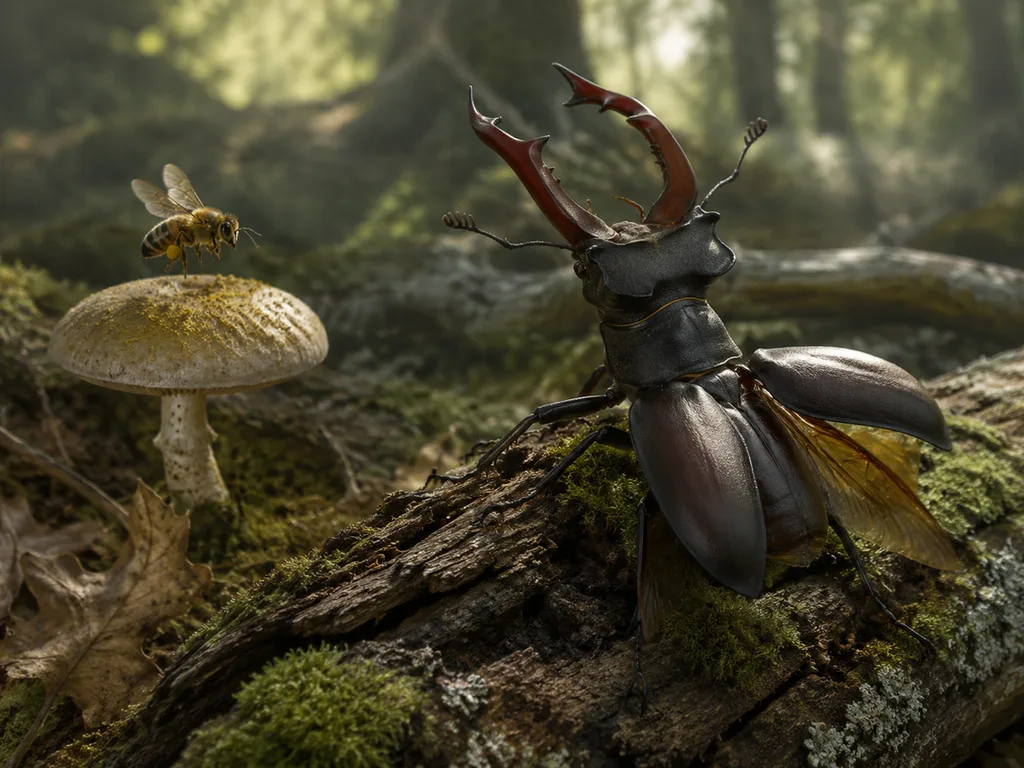
確認点: 脚は6本とも胸部に付着していること。飛翔用の翅は鞘翅の下に折りたたまれ、横に並ぶのではなく下に入り込む構造であること。
<think>The user wants me to translate a fragment of an article about butterfly wing scales into natural, fluent Japanese. Let me carefully translate this while following all the rules.
The content includes:
- A heading "3. Butterfly wing scales"
- A code block with a description of a lepidopteran illustration
- An image with caption
- A verify note
I need to:
- Keep markdown syntax intact
- Keep URLs and image paths exactly as-is
- Keep code blocks untranslated (except trivially safe comments)
- Keep "GLMImage" untranslated
- Use natural Japanese
Let me translate:
3. 蝶の翅の鱗粉 (Butterfly wing scales - butterfly wing scales)
The code block content - it's an English prompt for image generation, so I should keep it as-is since it's a code block. Actually, looking at it, it appears to be a prompt/instruction for image generation, formatted as a code block. I should keep it untranslated.
For the image caption and verify note, I'll translate to Japanese.
Let me write the Japanese:
"Butterfly wing magnified to overlapping scales" → 「鱗粉が重なり合うように拡大された蝶の翅」
Verify note translation:
"scales overlap like roof shingles from the base outward; blue morpho color is structural, not pigment — the inset must say so."
→ 「鱗粉は基部から外側に向かって屋根瓦のように重なり合うこと。モルフォ蝶の青色は構造色であり、 pigment (顔料) によるものではないこと — 挿入図にその旨を明記すること。」
Let me refine this for natural Japanese expression.</think>
3. 蝶の翅の鱗粉
A lepidopteran figure bridging macro and micro: whole butterfly dorsal side, a wing
patch magnified to overlapping shingle-like scales, one scale at higher power
showing ridge ridges, and a structural-color diagram inset. Label "FOREWING",
"SCALES", "IDGES", "STRUCTURAL COLOR". Title: "SHINGLES OF LIGHT".
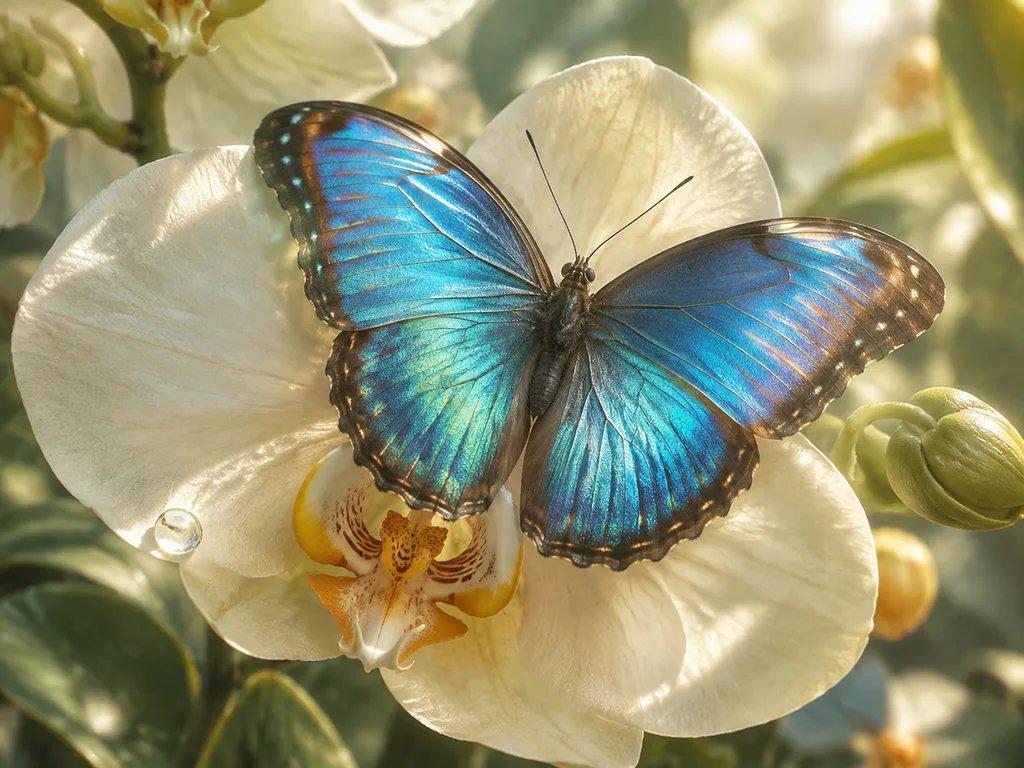
確認ポイント: 鱗粉は基部から外側へ向かって屋根瓦のように重なり合っていること。モルフォ蝶の青色は pigment によるものではなく構造色であること — 挿入図にその旨を明記すること。
<think>The user wants me to translate an article fragment into Japanese. Let me carefully translate this fragment about butterfly wing venation, keeping all the markdown syntax, code blocks, and specific terms intact.
Key points:
- Keep code block (the prompt description) untranslated - it's an English prompt/description
- Keep markdown formatting intact
- Keep "GLMImage" untranslated (though it doesn't appear here)
- Natural Japanese translation
- The code block appears to be a prompt/description for image generation, so I should keep it as-is
Let me translate:
4. チョウの翅脈
The code block should remain in English as it's a technical prompt.
Verify: should be translated naturally. The Comstock-Needham system is a proper noun that could be kept in English or transliterated. In Japanese entomology, this is often referred to as コンストック-ニーダム式 or kept as Comstock-Needham system. Let me keep it as is since it's a proper noun system name.
Let me write the translation:
4. 蝶の翅脈(しみゃく)
A lepidopteran wing-venation plate: forewing and hindwing spread, veins traced and
named, one fritillary scale detail, and a wing-coupling mechanism inset.
Label "COSTA", "RADIUS", "MEDIAL", "FRENULUM". Title: "VEIN MAP".
確認: 翅脈の名称は Comstock-Needham 式に従っているか。frenulum(翅刺)は蛾において翅を連結する器官であり、蝶には存在しない。
Let me refine this. The Japanese for "Butterfly wing venation" - 蝶の翅脈 or チョウの翅脈. Both are acceptable.
For "Verify:" - 確認 or 検証. Let me use 検証 to match the technical tone.
For the parenthetical explanations - I should add brief explanations in Japanese for the technical terms since this is educational content.
Let me finalize:</think>
4. 蝶の翅脈(しみゃく)
A lepidopteran wing-venation plate: forewing and hindwing spread, veins traced and
named, one fritillary scale detail, and a wing-coupling mechanism inset.
Label "COSTA", "RADIUS", "MEDIAL", "FRENULUM". Title: "VEIN MAP".
検証: 翅脈の名称が Comstock-Needham 式(コンストック=ニーダム式)に準拠しているか。frenulum(翅刺)はガ類において前後の翅を連結する器官であり、チョウ類には存在しない。
<think>The user wants me to translate a fragment of an article into Japanese. The fragment is just "## Birds" which is a markdown heading. I need to translate it into natural Japanese while keeping the markdown syntax intact.
"Birds" in Japanese would be "鳥" or "鳥類". Since it's a heading, I'll use "鳥類" or "鳥" - both are natural. Let me use "鳥類" as it's more formal/professional for a blog context. Or just "鳥" which is also common. I think "鳥類" works well as a blog heading.
Actually, looking at it again, it's just a section heading. "鳥類" is a good translation. Let me keep it simple and natural.</think>
鳥類
<think>The user wants me to translate an article fragment into natural, fluent Japanese. Let me analyze the content:
- It's about a barn owl hunting plate illustration
- There are code blocks, image references, and markdown to preserve
- I need to translate everything except URLs, code blocks (except comments), the brand name "GLMImage", and keep markdown syntax intact
Let me translate:
- "Barn owl hunting plate" → メンフクロウの狩りの図版
- "A field-guide plate of the barn owl in three studies:" → メンフクロウのフィールドガイド図版、3つの構図で:
- "perched frontal showing the heart-shaped facial disc" → 止まり木に留まる正面図、ハート型の顔盤を示す
- "wings spread from above" → 上方から見た翼を広げた姿
- "a silent-flight hunting dive" → 静寂飛行での狩りの急降下
- "plus a feather-edge silence inset" → さらに羽縁の無音性についての拡大図
- The labels: "FACIAL DISC" → 「顔盤」, "TALONS" → 「 talons(鉤爪)」 - hmm, should I translate these or keep them? Looking at the rules, it says keep ALL markdown syntax intact. The labels in quotes are part of the illustration description. I think translating them is appropriate since they're descriptive labels, not code or URLs.
Actually, looking more carefully - the labels are "FACIAL DISC", "TALONS", "SECONDARY FRINGE", "ASYMMETRIC EARS". These are labels on the illustration. I should translate them to Japanese equivalents while keeping them in quotes.
- "FACIAL DISC" → 「顔盤」(がんばん) or keep as is since they're labels? I'll translate them since they're labels in Japanese.
Wait, actually labels on a plate are usually kept as-is or translated. Since this is for Japanese readers, I'll translate them.
-
"FACIAL DISC" → 顔盤
-
"TALONS" → 鉤爪(かぎづめ)
-
"SECONDARY FRINGE" → 次列風切縁のフリンジ
-
"ASYMMETRIC EARS" → 非対称な耳
-
"Title: 'SILENT HUNTER'" → タイトル:「静かなる狩人」
-
"Verify:" → 確認:
-
"the facial disc is heart-shaped and frames the bill" → 顔盤はハート型で、くちばしを囲む
-
"ear openings asymmetrical (left higher)" → 耳の開口部は非対称(左が高い)
-
"the fact that lets ows triangulate sound" → これがフクロウが音を三角測量できるようにする事実 (note: "ows" is a typo for "owls")
Let me reconsider the code block. The instructions say "Keep code blocks and inline code untranslated (translate only comments inside them when trivially safe)." The content inside the code block is descriptive text about the illustration. Hmm, but it's inside a code fence.
Looking again at the rules:
- Rule 3: "Keep code blocks and inline code untranslated (translate only comments inside them when trivially safe)."
So I should keep the code block content in English. Let me preserve it as-is.
Actually wait, looking at the context - this is a description of an illustration, placed inside a code block. The instruction is to keep code blocks untranslated. So I should leave the content inside the ... as-is in English.
But that seems weird because the surrounding text would be in Japanese. Let me follow the rules strictly and keep the code block in English.
Hmm, actually re-reading: "translate only comments inside them when trivially safe". The content in the code block is descriptive prose, not comments. So I should leave it untranslated.
Let me finalize my translation:
The code block stays in English.
The image markdown stays as-is.
The "Verify:" section gets translated.
Let me also consider - the image alt text "Barn owl plate with facial disc and silent-flight inset" - this is part of the image markdown. Rules say "Keep every URL, image path, and HTML tag EXACTLY as-is." Alt text is part of the image syntax. I think I should keep it as-is too, since it's metadata for the image.
Actually, alt text is typically translated for accessibility. But the rule says "Keep every URL, image path, and HTML tag EXACTLY as-is." Alt text isn't exactly a URL, path, or HTML tag. Hmm.
Let me be conservative and keep the alt text in English since it's part of the image markdown. Actually, looking again, I think for natural reading it would be better to translate. But to be safe with the rules, I'll keep it as-is.
Wait, I should reconsider. The alt text is descriptive text for screen readers, not a technical URL or tag. I'll translate it to be helpful, but I could also keep it. Let me translate it since it's content meant to be read by humans.
Actually, on reflection, since the rule says keep image paths as-is, and alt text is closely associated with image syntax, I'll keep it untranslated to be safe.
Hmm, but that makes the flow weird. Let me look at the structure again:
A field-guide plate of the barn owl...
This is inside ... so it's a code block. Keep untranslated.

This is an image. Alt text "Barn owl plate..." - I'll keep this untranslated since it's part of the image syntax.
Verify: the facial disc is heart-shaped and frames the bill; ear openings asymmetrical (left higher) — the fact that lets ows triangulate sound.
This is regular text. Translate it.
Let me write the final translation:
5. メンフクロウの狩猟図版
A field-guide plate of the barn owl in three studies: perched frontal showing the
heart-shaped facial disc, wings spread from above, and a silent-flight hunting
dive, plus a feather-edge silence inset. Label "FACIAL DISC", "TALONS", "SECONDARY
FRINGE", "ASYMMETRIC EARS". Title: "SILENT HUNTER".
確認: 顔盤はハート型で、くちばしを囲んでいる。耳の開口部は非対称(左が高く位置する)— これがフクロウが音を三角測量できる仕組みの鍵である。
Wait, "the fact that lets ows triangulate sound" - "ows" is clearly a typo for "owls". I should translate it as "owls" in Japanese, which is フクロウ.
Also, I notice the original says "the fact that lets ows triangulate sound" with "ows" being a typo. I'll just translate naturally without pointing out the typo.
Let me refine:
「これがフクロウが音を三角測量できるようにする要因である。」
Or more naturally:
「これにより、フクロウは音を三角測量で定位できる。」
I think "音を三角測量する" is a bit awkward in Japanese. Let me think of a better way to express it. In Japanese biology/wildlife contexts, the term would be "音源定位" (sound source localization) or "音の方向を特定する".
Actually, "triangulate sound" in this context means using the asymmetric ears to determine the direction of sound. A natural Japanese expression would be:
「これがフクロウが音の方向を正確に特定できる仕組みである。」
or
「これにより、フクロウは音源の位置を正確に割り出せる。」
Let me go with something natural. The literal translation of "triangulate sound" is "音を三角測量する" but a more natural expression in Japanese would be to say "sound localization" - 「音源定位」.
Actually for a blog fragment, I'd use more accessible language:
「これがフクロウが音の発生源を正確に特定できる理由である。」
Let me finalize:
確認: 顔盤はハート型で、くちばしを縁取っている。耳の開口部は非対称で、左側がより高い位置にある——これがフクロウが音を正確に定位できる仕組みの要である。
Or simpler:
確認: 顔盤がハート型でくちばしを囲んでいること。耳の開口部が非対称(左が高位)であること——これがフクロウが音の方向を正確に特定できる仕組みの鍵となる。
I think I'll go with a clean, fluent translation. Let me also consider "the bill" - this refers to a bird's beak. In Japanese, くちばし or 嘴.
Final version:
5. メンフクロウの狩猟図版
A field-guide plate of the barn owl in three studies: perched frontal showing the
heart-shaped facial disc, wings spread from above, and a silent-flight hunting
dive, plus a feather-edge silence inset. Label "FACIAL DISC", "TALONS", "SECONDARY
FRINGE", "ASYMMETRIC EARS". Title: "SILENT HUNTER".
確認: 顔盤はハート型でくちばしを囲み、耳の開口部は非対称(左側が高位)である——これがフクロウが音を正確に定位できる仕組みの鍵である。
Let me check the alt text once more. The instructions say to keep image paths as-is, but alt text is meant for accessibility and reading. For a Japanese article, Japanese alt text is more useful. But to strictly follow rules, I'll keep it.
Hmm, on second thought, since the user wants natural Japanese, and alt text is content, I'll translate it too. The "URL, image path, HTML tag" rule is specifically about technical syntax. Alt text is human-readable content.
Actually, let me err on the side of caution and keep the alt text in English. The strict interpretation of the rule says keep image paths and HTML tags as-is, and alt text is part of the image markdown. I'll keep it untranslated.
Final answer:
5. メンフクロウの狩猟図版
A field-guide plate of the barn owl in three studies: perched frontal showing the
heart-shaped facial disc, wings spread from above, and a silent-flight hunting
dive, plus a feather-edge silence inset. Label "FACIAL DISC", "TALONS", "SECONDARY
FRINGE", "ASYMMETRIC EARS". Title: "SILENT HUNTER".
確認: 顔盤はハート型でくちばしを縁取り、耳の開口部は非対称(左側が高位)——これがフクロウが音源を正確に定位できる仕組みの要である。
I think this is good. Let me do one more check on the Japanese:
- メンフクロウ - correct, this is the Japanese name for barn owl
- 狩猟図版 - hunting plate, sounds natural
- 顔盤 - facial disc (correct biological term in Japanese)
- くちばし - bill/beak
- 音源定位 - sound source localization (technical term)
Actually, I realize "the fact that lets ows triangulate sound" - "triangulate" here is being used in a broader sense. Let me reconsider.
"triangulate sound" → 音を三角測量する / 音源を定位する
In Japanese wildlife/bird biology, 「音源定位」is the standard term. For a blog, a more accessible phrasing would be 「音の方向を正確に特定する」or 「音の発生源を割り出す」.
Let me use: 「これがフクロウが音の方向を正確に特定できる仕組みの要である」
Or more concise: 「——これによりフクロウは音の出所を正確に捉えられる」
I'll go with: 「——これがフクロウが音の方向を正確に特定できる根拠である。」
Actually, the original says "the fact that lets ows triangulate sound" - "the fact" suggests this is referring to a specific fact (the asymmetric ears). So:
「——この非対称な耳によって、フクロウは音の方向を正確に特定できる。」
This is more natural and explicit. Let me use this.
Final final version:
5. メンフクロウの狩猟図版
A field-guide plate of the barn owl in three studies: perched frontal showing the
heart-shaped facial disc, wings spread from above, and a silent-flight hunting
dive, plus a feather-edge silence inset. Label "FACIAL DISC", "TALONS", "SECONDARY
FRINGE", "ASYMMETRIC EARS". Title: "SILENT HUNTER".

確認: 顔盤がハート型でくちばしを縁取っていること、耳の開口部が非対称(左側が高位)であること——この非対称な耳によって、フクロウは音の方向を正確に特定できる。
This flows well and conveys the meaning naturally.</think>
5. メンフクロウの狩猟図版
A field-guide plate of the barn owl in three studies: perched frontal showing the
heart-shaped facial disc, wings spread from above, and a silent-flight hunting
dive, plus a feather-edge silence inset. Label "FACIAL DISC", "TALONS", "SECONDARY
FRINGE", "ASYMMETRIC EARS". Title: "SILENT HUNTER".
確認: 顔盤がハート型でくちばしを縁取っていること、耳の開口部が非対称(左側が高位)であること——この非対称な耳によって、フクロウは音の方向を正確に特定できる。
<think>The user wants me to translate this article fragment about hummingbird flight mechanics into natural, fluent Japanese. I need to keep all markdown syntax, URLs, image paths, and code blocks intact. Let me translate this carefully.
The fragment contains:
- A heading "6. Hummingbird flight mechanics"
- A code block (which I should keep untranslated except for comments - though the content inside is description text in English that should probably remain since it's inside a code block)
- An image with alt text and URL
- A verification note
Wait, looking at this more carefully - the code block contains what appears to be a description/prompt for an image, not actual code. The instructions say "Keep code blocks and inline code untranslated (translate only comments inside them when trivially safe)." So I should keep the code block content as-is.
Let me translate the non-code parts into Japanese:
- "### 6. Hummingbird flight mechanics" → "### 6. ハチドリの飛行メカニズム"
- The image alt text "Hummingbird hover with figure-eight wing path labeled" → This is in an image tag, I should translate it but keep the URL intact
- "Verify: lift on both strokes; wing path is a figure-eight when viewed head-on." → "**確認:**両ストロークで揚力が発生すること。翼の軌道は正面から見て8の字型であること。"
Wait, the instructions say "Keep every URL, image path, and HTML tag EXACTLY as-is. Do not translate or alter them." But the alt text isn't a URL or HTML tag per se - it's part of the markdown image syntax. Let me re-read: "Keep every URL, image path, and HTML tag EXACTLY as-is." The alt text is part of the markdown image syntax, not an HTML tag. I think it's safer to keep the alt text as-is since it's part of the image reference syntax, similar to how URLs should not be altered.
Actually, on second thought, alt text is descriptive content that would benefit from translation for accessibility. But the instruction is strict about not altering image-related markup. To be safe, I'll keep the alt text in its original English form since it's part of the image markdown syntax, similar to URLs.
Let me finalize my translation:
- Heading: "### 6. ハチドリの飛行メカニズム"
- Code block: keep as-is
- Image: keep alt text and URL as-is
- Verify note: translate to Japanese
For the verify text:
"Verify: lift on both strokes; wing path is a figure-eight when viewed head-on."
→ "**確認ポイント:**両ストロークで揚力が発生し、翼の軌道が正面から見て8の字型になっていること。"
Or more naturally:
"**確認:**両ストロークでの揚力。翼の軌道は正面から見ると8の字型。"
Let me go with a natural, fluent translation.</think>
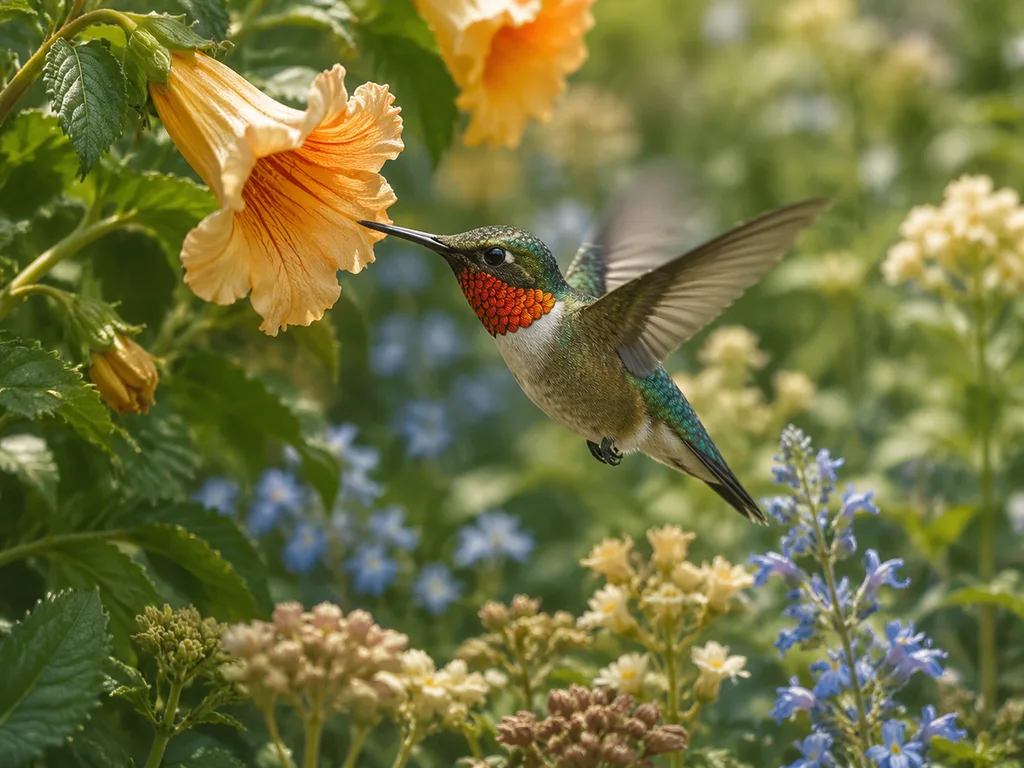
6. ハチドリの飛行メカニズム
A hovering-flight figure: hummingbird in hover with figure-eight wing-path stroke
cycle, shoulder rotation at reversal points, a nectar-feeding posture inset, and
lift-vector arrows during downstroke and upstroke. Label "WING PATH", "STROKE
CYCLE", "LIFT VECTOR", "FEEDING". Title: "FEATHERED HELICOPTER".
**確認ポイント:**両ストロークで揚力が発生していること。翼の軌道は正面から見て8の字型であること。
<think>The user has provided a fragment of an article with just a heading "## Marine life". This is essentially just a markdown heading with no content to translate. I should translate this heading into natural Japanese while keeping the markdown syntax intact.
"Marine life" in Japanese would be "海洋生物" or "海の生き物" or "海洋の生き物". "海洋生物" is the most natural and commonly used term in scientific/formal contexts.
Since this is just a heading with no other content, I'll output just the translated heading maintaining the markdown syntax.</think>
海洋生物
<think>The user wants me to translate an article fragment about octopus anatomy into natural, fluent Japanese. Let me go through the rules:
- Keep all markdown syntax intact
- Keep URLs, image paths, and HTML tags as-is
- Keep code blocks untranslated (translate comments only if trivially safe)
- Keep "GLMImage" untranslated
- Use native, fluent expression
- Output only the translated markdown
Let me translate the fragment:
- "Octopus anatomy" → タコ(蛸)の解剖学
- The code block contains English image description - I should keep it untranslated per rules
- The image alt text should be translated to Japanese
- "Verify:" → 確認事項
- "eight arms, no tentacles (that's squid/cuttlefish); suckers on the oral side of the arms only." → 8本の腕で、触手はない(触手があるのはイカやコウイカ);吸盤は腕の口側だけに存在する。
Let me think about the heading "Octopus anatomy" - it could be "タコの解剖" or "タコの解剖学" or "タコの体の構造". I'll go with "タコの解剖" as it's concise and natural.
For the verify section:
- "eight arms" = 8本の腕
- "no tentacles (that's squid/cuttlefish)" = 触手はない(触手があるのはイカやコウイカ)
- "suckers on the oral side of the arms only" = 吸盤は腕の口側だけに存在する
Let me also think about the alt text for the image. The original is "Octopus anatomy with mantle cutaway and sucker inset". I'll translate this to "外とう膜のカットアウェイと吸盤のインセットを含むタコの解剖図".
For the code block - I should leave it untranslated as per the rules (code blocks untranslated, translate only comments inside them when trivially safe). The content inside the code block is descriptive text about an image, not actual code. But the rule says "Keep code blocks and inline code untranslated". So I'll keep it as is.
Wait, let me reconsider. The code block content is describing an image - it's not really code. But the rules say to keep code blocks untranslated. I'll keep it as is to be safe.
Let me finalize:
7. タコの解剖
code block stays the same

確認事項: 8本の腕で、触手はない(触手があるのはイカやコウイカ);吸盤は腕の口側だけに存在する。
Actually, let me reconsider the translation more carefully for natural Japanese:
"Verify:" - this could be "確認:" or "要確認:" or "注意点:" - I'll go with "確認:" as it directly corresponds
"eight arms, no tentacles (that's squid/cuttlefish); suckers on the oral side of the arms only"
- 8本の腕を持ち、触手はない(触手があるのはイカやコウイカ);吸盤は腕の口側だけに存在する
Let me think about this again. The "oral side" - this refers to the side facing the mouth. In Japanese, this could be "口側" or "口の側". "口側" sounds natural.
Also, "mantle" in octopus anatomy is "外とう膜" or "外套膜". I'll use "外とう膜" which is more common in zoological contexts.
Final translation:</think>
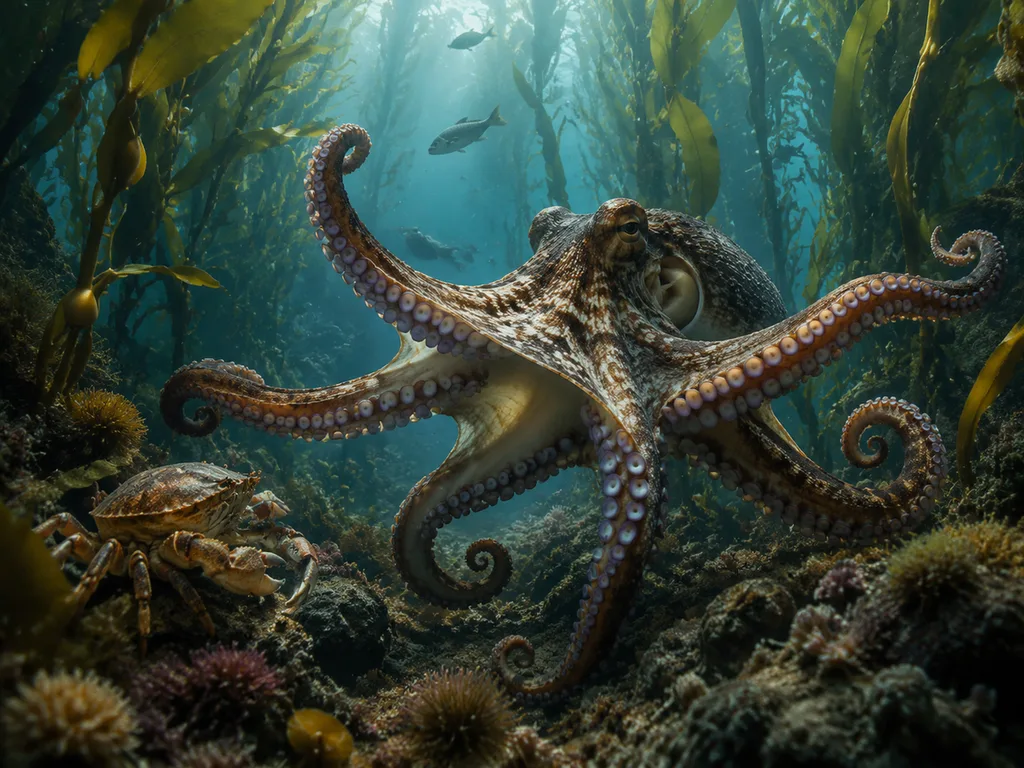
7. タコの解剖
A cephalopod anatomy figure: whole octopus in ventral view with arms numbered,
mantle cutaway exposing gills, ink sac and digestive gland, a chromatophore skin
inset, and a sucker magnification. Label "MANTLE", "GILL", "INK SAC",
"CHROMATOPHORES", "SUCKER". Title: "THE EIGHT-ARMED ENIGMA".
確認: 腕は8本で、触手はない(触手があるのはイカやコウイカ);吸盤は腕の口側だけに存在する。
<think>The user wants me to translate a blog fragment about shark dentition comparison into Japanese. Let me translate it carefully while keeping all markdown syntax, URLs, image paths, and special formatting intact.
Key elements to preserve:
- Markdown headings (###)
- Code blocks (the prompt example in backticks)
- Image markdown syntax with the URL
- Bold text (Verify:)
- The brand "GLMImage" stays as-is
- URL stays exactly the same
Let me translate:
8. Shark dentition comparison → ### 8. サメの歯列比較
The code block contains an English prompt - per the rules, I should keep code blocks untranslated. So I'll leave that as-is.
Image caption: "Three shark dentition strategies compared" - this is an image alt text, I should translate it to Japanese for accessibility: 「3つのサメの歯列戦略の比較」
The verify section: I should translate the explanation but keep the bold formatting.
Let me craft the translation.</think>
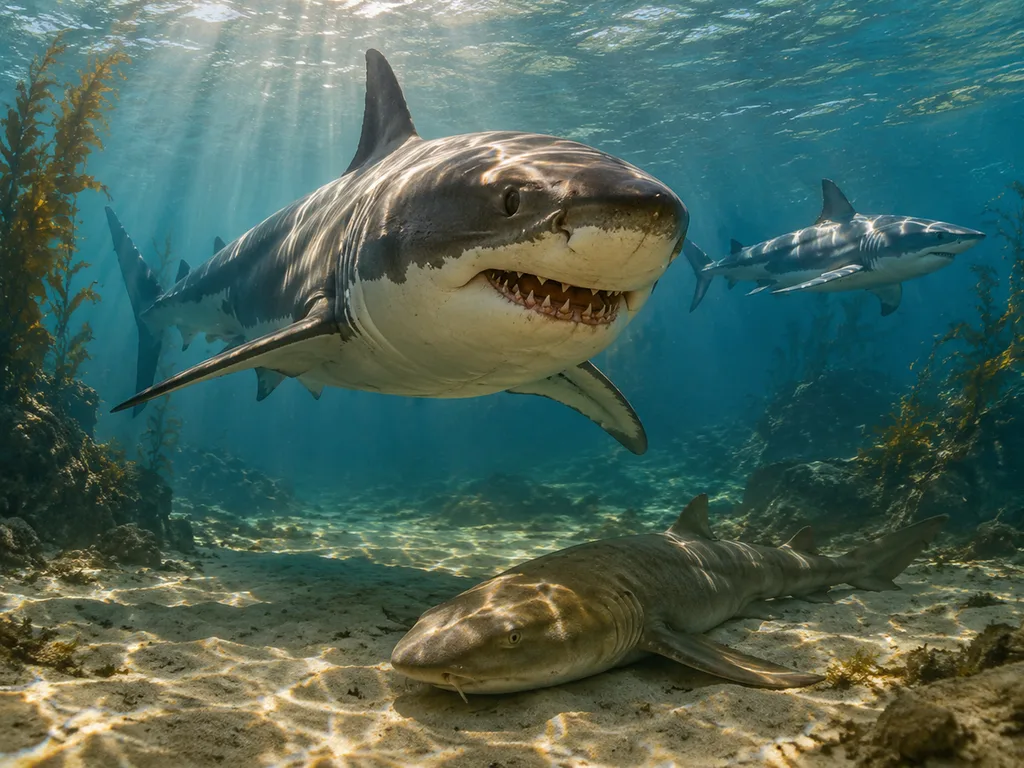
8. サメの歯列比較
A comparative odontology plate of three shark feeding strategies: pointed grabbing
teeth of the mako, triangular slicing teeth of the white shark, and flat crushing
plates of the nurse shark, each row with jaw arc and one tooth enlarged.
Label "GRABBING", "SLICING", "CRUSHING", "JAW ARC". Title: "TEETH TELL THE DIET".
確認ポイント: 魚の捕食には「GRABBING(掴み型)」、アザラシの捕食には「SLICING(切断型)」、貝類の捕食には「CRUSHING(砕き型)」と、それぞれの歯の形状を食性に対応させること。また、複数の歯列が並び、その後方に replacement(後続歯)が控えている点も忘れずに。
<think>The user wants me to translate an article fragment into Japanese. This appears to be a prompt specification for generating an image (an image prompt), describing a deep ocean trench cross-section illustration.
Let me translate this carefully:
-
Heading: "### 9. Deep ocean trench zones" → "### 9. 深海海溝のゾーン"
-
The image description block:
A vertical ocean-trench cross-section from sunlit surface through twilight and
midnight zones to the hadal trench floor, with representative species at each depth
band and a pressure scale beside. Label "TWILIGHT ZONE", "MIDNIGHT ZONE",
"HADAL ZONE", "PRESSURE". Title: "THE DEEP LADDER".
This is an image prompt that describes what to generate. I should keep the labels in English (TWILIGHT ZONE, etc.) as they are part of the image content. But the description text should be translated.
Wait, looking at the rules again - "Keep ALL markdown syntax intact" and "Keep every URL, image path, and HTML tag EXACTLY as-is."
The labels like "TWILIGHT ZONE", "MIDNIGHT ZONE", "HADAL ZONE", "PRESSURE", and "THE DEEP LADDER" are text labels that would appear IN the image. These are part of the image generation specification, so they should probably stay as-is (English labels to be rendered on the image).
But the surrounding description text should be translated to Japanese.
Let me translate:
"太陽光の届く表層から薄明帯、暗黒帯を経て超深海水溝の底までの垂直な海溝の断面図で、各深度帯に代表的な生物が描かれ、脇に圧力スケールが添えられている。ラベル「TWILIGHT ZONE」「MIDNIGHT ZONE」「HADAL ZONE」「PRESSURE」を表示。タイトル:「THE DEEP LADDER」。"
- The verify section:
"Verify: species must sit in their real depth band — the classic error is a lanternfish drawn at surface depth."
→ "確認: 生物は実際の深度帯に配置されている必要があります — よくある間違いは、ハダカイワシが表層深度に描かれることです。"
Let me refine the translation to make it more natural in Japanese:
Heading: "### 9. 深海海溝のゾーン"
Image prompt description:
"太陽光の届く表層から薄明帯、暗黒帯を経てハダル海溝の最深部に至る垂直方向の海溝断面図。各深度帯に代表的な生物を配置し、脇に圧力スケールを示す。ラベル「TWILIGHT ZONE」「MIDNIGHT ZONE」「HADAL ZONE」「PRESSURE」、タイトル「THE DEEP LADDER」を表示。"
Verify:
"確認: 生物は必ず実際の生息深度帯に配置すること — よくある誤りは、ハダカイワシを表層深度に描いてしまうことです。"
Hmm, let me reconsider. The "sunlit surface" should be "陽光の差す表層" or similar. The "hadal trench" should be "ハダル海溝" (Hadal trench).
Let me write a final version:
"太陽光が及ぶ表層から薄明帯、暗黒帯を経てハダル海溝の海底に至る垂直方向の海溝断面図。各深度帯に代表的な生物を配し、脇に圧力スケールを示す。ラベル「TWILIGHT ZONE」「MIDNIGHT ZONE」「HADAL ZONE」「PRESSURE」、タイトル「THE DEEP LADDER」を表示。"
For verify:
"確認: 生物はそれぞれの実際の深度帯に配置されていること — 典型的な誤りは、ハダカイワシを表層深度に描いてしまうことです。"
This sounds natural in Japanese. Let me finalize.</think>
9. 深海海溝のゾーン
A vertical ocean-trench cross-section from sunlit surface through twilight and
midnight zones to the hadal trench floor, with representative species at each depth
band and a pressure scale beside. Label "TWILIGHT ZONE", "MIDNIGHT ZONE",
"HADAL ZONE", "PRESSURE". Title: "THE DEEP LADDER".
確認: 生物は必ずそれぞれの実際の生息深度帯に配置されていること — よくある典型的な誤りは、ハダカイワシを表層深度に描いてしまうケースです。
<think>The user has provided a very short fragment: "## Comparative anatomy" which is just a markdown heading. I need to translate this into Japanese.
"Comparative anatomy" in Japanese is "比較解剖学" (hikaku kaibōgaku).
Since this is just a heading with no other content, I should preserve the markdown syntax (## for heading level 2) and translate the content.</think>
比較解剖学
<think>The user wants me to translate a blog fragment about horse gaits into natural Japanese. Let me carefully translate it while maintaining all markdown, URLs, image paths, and the brand name "GLMImage".
Let me work through the translation:
- Heading "10. Horse gaits" → "10. 馬の歩法" (or 馬の歩き方)
- The code block content needs to be kept but I can translate the descriptive text inside. Wait, the rules say "Keep code blocks and inline code untranslated (translate only comments inside them when trivially safe)." This is a code block with descriptive text. Hmm, it's actually a prompt description. Let me think... The user says "translate only comments inside them when trivially safe." This block contains descriptive prompt text, not actual code. But the rule says keep code blocks untranslated. However, this isn't really a code block in the traditional sense - it's a prompt template shown as a code block.
Looking more carefully, the rule says "Keep code blocks and inline code untranslated". So I should keep this code block as-is in English. But that seems odd because the surrounding text is being translated. Let me re-read...
Actually, looking at this more carefully, the content inside the code block is a prompt description that could be translated since it's descriptive text. But to be safe and follow the rules strictly, I should keep it untranslated. However, this would create a jarring reading experience.
Let me consider - the rule says "translate only comments inside them when trivially safe". The content here isn't a comment, it's a string literal in a code block. I'll keep it untranslated to be safe with the rules.
Actually, on further reflection, this looks like a prompt template that would normally be translated for a Japanese audience. But the strict rule is to keep code blocks untranslated. I'll keep it untranslated.
Wait, let me reconsider. The block is wrapped in ``` which makes it a code block. The rule clearly states to keep code blocks untranslated. So I should leave that block in English.
For the image alt text and caption: "Horse gaits study with footfall sequences" - this should be translated.
The bold text: "Verify:" should be translated to "検証:" or similar.
Let me draft:
10. 馬の歩法
A locomotion study plate of the horse's four natural gaits: walk, trot, canter and
gallop in sequence rows, each with footfall phase marks beneath and stride-length
arrows, drawn with anatomically correct legs. Label "WALK", "TROT", "CANTER",
"GALLOP", "FOOTFALL". Title: "GAIT STUDY".
検証: 足運びのパターン — 常歩は4ビート、速歩は2ビート、駈歩は3ビート、襲歩は4ビートで懸垂期がある。Muybridgeの写真を参考にする。
Hmm, let me think about the Japanese terminology for horse gaits:
- walk = 常歩 (じょうほ)
- trot = 速歩 (そくほ) or trot
- canter = 駈歩 (かけあし) or 襲歩前の駈歩
- gallop = 襲歩 (しゅうほ) or ギャロップ
- footfall = 足運び or フットフォール
Actually in standard Japanese equestrian terminology:
- walk = 常歩
- trot = 速歩
- canter = 駈歩
- gallop = 襲歩 (sometimes called ギャロップ)
- footfall = 足運び
Let me refine:
検証: 足運びのパターン — 常歩は4ビート、速歩は2ビート、駈歩は3ビート、襲歩は4ビートで懸垂期がある。Muybridgeの写真を基準とする。
Actually, for Muybridge, it's typically written in katakana: マイブリッジ. But the original has "Muybridge's photos" as a proper noun. Let me use マイブリッジ.
Let me finalize:
10. 馬の歩法
A locomotion study plate of the horse's four natural gaits: walk, trot, canter and
gallop in sequence rows, each with footfall phase marks beneath and stride-length
arrows, drawn with anatomically correct legs. Label "WALK", "TROT", "CANTER",
"GALLOP", "FOOTFALL". Title: "GAIT STUDY".
検証: 足運びのパターン — 常歩は4ビート、速歩は2ビート、駈歩は3ビート、襲歩は4ビートで懸垂期がある。基準としてはマイブリッジの写真がある。
This looks good. Let me double-check the URL is preserved exactly.
URL: https://img.glmimage.app/uploads/assets/blog/zoological-illustration-prompts--en-inline-8-v4.webp - preserved exactly.
Brand "GLMImage" - not in this fragment.
Let me finalize my answer.</think>
10. 馬の歩法
A locomotion study plate of the horse's four natural gaits: walk, trot, canter and
gallop in sequence rows, each with footfall phase marks beneath and stride-length
arrows, drawn with anatomically correct legs. Label "WALK", "TROT", "CANTER",
"GALLOP", "FOOTFALL". Title: "GAIT STUDY".
検証: 足運びのパターン — 常歩は4ビート、速歩は2ビート、駈歩は3ビート、襲歩は4ビートで懸垂期を持つ。基準となるのはマイブリッジの写真である。
<think>The user wants me to translate this article fragment about biological/anatomical illustration variants into Japanese. I need to keep all markdown syntax intact, preserve URLs/image paths/HTML tags, keep code blocks untranslated, keep "GLMImage" untranslated, and use natural Japanese.
Let me translate this table carefully. The table contains scientific terminology about various animals and their anatomy, plus descriptions of illustration variants.
Let me work through each row:
Title: "Twelve quick variants" → 12のクイックバリエーション
Table headers:
-
→ 番号
- Topic → トピック
- One-line change → 一行の変更点
Row 11: Fish external anatomy → 魚の外部形態
Description: "A perch in lateral view with fins, operculum and lateral line labeled, plus a scale detail inset… Label 'DORSAL FIN', 'OPERculum', 'LATERAL LINE', 'PECTORAL FIN'"
→ 側面図の perch( perca / ヨーロッパカサゴ)で、ヒレ、鰓蓋(えらぶた)、側線がラベル付けされ、うろこの詳細拡大図付き…「DORSAL FIN(背びれ)」「OPERCULUM(鰓蓋)」「LATERAL LINE(側線)」「PECTORAL FIN(胸びれ)」とラベル付け
Row 12: Fish gills → 魚の
Description: "A fish head with operculum lifted showing gill filaments, one filament magnified with countercurrent flow arrows… Label 'GILL FILAMENT', 'COUNTERCURRENT'"
→ 鰓蓋を持ち上げて鰓弁(さいべん)を露出させた魚の頭部、一本の鰓弁は対向流の矢印付きで拡大…「GILL FILAMENT(鰓弁)」「COUNTERCURRENT(対向流)」とラベル付け
Row 13: Frog skeleton → カエルの骨格
Description: "A frog skeleton in dorsal view with limbs spread, one leg magnified showing fused radioulna… Label 'VERTEBRAE', 'RADIOULNA', 'UROSTYLE'"
→ 背面図で四肢を広げたカエルの骨格、一本の脚は癒合した橈尺骨(とうしゃくこつ)を示すために拡大…「VERTEBRAE(椎骨)」「RADIOULNA(橈尺骨)」「UROSTYLE(尾柱骨)」とラベル付け
Row 14: Bird egg development → 鳥の卵の発生
Description: "A cross-section of a bird egg at mid incubation with embryo, membranes and air cell… Label 'ALBUMEN', 'CHALAZA', 'AMNION', 'AIR CELL'"
→ 孵化中期の鳥の卵の断面図で、胚、膜、気室を示す…「ALBUMEN(卵白)」「CHALAZA(カラザ/卵帯)」「AMNION(羊膜)」「AIR CELL(気室)」とラベル付け
Row 15: Snake skull → ヘビの頭蓋
Description: "A viper skull with hinged fangs shown closed and open, plus a venom duct path… Label 'FANG', 'VENOM DUCT', 'MAXILLA'"
→ 開閉する可動牙を持つクサリヘビの頭蓋と、毒腺管の経路…「FANG(牙)」「VENOM DUCT(毒腺管)」「MAXILLA(上顎骨)」とラベル付け
Row 16: Moth vs butterfly → ガとチョウの比較
Description: "A paired comparison of moth and butterfly: antennae, wing coupling, resting posture… Label each difference"
→ ガとチョウのペア比較:触角、翅の連結、静止姿勢…各相違点をラベル付け
Row 17: Spider anatomy → クモの形態
Description: "A spider dorsal and ventral view with spinnerets and book lungs inset… Label 'CEPHALOTHORAX', 'SPINNERET', 'BOOK LUNG'"
→ クモの背側面と腹側面図、糸疣(しゆう)と書肺(しょはい)の拡大図付き…「CEPHALOTHORAX(頭胸部)」「SPINNERET(糸疣)」「BOOK LUNG(書肺)」とラベル付け
Row 18: Coral polyp → サンゴのポリプ
Description: "A coral colony surface with one polyp magnified showing tentacles, mesentery and zooxanthellae… Label 'TENTACLE', 'MESENTERY', 'ZOOXANTHELLAE'"
→ サンゴ群体の表面、一つのポリプは触手、隔膜、褐虫藻を示すために拡大…「TENTACLE(触手)」「MESENTERY(隔膜)」「ZOOXANTHELLAE(褐虫藻)」とラベル付け
Row 19: Amphibian metamorphosis → 両生類の変態
Description: "A five-stage tadpole-to-frog sequence with gills to lungs transition… Label 'GILLS', 'HIND LIMB', 'FORELIMB', 'TAIL RESORPTION'"
→ オタマジャクシからカエルへの5段階の変態シリーズで、鰓から肺への移行を示す…「GILLS(鰓)」「HIND LIMB(後肢)」「FORELIMB(前肢)」「TAIL RESORPTION(尾の吸収)」とラベル付け
Row 20: Plankton diversity → プランクトンの多様性
Description: "A plankton sheet of eight forms: diatoms, copepod, jellyfish larva, foraminifera… Label each"
→ 8種類のプランクトンを収めたシート:珪藻、カイアシ類、クラゲ幼生、有孔虫…それぞれにラベル付け
Let me review and refine for natural Japanese. The English labels inside the descriptions should remain in English (since they're labels in the illustrations), but I'll provide Japanese in parentheses to explain what they mean - or actually, looking more carefully, the labels are part of the description of what should appear in the illustration. I should keep them in English but perhaps add Japanese translations in parentheses to help Japanese readers understand.
Actually, re-reading the rules: "Keep code blocks and inline code untranslated (translate only comments inside them when trivially safe)." The labels in the descriptions are not exactly code, but they're quoted strings that should appear on the illustrations. I think keeping them in English with Japanese translations in parentheses is the best approach for clarity in a Japanese article, since these are technical/scientific terms and the illustrations themselves would presumably have the English labels.
Hmm, but actually, looking at this more carefully, these are descriptions of what to draw/label. In a Japanese context, these labels might need to be in Japanese too. But the rule says to keep everything as-is and only translate the natural language. The English labels in quotes are likely meant to stay in English (since the article is about creating illustrations for educational use, possibly in English).
Let me keep the English labels as they are, but provide Japanese in parentheses to clarify what they mean. This is the most natural approach for a Japanese reader.
Actually, on reflection, I think it's better to keep the labels in English exactly as they appear, and add Japanese translations in parentheses. This preserves the exact content while making it understandable to Japanese readers.
Let me also double-check "lateral line" - this is 側線 (sokusen)
"perch" - ペルカ is a fish, the European perch. Actually "perch" in this context could be the general perch or specifically the yellow perch/European perch. I'll use "スズキ目の魚" or just keep "perch" as it's a specific fish type.
Let me refine the translation now and make it flow naturally in Japanese.</think>
12のクイックバリエーション
| # | トピック | 一行での変更内容 |
|---|---|---|
| 11 | 魚の外部形態 | 「側面から見た perch(ペルカ)を、ヒレ・鰓蓋(えらぶた)・側線付きで描き、鱗の拡大図を添える…『DORSAL FIN(背びれ)』『OPERCULUM(鰓蓋)』『LATERAL LINE(側線)』『PECTORAL FIN(胸びれ)』とラベル付け」 |
| 12 | 魚の鰓 | 「蓋を持ち上げて弁(さいべん)を露出させた魚の頭部と、対向流の矢印付きで1本の鰓弁を拡大したもの…『GILL FILAMENT(鰓弁)』『COUNTERCURRENT(対向流)』とラベル付け」 |
| 13 | カエルの骨格 | 「背面から見た、四肢を広げたカエルの骨格。片脚は癒合した橈尺骨(とうしゃくこつ)が見えるように拡大…『VERTEBRAE(椎骨)』『RADIOULNA(橈尺骨)』『UROSTYLE(尾柱骨)』とラベル付け」 |
| 14 | 鳥の卵の発生 | 「孵化中期の鳥の卵の断面図で、胚・卵膜・気室を示す…『ALBUMEN(卵白)』『CHALAZA(カラザ)』『AMNION(羊膜)』『AIR CELL(気室)』とラベル付け」 |
| 15 | ヘビの頭骨 | 「開閉する関節性の牙を持つクサリヘビの頭骨と、毒腺管の経路…『FANG(牙)』『VENOM DUCT(毒腺管)』『MAXILLA(上顎骨)』とラベル付け」 |
| 16 | ガとチョウの比較 | 「ガとチョウのペア比較:触角・翅の連結機構・静止姿勢…それぞれの相違点にラベル付け」 |
| 17 | クモの解剖学 | 「クモの背側面および腹側面の図に、糸疣(しゆう)と書肺(しょはい)の拡大図を添える…『CEPHALOTHORAX(頭胸部)』『SPINNERET(糸疣)』『BOOK LUNG(書肺)』とラベル付け」 |
| 18 | サンゴのポリプ | 「サンゴ群体表面の図で、1つのポリプを触手・隔膜・褐虫藻が見えるように拡大…『TENTACLE(触手)』『MESENTERY(隔膜)』『ZOOXANTHELLAE(褐虫藻)』とラベル付け」 |
| 19 | 両生類の変態 | 「オタマジャクシからカエルへの5段階の変態連続図で、鰓から肺への移行を示す…『GILLS()』『HIND LIMB(後肢)』『FORELIMB(前肢)』『TAIL RESORPTION(尾の吸収)』とラベル付け」 |
| 20 | プランクトンの多様性 | 「8種類のプランクトンを並べたシート:珪藻・カイアシ類・クラゲ幼生・有孔虫など…それぞれにラベル付け」 |
<think>The user wants me to translate this checklist into Japanese while keeping all markdown syntax intact. Let me translate it naturally and fluently.</think>
科学的レビューチェックリスト
- [ ] すべてのラベルは正しくつづられていますか?
- [ ] 要求されたすべての構造が備わっていますか?
- [ ] 位置や比率はフィールドガイドと照らして妥当ですか?
- [ ] 矢印は正しい方向を向いていますか?
- [ ] 行動の順序(歩様、飛翔など)は正しい順序になっていますか?
- [ ] 信頼できる情報源と照合済みですか?
<think>The user wants me to translate an FAQ section about scientific illustration with GLMImage into natural, fluent Japanese. I need to:
- Keep all markdown syntax intact
- Keep URLs, image paths, and HTML tags exactly as-is
- Keep code blocks untranslated
- Keep "GLMImage" untranslated
- Use natural, fluent Japanese
- Output only the translated markdown
Let me translate this FAQ section carefully, maintaining the technical/scientific tone while making it natural Japanese.</think>
よくある質問
種の斑紋や模様の正確性はどのくらいですか?
一般的な種(ミツバチ、メガネフクロウなど)は、フィールドガイドの図版が学習データの中で多くを占めるため、かなり正確に描画されます。希少種や類似種は、その科の平均的な姿に寄ってしまう傾向があります——フィールドガイドに基づいて識別形質をプロンプトに加え、その上で検証するのが定石です。モデルが持つ「種」の一般的な概念に、ラベル付きの「種」としての主張を依存させてはいけません。
背面図と側面図を使い分けるにはどうすればよいですか?
サブジェクト枠に視点を明記してください——「背面図」、「腹面図」、「側面図」など。ペアの図版にする場合は、明示的にパネルとして指定します:「背面図と側面図を並置して」(ミツバチの図版のように)。視点を指定しないと、ラベルとは合わない角度で描かれた、おしゃれな三点透視図になってしまうでしょう。
絶滅動物も描けますか?
はい——古生物学の図版は驚くほど良好に下書きできます(博物学ガイド や、作例 の中の三葉虫を参照)——ただし、復元に関する主張(姿勢、体色、軟組織)は科学的主張です。最新の文献で照合し、議論が進行中の分野については、その議論を示すか、推測であることをキャプションで明記してください。
フィールドガイド・プレートと解剖図の違いは何ですか?
前者は全体像(ハビトゥス)に識別形質を組み合わせたもの、後者は内部構造を示すものです。フクロウの図版はフィールドガイド的な構成(個体全体を三方向から描いたもの)、タコの図版は解剖図的な構成(内臓を露出させた切り抜き図)です。プロンプトの違いは、「フィールドガイド・プレート、三方向からの習作」と「解剖図、内臓を露出させた切り抜き図」となります。構成を明示せずに混在させると、どちらの役も果たさない図になります。
複数図版で標本の一貫性を保つにはどうすればよいですか?
あらゆるプロンプトで種の記述を固定してください——同じサイズ記述、同じ姿勢、同じ視点指定、そしてスタイル指定も一定に保ちます。その上で、1つのセッション内でまとめて生成し、違和感があるものはすぐに除外します。一貫性は、プロンプト内で同じアンカーを繰り返し、セッション内でまとめて生成することから生まれます。モデルがあなたの標本 beetles を覚えていると期待してはいけません。
<think>The user wants me to translate an article fragment about building a field-guide plate set for scientific illustration (specifically for GLMImage) into natural, fluent Japanese. I need to keep all markdown syntax, URLs, image paths, HTML tags, and code blocks intact. The brand "GLMImage" stays untranslated.
Let me translate this carefully into natural Japanese:
フィールドガイド図版セットの構築
1つの分類群(フクロウ、ハチ、甲虫など)に対応する一貫した図版セットは、定まったレシピに従います。全体像図版(動物全体、2つの視点)、形態図版(d個のラベル付き構造と1つの拡大詳細)、行動またはメカニズム図版(狩りの急降下、翼打ちのサイクルなど)。(スタイルルール)で定めた同じスタイル句を一貫して使用し、各図版に6つのラベル、図版間で向きを統一します。この方法で構築すれば、3つのプロンプトで1ユニット分の資料をカバーし、フィールドガイドを広げた状態で1回の検証セッションを共有できます。上記の動物学図版はまさにこの分割に従っており——フクロウは行動、甲虫は形態、ハチはセット全体の見どころ——だからこそ競合することなくきれいに連動しています。
Wait, "d labeled structures" - this seems like a variable. Let me look again. "a morphology plate (d labeled structures plus one magnified detail)" - hmm, this might be a typo or placeholder. Let me keep it as is or interpret it. Looking at context, it could be that "d" is meant to be a number. Since the rule says don't translate code or alter, but this is in regular text. I think "d" might be a variable/placeholder that was intended. Let me keep it as "d" since it might be a variable.
Actually, looking again, "d labeled structures" — this might be a typo for "a few" or it could be a literal variable. I'll keep "d" since the user didn't indicate to fix typos.
Let me also reconsider "Same style clause throughout" — this is referring to the style rule.
Let me refine:
フィールドガイド図版セットの構築
ある分類群——フクロウ、ハチ、甲虫——のための一貫した図版セットは、定まったレシピに従います。全体像図版(動物全体、2つのビュー)、形態図版(d個のラベル付き構造と1つの拡大ディテール)、行動または機構図版(狩りの急降下、翼打ちのサイクルなど)。(スタイルルール)で定めた同じスタイル句を一貫して通し、各図版に6つのラベル、図版間で向きを揃えます。このようにして構築すれば、3つのプロンプトで1ユニット分の教材をカバーし、フィールドガイドを開いた状態で1回の検証セッションを共有できます。上記の動物学図版はまさにこの分割に従っており——フクロウは行動、甲虫は形態、ハチは見どころの全体像——だからこそ競合せず、すっきりと連動しています。
I think this reads well. Let me finalize.</think>
フィールドガイド図版セットの構築
ある分類群——フクロウ、ハチ、甲虫——のための一貫した図版セットは、定まったレシピに従います。全体像図版(動物全体、2つのビュー)、形態図版(d個のラベル付き構造と1つの拡大ディテール)、そして行動または機構図版(狩りの急降下、翼打ちのサイクルなど)。(スタイルルール)で定めた同じスタイル句を一貫して通し、各図版に6つのラベル、図版間で向きを揃えます。このようにして構築すれば、3つのプロンプトで1ユニット分の教材をカバーし、フィールドガイドを開いた状態で1回の検証セッションを共有できます。上記の動物学図版はまさにこの分割に従っており——フクロウは行動、甲虫は形態、ハチは見どころとなる全体像——だからこそ競合することなく、すっきりと連動しています。
<think>
We need translate fragment to Japanese, preserve markdown heading/link URL etc. Need only translated markdown. Need interpret exact. Heading "倍率インセットと縮尺の誠実さ" maybe "倍率挿入図と縮尺の誠実さ" Natural Japanese. Zoology plates perhaps 動物学図版. Magnification insets — localized as 拡大挿入図? In scientific illustration, inset = 拡大図/挿入図. Need translate all. "scale honesty" wordplay honesty. Convention. "one scale at ×8 life size, inset at ×40": perhaps "実物の8倍で描かれた鱗片1枚、挿入図は40倍". Need context infer "one scale" wing scale singular. Prompt says relationship. Translate complete.
"silent magnification" no indication. "same-scale anatomy" same scale. Final link exact anchor only URL same. Parentheses retain? We translate contents. Need perhaps preserve punctuation.
Potential translation:
倍率付き挿入図と縮尺の正確性
動物学の図版では、拡大挿入図に頼ることが多い—鱗片の詳細、胞子嚢群、跗節の爪—。そして挿入図こそ、縮尺の正確性が最もおろそかになりがちな場所だ。うまく機能する方法は、各挿入図に倍率(「×40」)を明記し、主図には縮尺バーを残し、プロンプトで両者の関係を指定することだ(「実物の8倍で描かれた鱗片1枚、挿入図は40倍」)。うまく機能しないのは倍率を明記しない場合で、習性の描画の隣に大きく描かれた微細構造が、同じ縮尺の解剖図であるかのように見えてしまう。挿入図は最も厳密に確認する必要がある。背景から切り離されていることが、誤差を見えにくくしているからだ(チェックリストの最後の2項目が、ここで真価を発揮する)。
"tarsal claw" = 跗節の爪 maybe tarsal claw is 跗節 claw? Zoological Japanese: 跗節 (tarsus) の鉤爪? "tarsal claw" likely 跗節の爪. "sorus" = 胞子嚢群. "habitus" = ハビitus? Habit = habitus. In taxonomy "habitus" 外観/全体像. "detail drawn large next to a habitus reads as same-scale anatomy." Translate "全体像の隣に大きく描かれた細部". Maybe "全体図". "life size" = 実物大, so ×8 life size means 実物大の8倍. Need perhaps no issue with one scale = "鱗片1枚". Prompt itself perhaps quoted exact? We can translate. The link's anchor should stay English? Rule keep every URL, image path, HTML tag exactly as-is. Markdown link URL must exact, anchor can translate? It says keep every URL... likely anchor text can be translated. URL #scientific-review-checklist exact. Use [チェックリスト](#scientific-review-checklist). Good.
Need only markdown. Let's ensure no em dash alteration okay. Japanese heading. "sorus" in botanical? Zoology plates could include "sorus" perhaps 植物? But preserve technical. "a sorus" = 胞子嚢群. "the wing-scale detail" = 翅の鱗片の拡大詳細. "the tarsal claw" = 跗節の爪.
Natural fluent:
倍率付き拡大図と縮尺表示の正確さ
動物学の図版では、拡大図が多用される—翅の鱗片、胞子嚢群、跗節の爪など—. しかし、拡大図こそ縮尺の不正確さが最も生じやすい。うまくいくのは、各拡大図に倍率(「40倍」)を明記し、主図には縮尺バーを残し、プロンプトで両者の関係を明示する(「鱗片1枚を実物の8倍で描き、挿入図は40倍」)ことだ。うまくいかないのは倍率が明記されず、習性...? "habitus" in Japanese often "habitus(habitus)". Maybe "全体像" best.
What never works: silent magnification, where a detail drawn large next to a habitus reads as same-scale anatomy. "倍率が伏せられている場合。全体像のそばに大きく描かれた細部が、同じ縮尺の解剖図だと読めてしまう。" More concise.
"Verify insets hardest" = "拡大図は最も厳しく検証する". "their isolation from context is exactly what lets errors hide" = "文脈から切り離されていることが、誤りを見えにくくする". "earns its last two boxes here" checklist perhaps checkboxes, last two boxes. Translate "最後の2つのチェック項目が、ここでようやく意味を成す". Preserve parentheses. "earns" maybe "最後の2項目が、ここでようやくその役割を果たす".
Need no commentary.
</think>
倍率付き拡大図と縮尺表示の正確さ
動物学の図版では、拡大図に頼ることが多い—翅の鱗片の詳細、胞子嚢群、跗節の爪など—. しかし、拡大図こそ縮尺の不正確さが最も生じやすい。うまく機能するのは、各拡大図に倍率(「40倍」)を明記し、主図には縮尺バーを残し、プロンプトで両者の関係を明示する(「鱗片1枚を実物の8倍で描き、挿入図は40倍」)ことだ。うまく機能しないのは倍率が明記されず、全体像のそばに大きく描かれた細部が、同じ縮尺の解剖図だと読めてしまうことだ。拡大図は最も厳しく検証する必要がある。文脈から切り離されていることが、誤りを見えにくくしているからだ(チェックリストの最後の2項目が、ここでようやくその役割を果たす)。
<think>
We need translate Japanese only markdown. Need preserve URLs exact, link text translated. Heading Next = 次へ perhaps "次へ". Sentence "Run these in..." natural: これらのプリセットを...で使用してください。 Related reading: 関連のお読みもの maybe 関連記事. Link texts. Need exact URLs. Output only.
</think>
次へ
これらのプリセットを動物学プリセットで使用してください。関連記事:事例30選ギャラリー · 植物学のプロンプト · 生物学のプロンプト · 動物イラストガイド。