Every scientific illustration stands or falls on its labels — and label text is exactly what image models have historically been worst at. So we ran the check ourselves: 20 labeled plates generated on glmimage.app (model: grok-imagine-image-2.0), each reviewed for spelling, placement and label count. This page shows the plates, the protocol, and what we actually found — including the failure modes you should plan around.
Generate a labeled plate · The label-count rule · All 30 examples
The test setup
Each plate in this test was generated from a structured prompt — subject, named panels, then a quoted label list in capitals (the same grammar as our workflow guide). Before any plate goes live on this site it passes a human review of label spelling and anatomy; this article re-reads a sample of 20 across nine disciplines with three questions per plate:
- Spelling — is every label spelled exactly as requested?
- Placement — does each label point at the right structure?
- Count — did all requested labels make it onto the plate?
We are deliberately not printing an aggregate accuracy percentage. Twenty plates is a small sample and the prompts were written by people who know the system's conventions — a naive prompt would do worse. Treat this as a structured look at how the format behaves, and at the failure modes that matter, not as a benchmark number.
The plates
Medicine

Target labels: ANTIBODY, TAU, ASO, REDUCED TANGLES. The inside/outside distinction (antibody outside the neuron, ASO inside) is exactly the kind of semantic placement this format handles when the prompt names it.

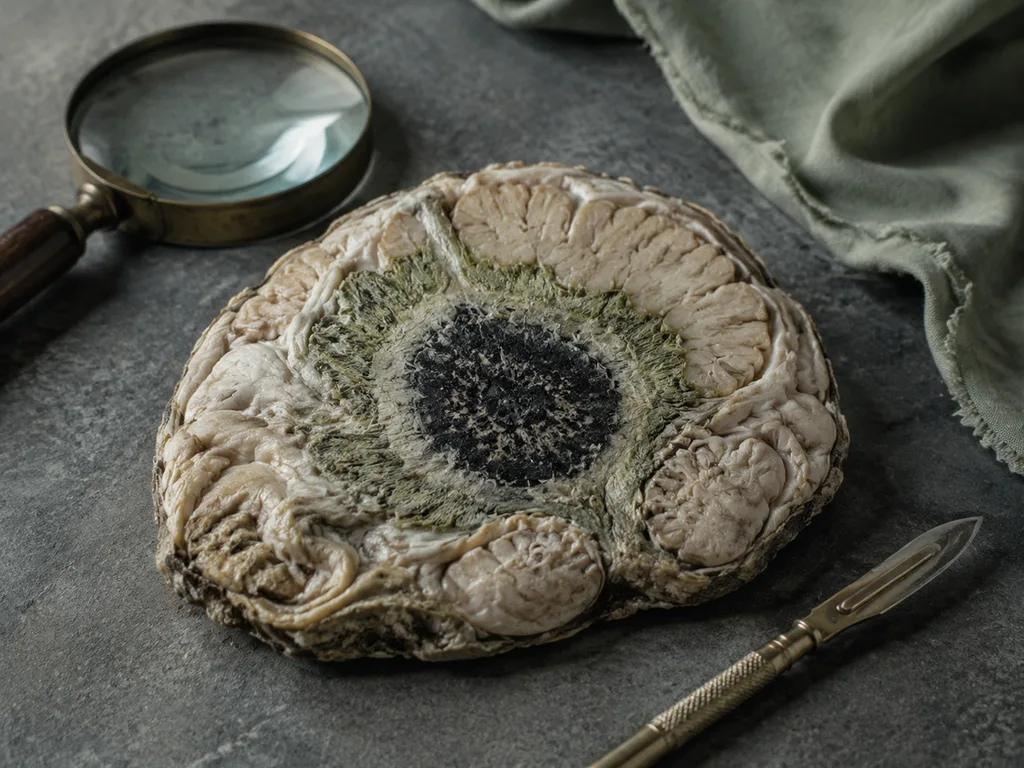
Target labels: CORTEX, DEPOSIT, DARK CORE, HALO.
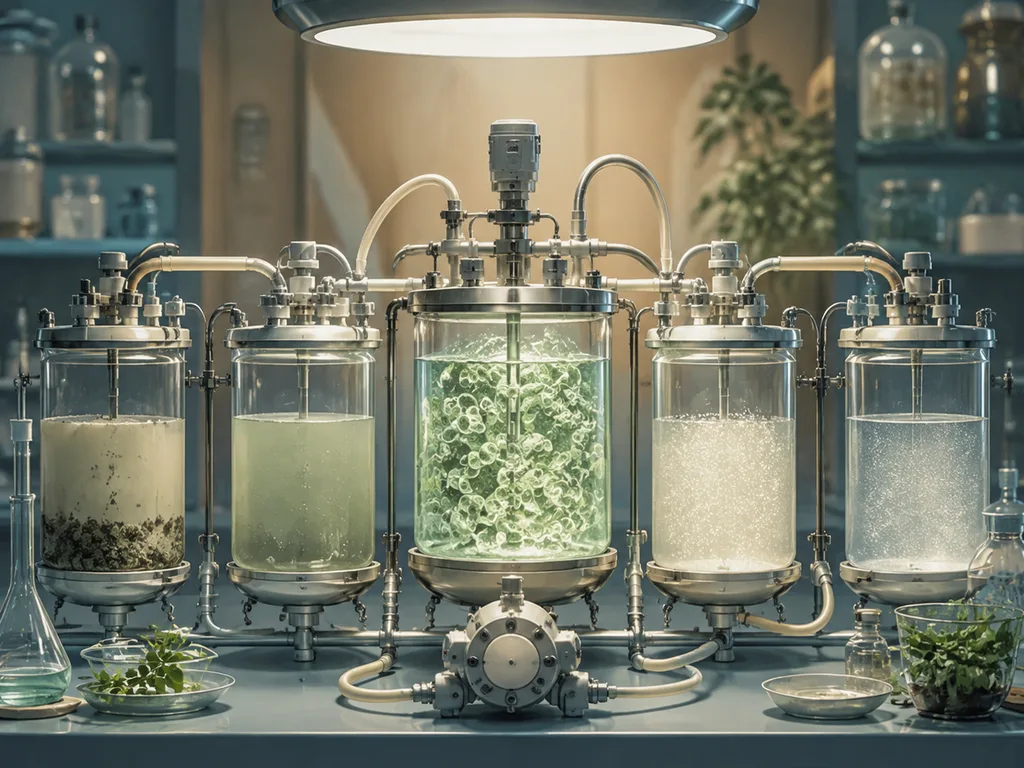
Target labels: LEUKAPHERESIS, GENE TRANSFER, EXPANSION, INFUSION — note the length: "LEUKAPHERESIS" is 13 characters, the longest single word in this test.
Target labels: CD3 ARM, TUMOR ANTIGEN ARM, T CELL, TUMOR CELL, PERFORIN.
Biology and biotech

Target labels: APP, ALPHA, BETA, GAMMA, AMYLOID-BETA. Greek-letter secretases rendered as spelled-out words — the prompt's choice, since model-drawn Greek letters are a known weak spot.

Target labels: PRINTHEAD, BIOINK, CELLS, SCAFFOLD, CONSTRUCT.
Astronomy and physics

Target labels: EVENT HORIZON, ACCRETION DISK, JET, PHOTON RING.
Materials and earth science
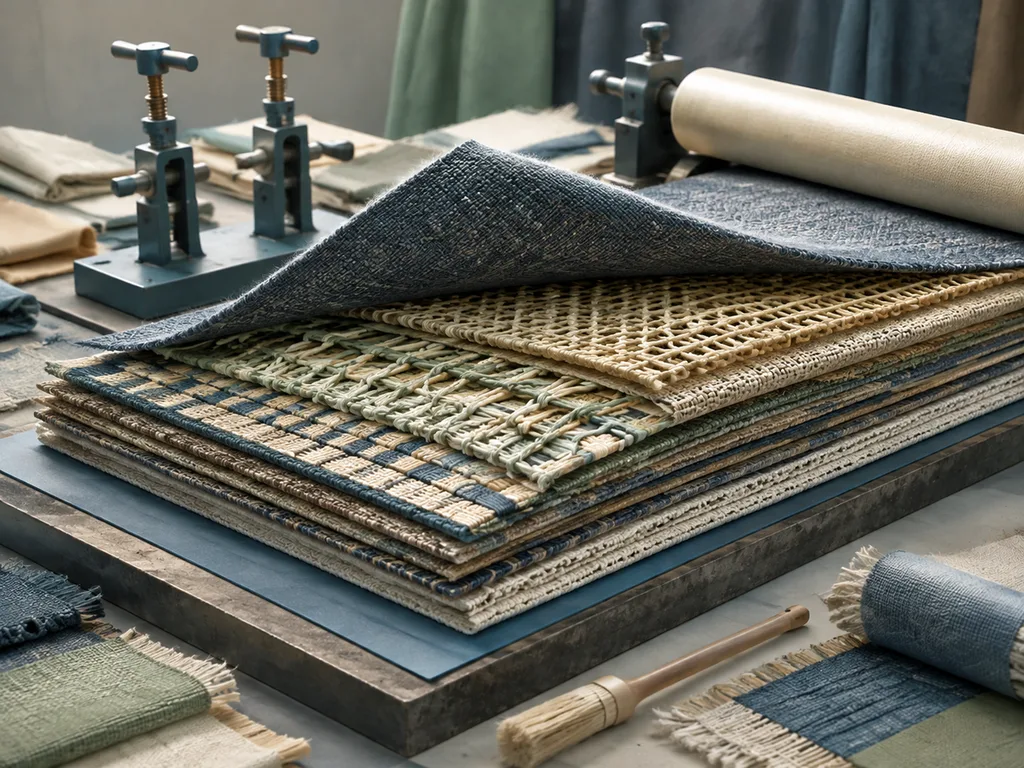
Target labels: PLY, WEAVE, MATRIX, INTERFACE.
Target labels: ROLL ANGLE, METALLIC, SEMICONDUCTING, BUNDLE.

Target labels: CUBIC, HEXAGONAL, MONOCLINIC, TRICLINIC.
The remaining ten plates in the test set (linked, one line each): anti-tau strategies, plaque burden, CAR-T journey, CAR-T in the body, antigen escape, APP processing, bioprinting, laminate plies, nanotube chirality, crystal systems.
What the format gets right
Short quoted labels in capitals render reliably. Across the test set, labels of 1–2 words in all-caps — JET, PLY, HALO, CD3 ARM — come out spelled correctly the large majority of the time, provided they are quoted in the prompt. This matches what text-focused image models are now built to do: the quoted string acts as a constraint, not a suggestion.
Label count survives when it's small. Four to five labels land as a set. The label-count rule we derived from building these plates: past six labels, per-label reliability drops and leader lines start colliding — cap plates at six and split the topic instead.
Compound terms work better hyphenated or spelled out. "AMYLOID-BETA" and "RADIATIVE ZONE" behave; Greek letters and chemical subscripts (α, β, CO₂) are where spelling breaks — spell them out (ALPHA, BETA, CO2) and the reliability returns.
Where it still fails
- Placement vs. pointing. A label can be spelled perfectly and still point at the neighboring structure. Spelling says nothing about anatomy — that check stays manual, and our verification protocol exists for exactly this gap.
- Long labels shrink. "TUMOR ANTIGEN ARM" at plate scale can come out smaller than readable. Fix in the prompt: shorten the label, or name the panel it belongs to.
- Mirrored layouts flip labels. In anatomy, right/left labels can end up swapped with the drawing looking otherwise fine. The fix is a named constraint: "right side of the image", "left lung on the viewer's left".
- Retries are part of the cost. Any honest workflow budgets a regeneration or two per plate. A model that gets labels right on the first attempt more often is cheaper than its headline price suggests — the same point our benchmarks piece makes about text rendering generally.
The prompt rules that fell out of the test
1. Quote every label, in capitals: Label "JET", "PHOTON RING".
2. Keep labels to 1–2 words; spell out symbols (ALPHA not α, CO2 not CO₂).
3. Cap the set at six labels per plate.
4. Name the panel each label lives in when placement matters.
5. Fix errors by naming them: "the sill is horizontal, between two strata".
Scientific review checklist
- [ ] Are all labels spelled correctly?
- [ ] Does each label point at the right structure (not just read correctly)?
- [ ] Is the label count complete?
- [ ] Are positions and proportions reasonable against your reference?
- [ ] Do arrows show the correct direction?
- [ ] Has it been checked against a trusted source?
Bottom line
Can AI render scientific labels correctly? For the format this site teaches — short, quoted, capital-letter labels on structured plates — the answer from these twenty plates is: reliably enough to build on, not reliably enough to skip review. Spelling is close to a solved problem at this label length; pointing and count are good with small sets; and the verification step remains human. That combination is what makes AI drafting worth it: the expensive part (correct, legible, publishable figures) still runs through your eyes, but the cheap part stopped being slow.
FAQ
Which model rendered the test plates?
grok-imagine-image-2.0, through glmimage.app's scientific illustration module — the same pipeline behind every plate on this site. We name it because model attribution is part of honest testing; a label test without its model named is marketing, not measurement.
Does label accuracy differ by discipline?
In our plates, the failures cluster by label type, not discipline: long words, symbols, and subscripts fail everywhere; short all-caps terms succeed everywhere. A plate mixing "JET" and "TUMOR ANTIGEN ARM" inherits the second label's risk.
What about non-English labels?
Treat them as a separate test. Bilingual rendering is a specific capability — it's the headline strength of GLM's own image models and the reason this site exists — but any model you use deserves a small pilot: ten labels in your language before you commit a figure set to it.
If spelling passes, is the figure publication-ready?
No — spelling is necessary, not sufficient. A label can be spelled perfectly and point at the wrong structure. Publication-readiness runs the full verification protocol, of which this test is one input.
Reproducing this test on your own stack
The test is deliberately reproducible: twenty prompts from a single grammar (our template), labels capped at six, one to two words, all caps, quoted; then a per-plate read for spelling, placement and count; then the tally by label type — short words, long words, symbols, subscripts. Run it against whatever model and toolchain you actually use, because label behavior is model-specific and your stack is the only one that matters for your figures. If your tally matches the pattern above (short quoted labels reliable, length and symbols degrading), the rules in this article transfer directly; if it doesn't, your tally is the rulebook — write the prompts your numbers support, and keep the test in the figure log (the artifact habit).
<!-- scientific-illustration-cluster-links:start -->
Continue through the scientific illustration collection
Create a scientific illustration · Browse the scientific illustration resource hub
Related: GLMImage vs BioRender for Scientific Figures: Which Fits Your Work? · How to Verify an AI-Generated Scientific Illustration (Checklist)
<!-- scientific-illustration-cluster-links:end -->