Scientific Illustration Jobs & Careers (2026 Guide)
Scientific illustration jobs still exist and still pay. They cluster in four non-medical fields — botanical, zoological, natural history, and technical — and they sit inside museums, publishers, research institutions, agencies, and a large freelance market. The U.S. Bureau of Labor Statistics does not track the job title separately: it files illustrators under craft and fine artists, a category with a median wage of $56,260 as of May 2024 (BLS OES). The adjacent medical illustration specialty reports a median of $83,500 according to the Association of Medical Illustrators, which tells you roughly where the ceiling sits. This guide covers the fields, the employers, staff versus freelance trade-offs, verified pay data, and how to break in.
The Fields That Hire Scientific Illustrators
"Scientific illustration" is one label over several distinct job markets. Which one you aim at changes the portfolio you build and the clients who will read it.
Botanical illustration. Floras, field guides, botanical-garden signage, herbarium work, seed and nursery catalogs, horticultural publishing. The work rewards patience with dissection and a watercolor or ink hand, and the clients tend to be institutions with long publishing cycles — slow to hire, slow to let go.
Zoological and wildlife illustration. Species plates for field guides, taxonomic descriptions that accompany new species papers, behavior sequences, and museum exhibit art. Precision in feather counts, scale rows, and fin positions is the product; a plate that miscounts a merlin's tail bands does not ship. Clients include field-guide publishers, natural-history museums, and the researchers describing new species who need their holotype illustrated properly.
Natural history illustration. Ecosystems, food webs, geology, astronomy, paleo-reconstruction, and process diagrams like water cycles and plate tectonics. Employers are museum exhibit departments, trade-book publishers, magazine science desks, and education companies. This is the broadest field and the one where compositional range matters most.
Technical illustration. Cutaways, assembly instructions, schematics, and mechanism diagrams for engineering firms, manufacturers, and product companies. It is the least biological and the most deadline-driven corner of the field, and it overlaps with engineering-communication roles.


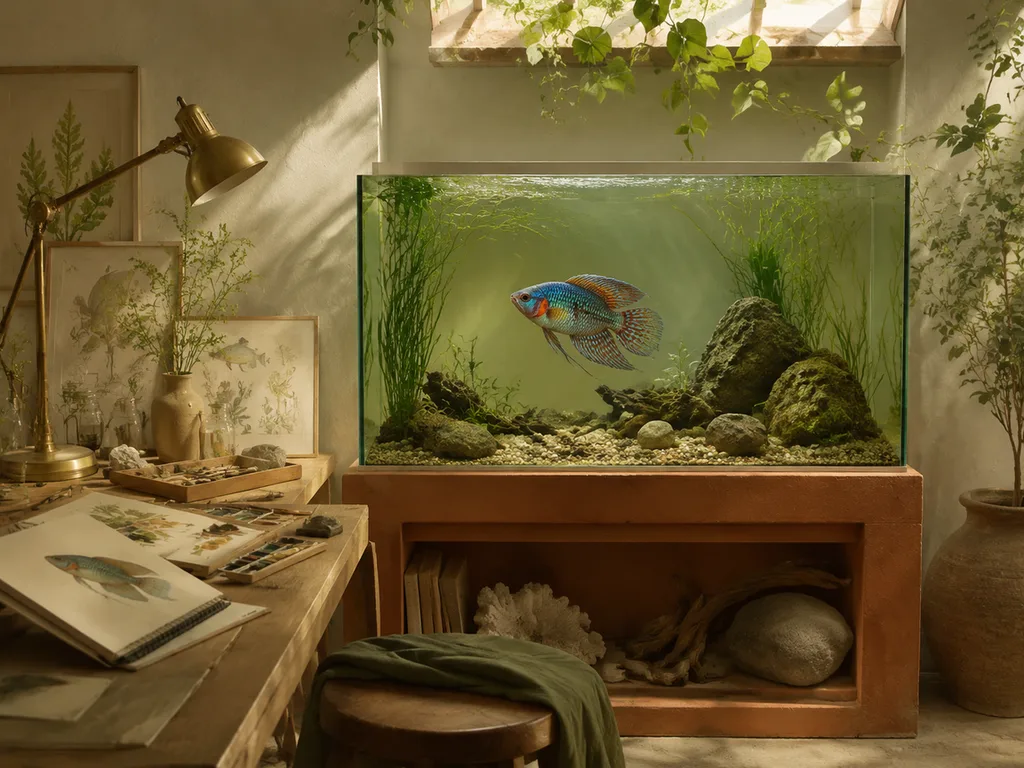
Where Scientific Illustration Jobs Actually Are
Museums and science centers. Exhibit graphics, taxonomic plates, reconstruction art, and educational material. These are some of the few employers who keep staff illustrators, and openings are infrequent — museums hire one person and keep them for years. Watch institution job boards rather than general listings.
Publishers and field-guide houses. Textbook publishers, university presses, and the specialist houses that produce floras and faunas. Most of this work is commissioned per project rather than staffed, and assignments arrive through art directors who already know you.
Research institutions and universities. Biology departments, herbaria, agriculture stations, and grant-funded projects that need species descriptions, habitat diagrams, and journal figures. Much of it is soft money: a three-year NSF grant with an illustration line item is a three-year client.
Agencies, studios, and education companies. Science-communication agencies, exhibition design firms, and e-learning companies buy illustration in volume for campaigns, exhibits, and courses. Faster deadlines, broader subjects, less taxonomy. For illustrators who want commercial pace alongside science content, this corner of the market is the usual answer, and it hires more often than museums do.
Freelance — the largest single bucket. Most working scientific illustrators are independent for at least part of their income, serving a mix of the clients above. A freelance year might include field-guide plates for a press, a museum exhibit wall, extension-office identification guides, and diagrams for a research group's next grant report. The GNSI — the Guild of Natural Science Illustrators, a 501(c)(3) professional organization (gnsi.org) — functions as the field's trade body, with chapters, an annual conference, and job listings.
What Do Scientific Illustration Jobs Pay?
Honest answer first: the general track pays less than the medical track, and the data is thin because no U.S. statistical agency tracks "scientific illustrator" as its own occupation.
- The government baseline. The BLS files illustrators under craft and fine artists: median wage $56,260 (May 2024 OES, bls.gov). That category mixes portrait painters with technical illustrators, so read it as a floor for salaried creative work, not a figure for this specialty.
- Entry level. Commonly reported starting salaries run $45,000–$75,000, with the upper end in technical and contract work. (Community-reported figures; treat as a range, not a promise.)
- The medical comparison. Medical illustrators — the credentialed sibling specialty — report a median of $83,500 with a range reaching $170,000 (AMI, ami.org). Glassdoor's 2025 estimates put the average at $79,975 (about $38/hour) with a 90th percentile of $135,598. General-track scientific illustration sits below this band, typically closer to the craft-and-fine-artists median.
- Freelance rates vary widely by field and client type; day-rate and per-plate pricing are both common, and institutional clients budget differently from commercial ones.
The practical read: you can make a living in this field, particularly by mixing steady institutional clients with technical or commercial work, but if maximum salary is the goal, the medical track — covered below — pays more.
Staff vs Freelance: How the Work Is Actually Structured
Staff roles (museums, publishers, universities) offer salary, benefits, and years-deep familiarity with one institution's collections. The trade-off is scarcity — few seats, slow turnover, and locations tied to wherever the museum or press happens to be.
Freelance offers the opposite package: any client anywhere, rates you set, and subject variety from koi anatomy to karst geology in the same month. The costs are equally real — self-marketing, uneven pipelines, no benefits, and the administrative overhead of running a small business.
Most illustrators land on a hybrid: a part-time institutional post or a couple of retainer clients covering fixed costs, with freelance commissions on top. If you are starting out, freelance is nearly always the entry point, because it is where the volume of small jobs is. Staff seats tend to come later, earned through the network and the track record that freelance years build.
How to Break Into Scientific Illustration
- Build the portfolio first. Six to ten labeled, identified pieces across disciplines — a botanical plate with dissected flowers, a zoological plate with correct fin counts, a technical cutaway, a process diagram. Every piece should carry subject identification and labels, because that is what science clients look for.
- Join the field's network. GNSI membership, chapter meetings, and the annual conference are the closest thing this field has to a job board you can talk to. Museum exhibit staff and art directors attend.
- Approach institutions directly. Herbaria, extension offices, natural-history museums, and university presses all buy illustration and rarely post openings. A short email with three relevant pieces and a specific offer ("species plates for your regional flora") outperforms a generic portfolio blast.
- Take the small jobs first. A newsletter diagram, a trail-side sign, one journal figure. Early commissions are how art directors learn whether you deliver accurate work on deadline.
- Use fast drafting tools to cover volume. Clients increasingly expect drafts quickly; generating a labeled first pass in seconds and refining it yourself is a competitive advantage, not a shortcut around accuracy.
For the full skills-and-portfolio path, see How to Become a Scientific Illustrator.
How It Differs from Medical Illustration
The two careers share a foundation — accuracy, clarity, labels — but they are different markets. Medical illustration concerns the human body and clinical subjects, is held to clinical accuracy, and is entered through a small number of accredited graduate programs; it pays more, per the AMI and Glassdoor figures above. General scientific illustration covers everything else (plants, animals, geology, mechanisms), has no degree gate, and is portfolio-driven throughout. If the human-body side tempts you, read What Is a Medical Illustrator? for the career shape and What Is Medical Illustration? for the work itself.
FAQ
Are scientific illustration jobs in demand in 2026?
Demand is steady rather than booming. Museums, publishers, research institutions, and education companies continue to commission plates, diagrams, and exhibit art, and AI drafting tools have shifted the work toward verification and finishing rather than eliminating it. Freelance volume is healthier than staff openings.
Do you need a degree to get scientific illustration jobs?
Not for the general track. Employers hire on portfolio and reliability. The exception is medical illustration, where accredited graduate training is the standard entry credential — a key reason it pays more.
What pay should I expect for scientific illustration jobs?
Plan around the craft-and-fine-artists median of $56,260 (BLS, May 2024) for salaried creative work, with commonly reported entry salaries of $45,000–$75,000 and higher figures in technical and medical-adjacent work. Freelance income depends on client mix and rate discipline.
Staff job or freelance — which should I aim for?
Start freelance, because that is where first commissions and portfolio breadth come from. Keep museum and publisher staff roles on the radar for later; they are scarce but stable, and a hybrid of one institutional anchor plus freelance work is a common end state.
See what clients are actually buying — generate a labeled plate for your own portfolio:
Try the scientific illustration generator →
<!-- scientific-authority-bridge:start -->
Turn a portfolio brief into a labeled draft
If you are building a scientific-illustration portfolio, start with a real communication brief rather than a decorative image. Create a labeled scientific illustration draft, then verify the structures and labels against authoritative references before adding it to your portfolio.
For the production workflow, use the scientific illustration prompt guide and the AI illustration verification checklist.
<!-- scientific-authority-bridge:end -->