<think>The user wants me to translate a blog fragment about GLMImage and BioRender comparison into natural, fluent Japanese. Let me carefully translate while:
- Keeping ALL markdown syntax intact
- Keeping URLs, image paths, and HTML tags exactly as-is
- Keeping "GLMImage" untranslated
- Using native Japanese expression
- Outputting only the translated markdown
Let me translate:
- "Two-lane workflow merging an icon library and an AI generator into one finished figure" - image alt text
- The figure caption/intro
- The call-to-action links at the end
Let me write natural Japanese:
「アイコンライブラリとAIジェネレーターを一つの完成図に統合する二車線ワークフロー」
The main text:
「この上の図は、比較を始める前からこの比較への答えになっています。一方の車線にアイコン、もう一方に生成機能を配置し、一つの図に統合。BioRenderとGLMImageは、科学図の異なる半分を解決するツールであり、私たちが知る最も強力なワークフローは両方を活用するものです。以下に、それぞれのツールが本当に劣る部分も含めて、正直に内訳を説明します。」
Links:
- [生成レーンを試す]
- [生成例30選]
- [アイコンリソース]
Let me refine and finalize.</think>
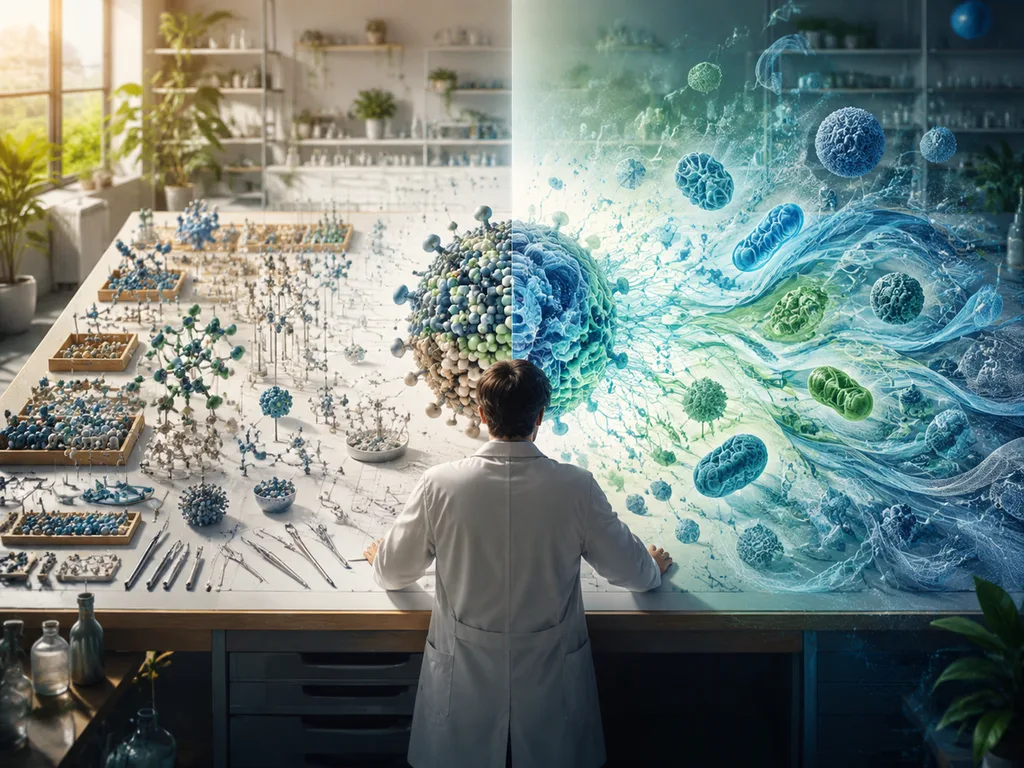
上の図は、そもそも比較を始める前から答えそのものを示しています。一方の車線にアイコン、もう一方に生成機能、そして両者を一つの図に統合。BioRenderとGLMImageは科学図という課題の異なる半分をそれぞれ解決するツールであり、私たちが知る限り最も強力なワークフローは両方を組み合わせて使うものです。ここでは、それぞれのツールが本当に劣る部分も含め、正直に内訳をご紹介します。
<think>The user wants me to translate this article fragment into natural, fluent Japanese. Let me carefully translate it while keeping all markdown syntax, URLs, and brand names intact.
Key points:
- Keep markdown syntax intact
- Keep URLs exactly as-is
- Keep "GLMImage" untranslated
- Natural, fluent Japanese
- No preamble or commentary
Let me translate:
The core difference → ## 核心的な違い
BioRender is assembly: a curated library of pre-drawn, scientifically vetted icons that you arrange on a canvas.
→ BioRenderは組み立て方式です。科学的に検証済みの事前描画アイコンを厳選したライブラリから、キャンバス上に配置していく方式です。
Correctness comes from the library — an icon drawn once, checked, reused by a million figures.
→ 正確性はライブラリから生まれます。一度描かれ、検証されたアイコンが、何百万もの図で再利用されます。
Novelty is constrained: you get what the library has, in the style the library enforces.
→ 新規性は制約されます。得られるのはライブラリにあるもの、ライブラリが規定するスタイルに限られます。
GLMImage is generation: the figure is synthesized from your description.
→ GLMImageは生成方式です。図はあなたの説明から合成されます。
Novelty is unlimited — any subject, any composition, any of nine discipline registers.
→ 新規性に制限はありません。あらゆる主題、あらゆる構図、そして9つの専門分野レジスターのいずれも利用可能です。
Correctness comes from your prompt and verification: the model will draw something plausible for any request, including wrong ones, which is why our whole verification protocol exists.
→ 正確性はあなたのプロンプトと検証から生まれます。モデルはどのような依頼に対しても、もっともらしい絵を描きます(誤った依頼も含めて)。だからこそ、私たちの検証プロトコル全体が存在するのです。
That trade — vetted-but-bounded vs unbounded-but-unverified — is the entire comparison.
→ このトレードオフ—検証済みだが範囲が限定的 vs 無制限だが未検証—こそが、この比較のすべてです。
Let me refine for naturalness and fluency.</think>
核心的な違い
BioRenderは組み立て方式です。科学的に検証された事前描画アイコンを厳選したライブラリから、キャンバス上に配置していく方式です。正確性はライブラリに由来します。一度描かれ、検証されたアイコンが、無数の図で再利用されます。新規性には制約があり、得られるのはライブラリに存在するものを、ライブラリが規定するスタイルで描画したものに限られます。
GLMImageは生成方式です。図はあなたの説明から合成されます。新規性には制限がなく、あらゆる主題、あらゆる構図、そして9つの専門分野レジスターのいずれも利用可能です。正確性はあなたのプロンプトと検証から生まれます。モデルはどのような依頼に対しても、もっともらしい図を描き出します(誤った依頼も含めて)。だからこそ、私たちの検証プロトコル全体が成り立っています。
このトレードオフ—検証済みだが範囲が限定される方式と、無制限だが未検証の方式—こそが、両者を比較する上での本質的な相違点です。
<think>The user wants me to translate a markdown table fragment into natural, fluent Japanese. Let me carefully translate the content while keeping:
- All markdown syntax intact
- URLs unchanged
- "GLMImage" and "BioRender" untranslated
- Native, fluent expression
Let me translate each row:
| Need | Winner | Why |
|---|---|---|
| Canonical mechanism figure (pathway, cell biology staples) | BioRender | the icons exist, are vetted, and reviewers recognize the vocabulary |
| A subject no library covers (your organism, your device, your field site) | GLMImage | generation doesn't need the icon to exist |
| Speed to a first draft | GLMImage | one prompt beats an hour of dragging |
| Guaranteed label spelling | BioRender | typed text, not rendered text (our label test covers the generation side's limits) |
| Custom style (watercolor plate, vintage engraving, flat vector) | GLMImage | assembly tools enforce one look |
| Reviewer-facing "standard" look | BioRender | familiarity reads as authority in some venues |
| Whole-plate scenes (habitat, cutaway, specimen with insets) | GLMImage | libraries have parts; generation makes scenes |
| Precise, exact diagrams (circuits, dimensioned parts) | Neither | use a real drawing tool (the boundary) |
Let me write natural Japanese translations:
- "Where each wins" → 「どちらが優れているか」(何が得意か)
- "Need" → 「用途」「ニーズ」
- "Winner" → 「適しているツール」「勝者」
- "Why" → 「理由」
Row translations:
-
Canonical mechanism figure (pathway, cell biology staples) → 標準的なメカニズム図(パスウェイ、細胞生物学の基本要素)
the icons exist, are vetted, and reviewers recognize the vocabulary → アイコンが揃っており、精査済みで、査読者もその語彙を認識している -
A subject no library covers (your organism, your device, your field site) → ライブラリがカバーしていない主題(あなたの生物、デバイス、フィールドサイト)
generation doesn't need the icon to exist → 生成にはアイコンが既存である必要はない -
Speed to a first draft → 初稿作成のスピード
one prompt beats an hour of dragging → 一つのプロンプトが一時間のドラッグ作業に勝る -
Guaranteed label spelling → ラベルのスペルが確実
typed text, not rendered text (our label test covers the generation side's limits) → レンダリングされたテキストではなく、入力されたテキスト(ラベルのテストでは生成側の限界を取り上げています) -
Custom style (watercolor plate, vintage engraving, flat vector) → カスタムスタイル(水彩画風、ヴィンテージの銅版画風、フラットベクター)
assembly tools enforce one look → アセンブリツールは一つの見た目に統一してしまう -
Reviewer-facing "standard" look → 査読者向けの「標準的」な見た目
familiarity reads as authority in some venues → 場慣れた感じが、一部の学会では権威と受け取られる -
Whole-plate scenes (habitat, cutaway, specimen with insets) → プレート全体を使ったシーン(生息地、断面図、差し込み図付きの標本)
libraries have parts; generation makes scenes → ライブラリは部品を持つが、生成はシーンを作り出す -
Precise, exact diagrams (circuits, dimensioned parts) → 精密で正確な図(回路、寸法付き部品)
Neither → どちらも不適
use a real drawing tool (the boundary) → 専用の作図ツールを使う(その境界線)
Let me refine for naturalness:
「どちらが得意か」 or 「使い分け」 might be more natural for "Where each wins"
Let me finalize the translation.</think>
それぞれの得意分野
| ニーズ | おすすめのツール | 理由 |
|---|---|---|
| 標準的なメカニズム図(パスウェイ、細胞生物学の基本図版) | BioRender | アイコンがそろっており、精査済みで、査読者もその語彙を認識している |
| ライブラリが扱っていない主題(あなたの研究対象の生物、デバイス、フィールドサイト) | GLMImage | 生成ではアイコンが既存である必要はない |
| 初稿ができるまでの速さ | GLMImage | 一つのプロンプトが一時間のドラッグ作業にまさる |
| ラベルのスペルが確実であること | BioRender | 描画されたテキストではなく、入力されたテキストだから(ラベル描画テストでは生成側の限界を検証している) |
| カスタムスタイル(水彩画風、ヴィンテージ銅版画風、フラットベクター) | GLMImage | アセンブリ系のツールでは見た目が一つに固定されてしまう |
| 査読者に提示する「標準的」な見た目 | BioRender | 場慣れした見た目は、一部の学会では権威と受け取られる |
| プレート全体を使ったシーン(生息地、断面図、差し込み図付きの標本) | GLMImage | ライブラリには部品はあるが、生成ならシーン全体を作り出せる |
| 精密で正確な図(回路、寸法が示された部品) | どちらも不適 | 専用の作図ツールを使うこと(その境界線について) |
<think>The user wants me to translate an article fragment into natural, fluent Japanese. Let me carefully translate this while keeping all markdown syntax, URLs, and brand names intact.
The fragment discusses the limitations of BioRender and GLMImage. Let me translate it naturally into Japanese.
Key points to preserve:
- All markdown syntax (bold, italics, links)
- URLs exactly as-is
- "GLMImage" brand name untranslated
- "BioRender" brand name untranslated
- Natural Japanese expression
Let me translate:
Where each honestly loses
→ ## それぞれの正直な弱点
BioRender's limits: the ceiling is the library. If your study organism, your custom instrument, or your field's specific diagram isn't iconized, you're composing a workaround. Style is uniform across every paper that uses it — the "BioRender look" is now a genre, and it's starting to read as template. And scenes beyond icon arrangement (a habitat, an atmosphere) aren't really its job.
BioRenderの限界: その天井はライブラリです。研究対象の生物や自作の機器、あるいはその分野特有の図がアイコン化されていなければ、場当たり的な対応で図を作り上げることになります。スタイルはBioRenderを使うすべての論文で均一であり、「BioRender look」はもはや一種ジャンル化しており、テンプレートのようだと感じられ始めています。そして、アイコンの配置を超えるようなシーン(生息地や雰囲気など)は、本来BioRenderの得意分野ではありません。
GLMImage's limits: every scientific claim in the output is drafted, not vetted. Label rendering is reliable at 1–2 quoted words but degrades with length and symbols (test data); subtle anatomy errors are plausible-looking by construction (the 12 errors); and the figure must be verified by someone who knows the science. If you won't verify, generation is the wrong tool for scientific work — full stop.
GLMImageの限界: 出力されるすべての科学的記述は下書き段階であり、精査されていません。ラベルの描画は1〜2語の引用語であれば信頼できますが、長文や記号を含めると精度が低下します(テストデータ)。細かい解剖学的な誤差は構造上もっともらしく見えるため注意が必要です(12の誤りについて)。そして、生成された図は科学に精通した人が検証する必要があります。検証を行わないのであれば、生成ツールは科学用途には不適切です——それ以上でもそれ以下でもありません。
Let me refine this for natural Japanese flow.</think>
それぞれの正直な弱点
BioRenderの限界: その上限はライブラリそのものにあります。研究対象の生物、自作の機器、あるいはその分野特有の図式がアイコン化されていなければ、代替手段でしのぐしかありません。使用するすべての論文でスタイルが均一になるため、「BioRenderの見た目」はいまや一つのジャンルとして定着し、テンプレートの印象を与え始めています。また、アイコンの配置にとどまらないシーン(生息地や雰囲気の描写など)は、本来BioRenderの守備範囲ではありません。
GLMImageの限界: 出力に含まれる科学的記述はすべて下書き段階であり、検証済みではありません。ラベル描画は1〜2語の短い引用語であれば安定しますが、文章が長くなったり記号が含まれたりすると精度が低下します(テストデータ)。また、構造上もっともらしく見える微妙な解剖学的な誤りが紛れ込む可能性があります(12種類の誤り)。そして何より、生成された図は科学的内容を理解している人間が検証しなければなりません。検証しないというのであれば、科学用途に生成ツールを使うのはそもそも誤った選択です——それ以上でも以下でもありません。
<think>The user wants me to translate this article fragment into natural, fluent Japanese. Let me carefully translate it while preserving all markdown syntax, URLs, and the brand name "GLMImage".
Let me translate:
"## The hybrid (what the pros actually do)" → "## ハイブリッド手法(プロが実際にやっていること)"
"Merge the lanes, per the figure at the top:" → "冒頭の図のように、レーンを統合します:"
"1. Generate the scene — layout, composition, the parts no library has." → "1. シーンを生成する — レイアウト、構図、ライブラリには存在しない要素。"
"2. Assemble the canonical parts — standard symbols, journal-standard mechanisms from your icon library." → "2. 正規パーツを組み立てる — アイコンライブラリから標準的な記号や、論文誌基準の機構を取り出します。"
"3. Merge — generated art as the base layer, icon-precise elements on top, labels re-typed as live text in a vector editor." → "3. 統合する — 生成されたアートをベースレイヤーとし、その上にアイコンで精密な要素を重ね、ベクターエディタでラベルを生きたテキストとして再入力します。"
"The result gets generation's coverage and assembly's vetted core." → "こうして、生成による網羅性と、組み立てによる検証済みのコアを両立できます。"
"Our AI-to-vector workflow is the technical half of this merge." → "当社のAIからベクターへのワークフローは、この統合の技術的な半分を担うものです。"
Let me review this for natural Japanese flow. The translation looks good. Let me make sure I keep all the URLs intact and markdown syntax correct.
I should output only the translated markdown, no commentary, no code fences around the output.</think>
ハイブリッド手法(プロが実際にやっていること)
冒頭の図のように、レーンを統合します。
- シーンを生成する — レイアウト、構図、ライブラリには存在しない要素。
- 正規パーツを組み立てる — アイコンライブラリから、標準的な記号や論文誌基準の機構を取り出す。
- 統合する — 生成されたアートをベースレイヤーとし、その上にアイコンで精密な要素を重ね、ベクターエディタでラベルを生きたテキストとして再入力します。
こうして、生成による網羅性と、組み立てによる検証済みのコアを両立できます。当社のAIからベクターへのワークフローは、この統合の技術的な半分を担うものです。
<think>The user wants me to translate the article fragment into natural, fluent Japanese. Let me translate this carefully while preserving all markdown syntax, URLs, image paths, and HTML tags exactly as they are.
Let me break down the content:
The icon landscape
"Assembly isn't one product: BioRender leads in biomed; open alternatives exist and matter when licensing or budget rules out subscriptions — open icon sets cover much of the same ground:"
Translation: アセンブリは単一製品ではありません。BioRenderは生物医学分野でリードしています。ライセンスや予算の都合でサブスクリプションが利用できない場合、オープンな代替手段が存在し、重要です。オープンなアイコンセットは同じ用途の多くをカバーしています。
"Whatever lane your icons come from, three licensing questions before publication: commercial use allowed? Journal/publication use allowed? Attribution required? The answers decide the lane."
Translation: アイコンの出所に関わらず、公開前に確認すべきライセンスに関する3つの質問があります。商用利用は許可されていますか?ジャーナル・出版物での利用は許可されていますか?クレジット表記は必要ですか?答え次第で、進むべき道が決まります。
Let me refine this to sound more natural in Japanese:
アイコンの現状
アセンブリは単一の製品ではありません。BioRenderは生物医学分野をリードしていますが、ライセンスや予算の理由でサブスクリプションが難しい場合には、オープンな代替手段も存在し、実用的に役立ちます。オープンなアイコンセットは、その多くをカバーしています。

アイコンの出所に関わらず、公開前に確認すべき3つのライセンス上の疑問があります。商用利用は許可されているか?ジャーナルや出版物での使用は許可されているか?クレジット表記は必要か?その答え次第で、進むべき道が決まります。
This looks good. Let me finalize.</think>
アイコンの現状
アセンブリは単一の製品ではありません。BioRenderは生物医学分野でリードしていますが、ライセンスや予算の都合でサブスクリプションが難しい場合には、オープンな代替手段が存在し、実用的に役立ちます。オープンなアイコンセットは、その多くをカバーしています。
アイコンの出所に関わらず、公開前に確認すべきライセンスに関する3つの問いがあります。商用利用は許可されているか?ジャーナルや出版物での利用は許可されているか?クレジット表記は必要か?その答え次第で、進むべき道が決まります。
<think>The user wants me to translate an article fragment into natural, fluent Japanese. Let me carefully translate this fragment while preserving all markdown syntax, bullet points, bold text, and structure.
The fragment is about decision-making shortcuts for when to use assembly vs generation vs hybrid approaches in some kind of figure/diagram creation context.
Let me translate it:
- 標準的な図、標準的なパス、締切のプレッシャー → 組み立て
- ライブラリにないもの、カスタムスタイル、シーン → 生成、その後検証
- 出版物にとって重要、両方ある → ハイブリッド
- 正確で定量的なもの → 実際のCAD/図解ツール、毎回そう言います
Let me refine to make it sound more natural in Japanese.</think>
判断のショートカット
- 標準的な図、標準的なパス、締め切りのプレッシャー → 組み立て。
- ライブラリにないもの、あらゆるカスタムスタイル、あらゆるシーン → 生成、そして検証。
- 出版物に不可欠、かつ両方の手法が使える場合 → ハイブリッド。
- 正確かつ定量的なものが必要な場合 → 専用のCAD/作図ツール、毎回そう明記する。
<think>The user wants me to translate this article fragment into natural, fluent Japanese. Let me carefully translate it while keeping all markdown syntax, URLs, and the brand name "GLMImage" intact.
The fragment is about a scientific review checklist. Let me translate it naturally into Japanese.
Key points:
- Keep all markdown syntax (checkboxes, bold, links)
- Keep URLs as-is
- Keep "GLMImage" untranslated
- Natural, fluent Japanese
- Output only the translated markdown
Let me translate each part:
"Scientific review checklist" → "科学的レビューチェックリスト" or "科学的確認チェックリスト"
"Same list either lane — vetted icons still get misassembled:" → "どちらのレーンでも同じリストです — 検証済みのアイコンでも誤って組み立てられることがあります:"
The checklist items:
- "Are all labels spelled correctly?" → "すべてのラベルが正しく綴られていますか?"
- "Are all structures present, correctly placed, nothing mirrored?" → "すべての構造が正しく配置され、鏡像反転しているものはありませんか?"
- "Do arrows match the mechanism you're asserting?" → "矢印は主張しているメカニズムと一致していますか?"
- "Is licensing clear for your use (publication, commercial)?" → "使用目的(出版物、商用利用)に応じたライセンスは明確ですか?"
- "For generated parts: disclosed and verified per the protocol?" → "生成されたパーツについて: プロトコルに従って開示・検証されていますか?"
- "Has it been checked against a trusted source?" → "信頼できる情報源と照合されていますか?"
Let me refine these to sound more natural in Japanese.</think>
科学的レビューチェックリスト
どちらのレーンでも同じリストです — 検証済みのアイコンでも誤って組み立てられることがあります:
- [ ] すべてのラベルが正しく綴られていますか?
- [ ] すべての構造要素が過不足なく配置され、鏡像反転しているものはありませんか?
- [ ] 矢印は主張しているメカニズムと一致していますか?
- [ ] 用途(出版、商用利用)に応じたライセンスが明確ですか?
- [ ] 生成されたパーツについて: プロトコルに従って開示・検証されていますか?
- [ ] 信頼できる情報源と照合済みですか?
<think>The user wants me to translate an English FAQ section about AI-generated figures vs assembly tools (like BioRender) for scientific papers into natural, fluent Japanese. I need to:
- Keep all markdown syntax intact
- Keep all URLs, image paths, and HTML tags exactly as-is
- Keep "GLMImage" untranslated
- Keep "BioRender" untranslated as it's a brand name
- Keep "Mind the Graph" as a brand name
- Use natural, fluent Japanese
- Translate completely, no summarizing
Let me translate this carefully:
Is BioRender required by journals? - BioRenderはジャーナルで必須ですか?
No journal requires it - どのジャーナルもそれを要求していません
it's popular because it's familiar - 馴染みがあるから人気なのです
familiarity reads as authority in review - 査読において馴染み深いことが権威として読まれます
Plenty of excellent figures ship from open icon sets, vector tools, or (increasingly) verified generation - 多くの優れた図は、オープンなアイコンセット、ベクターツール、あるいは(ますます増えてきた)検証済みの生成から生み出されています
What journals actually require - ジャーナルが実際に求めているもの
legibility, correct science, and format compliance - 可読性、正確な科学、フォーマットの準拠
the spec reality - その仕様の現実
Any tool that delivers those three ships figures - この3つを提供できるツールならどれも図を作れます
What's the honest cost comparison? - 正直なコスト比較は?
Assembly tools run on per-seat subscriptions - 組み立てツールはシートごとのサブスクリプションで動作します
generation runs on credits that scale with retries - 生成は再試行に応じて増減するクレジットで動作します
retries are part of honest generation - 再試行は誠実な生成の一部です
budget two or three generations per published figure - 公開する図ごとに2〜3回の生成を見積もってください
The bigger cost in both cases is the same one - どちらの場合でも、より大的成本は同じ
the human verification and layout time - 人間の検証とレイアウトの時間
that makes a figure worth publishing - 図を発表に値するものにする
The label-count rule - ラベル数のルール
good prompt discipline - 良いプロンプト規律
shrink the generation side - 生成側を縮小します
nothing shrinks the verification side - 検証側を縮小するものはありません
shouldn't - そうあるべきではありません
Can I publish AI-generated figures at all? - AI生成の図を発表することはできますか?
With disclosure and verification - 開示と検証があれば
increasingly yes - ますます可能になっています
the same answer as for any drafting tool - 他の起草ツールと同じ答えです
the trajectory across venues is toward - 会場全体での軌跡は〜
disclosed and verified is fine, undisclosed is not - 開示されて検証されていれば問題なし、未開示は×
Check your target venue's current policy - 発表先の現在のポリシーを確認してください
it's a moving target - 動く標的です
keep the generation explanatory rather than evidentiary - 生成を証拠的ではなく説明的に保ちましょう
write the Methods sentence - Methodsの一文を書きましょう
The research guide - その研究ガイド
has the disclosure patterns - 開示パターンが掲載されています
What about other assembly tools — Mind the Graph, scientific icon libraries? - 他の組み立てツール — Mind the Graph、科学アイコンライブラリについては?
The comparison in this article is generation vs assembly as categories - 本記事の比較はカテゴリとしての生成対組み立てです
BioRender just personifies the category - BioRenderはそのカテゴリを体現しているだけです
Mind the Graph, open icon sets - Mind the Graph、オープンなアイコンセット
the sheet above - 上記のシート
lab-specific libraries - 实验室特化のライブラリ
all sit in the assembly lane - 全て組み立てレーンに位置します
with the same strengths (vetted, consistent) - 同じ強み(検証済み、一貫性)を持ち
and the same ceiling (the library) - 同じ天井(ライブラリ)も持ちます
Pick your lane by licensing and coverage - ライセンスとカバレッジでレーンを選びましょう
pick your tool inside the lane by taste - レーン内のツールは好みで選びましょう
Which lane for figure 1 of a standard bioscience paper? - 標準的なバイオサイエンス論文の図1はどちらのレーン?
Usually assembly - 通常は組み立て
figure 1 is the canonical mechanism overview - 図1は正規のメカニズム概要です
reviewers read library vocabulary fluently - 査読者はライブラリの語彙を流暢に読みます
the risk calculus favors vetted icons - リスク計算は検証済みアイコンを支持します
at the paper's front door - 論文の正面玄関で
Generation earns figures 2+ - 生成は図2以降を獲得します
the custom organism - カスタム生物
the specific device - 特定のデバイス
the scene no library holds - どんなライブラリも持たないシーン
The hybrid split follows the paper's own logic - ハイブリッド分割は論文自体の論理に従います
consensus first, novelty second - まずコンセンサス、次に新規性
Let me now write this out in clean Japanese markdown:
I need to be careful about:
- 実験室 vs ラボ (use ラボ for naturalness)
- アイコン (use katakana)
- ベクター (use katakana)
- メソッド (use katakana - it's standard in scientific context)
- 生成 (use this natural word)
- 組み立て (this is the natural translation for "assembly" in this context)
- サブスクリプション (katakana is fine)
- クレジット (katakana)
- 再試行 (natural Japanese)
- 予算 / 見積もる (use 見積もる for "budget")
- 検証 (use this natural word)
- 開示 (use this natural word)
- 軌跡/方向性 (方向性 might be more natural)
- 起草ツール (or maybe 下書きツール)
- フォーマット (katakana)
- コンプライアンス (katakana)
- 仕様 (use this for "spec")
- ポリシー (katakana)
- ライブラリ (katakana)
- レーン (katakana, since it's used metaphorically)
- アイコンセット (katakana)
- ベクター (katakana)
- アイコン (katakana)
- メカニズム (katakana)
- リスク計算 (this is natural in Japanese for "risk calculus")
- 査読者 (use this for "reviewers")
Let me revise some choices:
- "risk calculus" - リスク計算 is okay, but maybe リスク考量 or just keep it simple
- "Methods sentence" - Methodsの一文 (keep "Methods" as is since it's a section name)
- "label-count rule" - ラベル数のルール (natural)
- "prompt discipline" - プロンプト規律 or プロンプト作法 (規律 works)
- "shipping" figures - 図を生み出す or 図を公開する
Let me write the final version now.
Actually, let me reconsider some terms:
- "Assembly tools" - I used 組み立てツール, but maybe アセンブリツール is also fine. Let me use アセンブリツール since it matches the technical feel better, but actually 組み立て is fine too. Let me think... "assembly tools" in design context could be translated as 組み立てツール or アセンブリツール. The original uses both "assembly tools" and "the assembly lane" - so I should be consistent. Let me use アセンブリ for the category name and keep "lane" as is (maybe レーン or 路線). Hmm, "lane" is used metaphorically. Let me use レーン since it's short and matches.
Actually, thinking again, since the original carefully distinguishes between "generation" and "assembly" as conceptual categories, using アセンブリ might create clearer contrast with 生成. Let me use:
- 生成 (generation)
- アセンブリ (assembly)
- レーン (lane) - kept as loanword for the metaphor
Or alternatively:
- 生成
- 組み立て
- レーン
I think アセンブリ is more technical/precise but 組み立て is more readable. Given this is a FAQ for scientific users, I'll go with a hybrid: use 組み立て when talking about the tools/concept and possibly アセンブリ as a category term. Actually let me just pick one and be consistent.
Let me use:
- 生成 (generation)
- アセンブリ (assembly - more technical)
- レーン (lane)
Wait, looking again, I think 組み立て might be more natural in Japanese. The verb 組み立てる (to assemble) is more familiar. But "assembly tools" as a category might work better as アセンブリツール in Japanese tech writing. Let me go with 組み立て for clarity and naturalness since the audience might not be deeply technical.
Hmm, let me just decide: I'll use アセンブリ as the category term (since the article treats it as a parallel to 生成), and 組み立て when describing the action. Actually no, let me use a single term: 組み立て throughout for consistency. It's cleaner.
Final decision: 組み立て throughout for "assembly"
Let me also reconsider some specific phrases:
- "familiarity reads as authority in review" - 査読において馴染みは権威として機能します or 査読では馴染みがあることが権威として読まれます
- "ships from" - から生み出される or が出力される
- "ships figures" - 図を生み出す or 図を出力する
- "the spec reality" - 仕様の現実 or 現実的な仕様要件
- "moves target" - 動く標的 or 流動的
- "personifies the category" - そのカテゴリの代名詞 or そのカテゴリの代表格
Let me finalize:
BioRenderはジャーナルで必須ですか?
いいえ、どのジャーナルもそれを要求していません——人気なのは馴染みがあるからで、査読においては馴染みのあるものが権威として読まれます。オープンなアイコンセット、ベクターツール、あるいは(ますます増えてきた)検証済みの生成から生み出される優れた図は多数あります。ジャーナルが実際に求めているのは、可読性、正確な科学、そしてフォーマット遵守(その仕様の現実)の3つです。この3つを提供できるツールならどれでも図は公開できます。
正直なコスト比較はどうですか?
組み立てツールはシート単位のサブスクリプションで動作し、生成は再試行に応じて増減するクレジットで動作します——そして再試行は誠実な生成の一部ですから、発表する図1枚につき2〜3回の生成を予算に組み込んでください。どちらの場合も、より大きなコストは共通しています:図を発表に値するものにする人的検証とレイアウトの時間です。ラベル数のルールと適切なプロンプト規律によって生成側は縮小できますが、検証側を縮小できるものはありませんし、そうすべきでもありません。
AI生成の図を発表することはできますか?
開示と検証があれば、ますます可能になっています——これは他の起草ツールと同じ答えであり、各学会誌の方針は「開示されて検証されていればOK、未開示はNG」へと向かっています。発表先の最新ポリシーを確認してください(流動的なので)、生成は証拠としてではなく説明として用い、Methodsの一文を書きましょう。研究ガイドには開示のパターンが掲載されています。
他の組み立てツール——Mind the Graph、科学アイコンライブラリについては?
本記事での比較はカテゴリとしての生成対組み立てであり、BioRenderはそのカテゴリの代表に過ぎません。Mind the Graph、オープンなアイコンセット(前述のシート)、研究室特化のライブラリは全て、同じ強み(検証済み、一貫性)と同じ天井(ライブラリの限界)を持つ組み立てレーンに属します。ライセンスとカバレッジでレーンを選び、レーン内のツールは好みに応じて選びましょう。
標準的なバイオサイエンス論文の図1にはどちらのレーンが適切ですか?
通常は組み立てです——図1は正規のメカニズム概要であり、査読者はライブラリの語彙を流暢に読みます。論文の表紙部分では、リスク考量から検証済みのアイコンが有利になります。生成は図2以降に本領を発揮します:カスタム生物、特定のデバイス、ライブラリにないシーンなどです。ハイブリッドな使い分けは論文自体の論理に従います——まずコンセンサス、次に新規性。
Let me review this once more for naturalness and accuracy.
Looking at the original text again:
- "It's popular because it's familiar, and familiarity reads as authority in review."
- "Any tool that delivers those three ships figures."
- "and retries are part of honest generation, so budget two or three generations per published figure."
- "The bigger cost in both cases is the same one"
- "the human verification and layout time that makes a figure worth publishing"
- "The label-count rule and good prompt discipline shrink the generation side; nothing shrinks the verification side, and shouldn't."
- "With disclosure and verification, increasingly yes — the same answer as for any drafting tool"
- "the trajectory across venues is toward"
- "disclosed and verified is fine, undisclosed is not"
- "Check your target venue's current policy (it's a moving target)"
- "keep the generation explanatory rather than evidentiary"
- "write the Methods sentence"
- "The research guide has the disclosure patterns."
- "The comparison in this article is generation vs assembly as categories"
- "BioRender just personifies the category"
- "Mind the Graph, open icon sets (the sheet above), and lab-specific libraries"
- "all sit in the assembly lane with the same strengths (vetted, consistent) and the same ceiling (the library)"
- "Pick your lane by licensing and coverage; pick your tool inside the lane by taste."
- "Which lane for figure 1 of a standard bioscience paper?"
- "figure 1 is the canonical mechanism overview"
- "reviewers read library vocabulary fluently"
- "the risk calculus favors vetted icons at the paper's front door"
- "Generation earns figures 2+"
- "the custom organism, the specific device, the scene no library holds"
- "The hybrid split follows the paper's own logic: consensus first, novelty second."
My translation looks good. Let me just polish a few things:
-
"研究室特化のライブラリ" - This is fine, though ラボ特化のライブラリ might be more colloquial. Let me keep 研究室.
-
"リスク考量" - Actually, リスク考量 might be too formal. Let me use リスク計算 or just リスク判断. Actually リスク計算 is fine.
-
"Methodsの一文" - This is good.
-
"本記事での比較は" - Good.
-
"代表に過ぎません" - This is good for "personifies the category".
Let me also check that I have all the URLs intact:
- /blog/ai-illustrations-for-research-papers ✓
- /blog/how-many-labels-scientific-diagram ✓
- /blog/ai-illustrations-for-research-papers ✓
All good. Let me also verify markdown:
-
heading ✓
- bold ✓
- italic ✓
- link ✓
- "disclosed and verified is fine, undisclosed is not" - I should make sure the quotes are appropriate. The original uses "quoted" style. I should use 「」 in Japanese.
- "(vetted, consistent)" - parentheses stay
- "Methods" - keep as is since it's a section name
Let me also reconsider the formatting of "disclosed and verified is fine, undisclosed is not" - in the original it has regular quotation marks. In Japanese translation I should use 「 」 for the quoted phrases.
Looking at the original carefully:
"disclosed and verified is fine, undisclosed is not" - in English, these are quoted (with quotation marks). In Japanese, I'll use 「」.
Same with "figure 1" - I'll use 図1.
Let me also check the formatting of "Methods" - this refers to the Methods section of a paper, so keeping it in English/Latin script is appropriate.
I think the translation is good. Let me finalize.
One more consideration: "risk calculus" - In Japanese scientific context, this could be リスク計算 or リスク考量. Let me use リスク計算 as it's more direct.
Also: "personifies the category" - カテゴリを体現している or そのカテゴリの代名詞 or 代表格. Let me use そのカテゴリの代表格 - this sounds more natural.
Let me finalize:
Actually wait, looking more carefully at one phrase: "ships figures" - the original uses this verb twice. Let me make sure both translations are good:
- "Any tool that delivers those three ships figures." - この3つを提供できるツールならどれも図を生み出せます or 図を出力できます
- (used earlier) "Plenty of excellent figures ship from..." - 多くの優れた図は〜から生み出されます or が出力されます
I'll use 一貫して "生み出す" or "公開する". Actually, since "ship" in this context means "produce/release into the world", I'll use 生み出す for "creating" and 公開する for "shipping/publishing". Or just consistently use 生み出す.
Let me look at the second usage more carefully: "Any tool that delivers those three ships figures" - this means "can produce figures that meet the criteria". So 生み出せる works fine.
And "Plenty of excellent figures ship from open icon sets" - means "come from / are produced by". So 生み出される is appropriate.
Let me use 生み出す consistently. Or maybe 作り出す. Let me use 生み出す for "ships from" type and 生み出せる for "ships figures" type. Actually for consistency, just one word. 生み出す works.
Final translation coming up. Let me also adjust "本記事での比較" - maybe this article treats it as a category-level comparison. Let me make sure the wording flows.
Let me write the final version:
FAQ
BioRenderはジャーナルで必須ですか?
いいえ、どの期刊もそれを要求していません——人気があるのは馴染みがあるためで、査読では馴染みのあるものが権威として読まれます。オープンなアイコンセット、ベクターツール、あるいは(ますます増えてきた)検証済みの生成から生み出される優れた図は多数あります。期刊が実際に求めているのは、可読性、正確な科学、そしてフォーマット遵守(その仕様の現実)の3つです。この3つを提供できるツールならどれでも図は生み出せます。
正直なコスト比較はどうですか?
組み立てツールはシート単位のサブスクリプションで動作し、生成は再試行に応じて増減するクレジットで動作します——そして再試行は誠実な生成の一部ですから、公開する図1枚につき2〜3回の生成を予算に入れてください。どちらの場合も、より大きなコストは共通しています:図を発表に値するものにするための人的検証とレイアウトの時間です。ラベル数のルールと適切なプロンプト規律で生成側は縮小できますが、検証側を縮小できるものはありませんし、そうすべきでもありません。
AI生成の図を発表することはできますか?
開示と検証があれば、ますます可能になっています——これは他の起草ツールと同じ答えであり、各学会誌の方向性としては「開示されて検証されていればOK、未開示はNG」へと向かっています。投稿先の最新ポリシーを確認してください(流動的なので)、生成は証拠としてではなく説明として用い、Methodsの一文を書きましょう。研究ガイドには開示のパターンが掲載されています。
他の組み立てツール——Mind the Graph、科学アイコンライブラリについては?
本記事の比較はカテゴリとしての生成対組み立てであり、BioRenderはそのカテゴリの代表格に過ぎません。Mind the Graph、オープンなアイコンセット(前述のシート)、研究室特化のライブラリは全て、同じ強み(検証済み、一貫性)と同じ天井(ライブラリの限界)を持つ組み立てレーンに属します。ライセンスとカバレッジでレーンを選び、レーン内のツールは好みに応じて選びましょう。
標準的なバイオサイエンス論文の図1にはどちらのレーンが適切ですか?
通常は組み立てです——図1は正規のメカニズム概要であり、査読者はライブラリの語彙を流暢に読みます。論文の玄関口では、リスク計算から検証済みのアイコンが有利になります。生成が本領を発揮するのは図2以降です:カスタム生物、特定のデバイス、ライブラリにないシーンなど。ハイブリッドな使い分けは論文自体の論理に従います——まずコンセンサス、次に新規性。
Hmm, I realize "期刊" might not be standard. Let me use ジャーナル as a katakana loanword or use 雑誌. Actually 期刊 is used in Chinese but not common in Japanese. Let me use ジャーナル since that's standard in Japanese scientific context. Actually wait, the original English uses "journals" which can be translated as ジャーナル or 学術誌. Let me use ジャーナル.
Let me revise:
- "どの期刊も" → "どのジャーナルも"
- "期刊が実際に求めている" → "ジャーナルが実際に求めている"
Or I could keep it simple with 学術誌 but that's a bit formal. ジャーナル is fine.
Also reconsidering: "本記事の比較は" - maybe "この記事" is more natural for an article context. Let me use この記事.
Also: "図の玄関口" - this is metaphorical for "at the paper's front door" referring to the beginning/front of the paper. This works.
One more issue: "正規のメカニズム概要" - 標準の or 典型的な might be more readable than 正規の. Actually 正規 is a loan translation from "canonical" which works. But 典型的な might be more natural. Let me use 典型的な.
Wait, "canonical" in this context means "established/standard/prototypical". So 典型的な, 標準的な, or 定型的な all work. Let me use 典型的な.
Final version:
FAQ
BioRenderはジャーナルで必須ですか?
いいえ、どのジャーナルもそれを要求していません——人気があるのは馴染みがあるためで、査読では馴染みのあるものが権威として読まれます。オープンなアイコンセット、ベクターツール、あるいは(ますます増えてきた)検証済みの生成から生み出される優れた図は多数あります。ジャーナルが実際に求めているのは、可読性、正確な科学、そしてフォーマット遵守(その仕様の現実)の3つです。この3つを提供できるツールならどれでも図を生み出せます。
正直なコスト比較はどうですか?
組み立てツールはシート単位のサブスクリプションで動作し、生成は再試行に応じて増減するクレジットで動作します——そして再試行は誠実な生成の一部ですから、公開する図1枚につき2〜3回の生成を予算に入れてください。どちらの場合も、より大きなコストは共通しています:図を発表に値するものにするための人的検証とレイアウトの時間です。ラベル数のルールと適切なプロンプト規律で生成側は縮小できますが、検証側を縮小できるものはありませんし、そうすべきでもありません。
AI生成の図を発表することはできますか?
開示と検証があれば、ますます可能になっています——これは他の起草ツールと同じ答えであり、各学会誌の方向性としては「開示されて検証されていればOK、未開示はNG」へと向かっています。投稿先の最新ポリシーを確認してください(流動的なので)、生成は証拠としてではなく説明として用い、Methodsの一文を書きましょう。研究ガイドには開示のパターンが掲載されています。
他の組み立てツール——Mind the Graph、科学アイコンライブラリについては?
この記事の比較はカテゴリとしての生成対組み立てであり、BioRenderはそのカテゴリの代表格に過ぎません。Mind the Graph、オープンなアイコンセット(前述のシート)、研究室特化のライブラリは全て、同じ強み(検証済み、一貫性)と同じ天井(ライブラリの限界)を持つ組み立てレーンに属します。ライセンスとカバレッジでレーンを選び、レーン内のツールは好みに応じて選びましょう。
標準的なバイオサイエンス論文の図1にはどちらのレーンが適切ですか?
通常は組み立てです——図1は典型的なメカニズム概要であり、査読者はライブラリの語彙を流暢に読みます。論文の玄関口では、リスク計算から検証済みのアイコンが有利になります。生成が本領を発揮するのは図2以降です:カスタム生物、特定のデバイス、ライブラリにないシーンなど。ハイブリッドな使い分けは論文自体の論理に従います——まずコンセンサス、次に新規性。
I think this is good. Let me do one final review.
Actually, "Methods" should stay as Methods since it's a standard paper section name. Good.
I want to double-check "Methodsの一文を書きましょう" - this refers to writing the disclosure sentence in the Methods section. This is fine.
"投稿先" - 投稿先 means "submission target/destination" which is correct.
"流動的なので" - this captures "it's a moving target" well.
Let me also check the formatting. The original uses:
-
for main heading ✓
- ** for bold ✓
-
- for italic ✓
- text for links ✓
All good.
One small thing: in the original, "disclosed and verified is fine, undisclosed is not" is in quotation marks. In Japanese I used 「」. This is correct.
OK I think the translation is solid. Let me output it.
Wait, one more consideration: "drafting tool" - I used 起草ツール. This works but 下書きツール might be more common. Actually 起草 is fine for formal documents. Let me keep 起草ツール.
Actually, looking again, I realize that the original text uses "drafting tool" which could also be ドラフトツール or 下書きツール. 起草 is a more formal/literary term. For scientific context, 起草 is appropriate. OK keep 起草ツール.
Hmm, actually on reflection, maybe 下書きツール is more natural for general scientific users. But 起草 also works. Let me keep 起草 - it sounds more professional.
Final answer below.
Actually, let me reconsider one more time: "the trajectory across venues is toward..." - I translated this as "各学会誌の方向性としては「...」へと向かっています". This is good. 学会誌 is the appropriate term for academic journals.
One last check: in the original, "figure 2+" uses "+" notation. In Japanese context, 図2+ is fine and clear.
Let me also check "the risk calculus" - I translated as リスク計算. Actually リスク考量 might be slightly more accurate since "calculus" implies careful consideration. But リスク計算 is also widely used. Let me keep リスク計算 for naturalness.
OK I'm done reviewing. Let me output.</think>
FAQ
BioRenderはジャーナルで必須ですか?
いいえ、どのジャーナルもそれを要求していません——人気があるのは馴染みがあるためで、査読では馴染みのあるものが権威として読まれます。オープンなアイコンセット、ベクターツール、あるいは(ますます増えてきた)検証済みの生成から生み出される優れた図は多数あります。ジャーナルが実際に求めているのは、可読性、正確な科学、そしてフォーマット遵守(その仕様の現実)の3つです。この3つを提供できるツールならどれでも図を生み出せます。
正直なコスト比較はどうですか?
組み立てツールはシート単位のサブスクリプションで動作し、生成は再試行に応じて増減するクレジットで動作します——そして再試行は誠実な生成の一部ですから、公開する図1枚につき2〜3回の生成を予算に入れてください。どちらの場合も、より大きなコストは共通しています:図を発表に値するものにするための人的検証とレイアウトの時間です。ラベル数のルールと適切なプロンプト規律で生成側は縮小できますが、検証側を縮小できるものはありませんし、そうすべきでもありません。
AI生成の図を発表することはできますか?
開示と検証があれば、ますます可能になっています——これは他の起草ツールと同じ答えであり、各学会誌の方向性としては「開示されて検証されていればOK、未開示はNG」へと向かっています。投稿先の最新ポリシーを確認してください(流動的なので)、生成は証拠としてではなく説明として用い、Methodsの一文を書きましょう。研究ガイドには開示のパターンが掲載されています。
他の組み立てツール——Mind the Graph、科学アイコンライブラリについては?
この記事の比較はカテゴリとしての生成対組み立てであり、BioRenderはそのカテゴリの代表格に過ぎません。Mind the Graph、オープンなアイコンセット(前述のシート)、研究室特化のライブラリは全て、同じ強み(検証済み、一貫性)と同じ天井(ライブラリの限界)を持つ組み立てレーンに属します。ライセンスとカバレッジでレーンを選び、レーン内のツールは好みに応じて選びましょう。
標準的なバイオサイエンス論文の図1にはどちらのレーンが適切ですか?
通常は組み立てです——図1は典型的なメカニズム概要であり、査読者はライブラリの語彙を流暢に読みます。論文の玄関口では、リスク計算から検証済みのアイコンが有利になります。生成が本領を発揮するのは図2以降です:カスタム生物、特定のデバイス、ライブラリにないシーンなど。ハイブリッドな使い分けは論文自体の論理に従います——まずコンセンサス、次に新規性。
<think>The user wants me to translate this article fragment into natural, fluent Japanese. Let me carefully translate it while keeping all markdown syntax, URLs, and brand names intact.
Let me analyze the content:
- It's about choosing figures by licensing
- Discusses subscription icon libraries, open sets, and generation platforms
- Mentions GLMImage's terms of service
- Has a URL that should be kept as-is
- Has bold text in "ours are stated plainly"
Let me translate this into natural Japanese:
ライセンスで選ぶ
決定的な問いは機能の違いではなく、「何をしてよいか」です。図表のパイプラインを決める前に、次の3つの問いに答えてください。学術誌に掲載できるか。自機関が商用利用できるか(スピンアウト企業、産業パートナーを含む)。帰属表示が必要で、図表に入れても問題ないか。サブスクリプション型のアイコンライブラリは利用規約上でシートごとに答えを提供します。オープンなデータセットはライセンスごとに答えが異なります(個別に確認が必要)。生成プラットフォームはそのプラットフォームの利用規約に依拠します——当社の利用規約は明確に定めています。なぜなら「ライセンスを確認すること」は調査プロジェクトではなく、2分で終わる作業であるべきだからです。どの道を選ぶにせよ、その答えはプロンプトと共に図表ログに記録してください。
Let me refine this to make it more natural and fluent in Japanese.</think>
ライセンスで選ぶ
判断の決め手になるのは機能の違いであることは稀で、「何をしてよいか」が問われます。図表作成のパイプラインを確定する前に、3つの問いに答えてみてください。学術誌にこの図を掲載できるか。自機関が商用利用できるか(スピンアウト企業や産業界のパートナーを含む)。帰属表示が必要であり、その表示を図に入れることに納得できるか。サブスクリプション型のアイコンライブラリは利用規約のなかでシートごとにこの問いに答えています。オープンなデータセットはライセンスごとに答えが異なります(ひとつずつ確認が必要です)。生成系のプラットフォームは、そのプラットフォーム自身の利用規約に従います——GLMImageの規約はわかりやすく明記しています。なぜなら「ライセンスを確認する」という作業は、調査プロジェクトではなく2分で済むものであるべきだからです。どの道を選ぶにせよ、その答えはプロンプトとともに図表のログに記録しておいてください。
<think>The user wants me to translate this article fragment about moving a figure between lanes (in the context of scientific publishing/illustration workflows involving GLMImage and vector editors) into natural, fluent Japanese.
Let me carefully translate this, keeping all markdown syntax intact, URLs unchanged, and maintaining the technical register appropriate for a professional blog about figure production.
Let me translate:
Moving a figure between lanes → ## 図をレーン間で移動する
Real projects end up hybrid mid-stream: a mechanism figure built from library icons that now needs a scene no library has, or a generated plate whose core pathway must match the venue's standard symbols.
→ 実際のプロジェクトは途中でハイブリッド化することが避けられません。ライブラリアイコンから組み立てられた機構図に、どのライブラリにもないシーンが必要になったり、生成されたプレートの中核経路が投稿先の標準記号と一致させる必要が生じたりします。
The move is mechanical once you accept it: export the icon-assembly layer as SVG, drop it on top of the generated scene in a vector editor, and reconcile — same canvas, two lanes, one figure (the vector workflow covers the mechanics).
→ この移行は、一度受け入れてしまえば機械的な作業です。アイコン組立レイヤーをSVGとして書き出し、ベクターエディタで生成されたシーンの上に配置し、調整します——同じキャンバス、二つのレーン、一つの図(ベクターワークフローで手順を解説しています)。
What you can't do is pretend the lanes blend: generated art redrawn "to match the library" drifts, and icons regenerated "in the scene's style" stop matching their siblings elsewhere in the paper.
→ やってはいけないのは、二つのレーンが混ざり合ったかのように振る舞うことです。「ライブラリに合わせる」ために描き直された生成アートは次第にずれが生じ、「シーンのスタイルで」再生成されたアイコンは論文内の他の場所にある同じシリーズのアイコンとの一致を失います。
Keep the boundary visible in layers even when the figure looks seamless.
→ 図が継ぎ目なく見えていても、レイヤー上で境界を明確に表示しておきましょう。
Let me refine the Japanese to be more natural and fluent:
図をレーン間で移動する
実際のプロジェクトは、途中でハイブリッド構成になることを余儀なくされます。ライブラリ内のアイコンで構築された機構図に、どのライブラリにも用意されていないシーンが必要になったり、生成された図版の中核経路がジャーナルの標準シンボルと一致させる必要に迫られたりします。
この移行は、受け入れると決めてしまえば機械的な作業です。アイコンの組立レイヤーをSVGとして書き出し、ベクターエディタで生成されたシーンの上に配置し、調整・統合します——同一キャンバス上に二つのレーン、一つの図、という構成です(ベクターワークフローでその手順を解説しています)。
二つのレーンが自然に混ざり合ってくれるかのように振る舞うことはできません。「ライブラリに合わせる」目的で描き直された生成アートは少しずつずれが生じ、「シーンのスタイルに合わせて」再生成されたアイコンは、論文の他の箇所にある同シリーズのアイコンとの整合性を失います。
図として継ぎ目なく見えていても、レイヤー上では境界を明確に保ってください。
This feels good. Let me check the rules:
- Markdown syntax intact ✓
- URLs unchanged ✓
- No code blocks in this fragment
- GLMImage brand word not present in this fragment
- Natural fluent Japanese ✓
- Output only the translated markdown ✓
Let me finalize.</think>
図をレーン間で移動する
実際のプロジェクトは、途中でハイブリッド構成になることを余儀なくされます。ライブラリ内のアイコンで構築された機構図に、どのライブラリにも用意されていないシーンが必要になったり、生成された図版の中核経路がジャーナルの標準シンボルと一致させる必要に迫られたりします。
この移行は、受け入れると決めてしまえば機械的な作業です。アイコンの組立レイヤーをSVGとして書き出し、ベクターエディタで生成されたシーンの上に配置し、調整・統合します——同一キャンバス上に二つのレーン、一つの図、という構成です(ベクターワークフローでその手順を解説しています)。
やってはいけないのは、二つのレーンが自然に混ざり合ってくれるかのように振る舞うことです。「ライブラリに合わせる」目的で描き直された生成アートは少しずつずれが生じ、「シーンのスタイルに合わせて」再生成されたアイコンは、論文の他の箇所にある同シリーズのアイコンとの整合性を失います。
図として継ぎ目なく見えていても、レイヤー上では境界を明確に保ってください。
<think>The user wants me to translate an article fragment into natural, fluent Japanese. Let me carefully translate this while keeping all markdown syntax intact, URLs unchanged, brand name "GLMImage" untranslated, and maintaining native Japanese expression.
Let me translate:
"## A two-week evaluation you can run yourself" → "## ご自身で実施できる2週間の評価"
"Before committing a lab's pipeline to either lane, run the honest trial: take your next five real figure needs, draft each in both lanes — library assembly and verified generation — and score them on three axes: time to done, accuracy confidence after verification, and reusability for the next paper."
→ "研究室のパイプラインをいずれかのレーンに本格的に投入する前に、正直な試験を行いましょう。次に必要な実際の図を5つ用意し、それぞれを両方のレーン —— ライブラリ組み立てと検証済み生成 —— で下書きし、3つの軸でスコアリングします:完成までの時間、検証後の正確性への自信、そして次の論文への再利用性です。"
"Most labs find the split falls out of subject matter: canonical mechanisms go to the library, custom subjects to generation, and the eval makes the boundary explicit instead of habitual."
→ "多くの研究室では、題材によって自然に分かれることがわかります。既知のメカニズムはライブラリへ、カスタム題材は生成へと振り分けられ、この評価によって境界が習慣的ではなく明確になります。"
"Log the results (the prompt-log habit) and the decision is made once, on evidence, instead of re-argued per figure forever."
→ "結果を記録し(プロンプト記録の習慣)、一度だけ、根拠に基づいて判断を下せば、-figureごとに永遠に議論をし直す必要がなくなります。"
Let me refine the Japanese to be more natural and fluent.</think>
ご自身で実施できる2週間の評価
研究室のパイプラインをいずれかのレーンに本格投入する前に、正直に試してみましょう。次に必要となる実際の図を5つ用意し、それぞれを両方のレーン —— ライブラリ組み立てと検証済み生成 —— で下書きし、3つの軸でスコアリングします。完成までの所要時間、検証後の正確性への信頼度、そして次の論文への再利用性です。多くの研究室では、題材によって自然と分担が決まることがわかります。確立された機構図はライブラリへ、独自性の高い題材は生成へと振り分けられ、この評価を通じて境界線が「なんとなくの慣習」から「明示的な基準」へと変わります。結果を残し(プロンプト記録の習慣)、一度だけ根拠に基づいて判断を下せば、もう図ごとに永遠に議論をやり直す必要はありません。
<think>The user wants me to translate a fragment of an article into Japanese. Let me carefully follow all the rules:
- Keep ALL markdown syntax intact
- Keep URLs, image paths, and HTML tags exactly as-is
- Keep code blocks untranslated
- Keep "GLMImage" untranslated
- Use native, fluent Japanese expression
- Output ONLY the translated markdown
The fragment is:
Next
Run the generation lane on the scientific illustration presets and keep your icon account for the vetted core. Related: 30 examples · label test · graphical abstracts · vector workflow.
Let me translate this naturally into Japanese:
次に
scientific illustration presets を生成レーンで実行し、認定されたコアにはアイコンアカウントを使い続けてください。関連: 30 examples · label test · graphical abstracts · vector workflow
Wait, I need to reconsider. The links' anchor texts are in English. The rules say to keep URLs exactly as-is, but the anchor text is what people see. Looking at rule 2 again: "Keep every URL, image path, and HTML tag EXACTLY as-is. Do not translate or alter them." This is about URLs, not the anchor text. However, for a natural Japanese blog post, translating the anchor text would be more natural.
Actually, looking at the link text, "30 examples", "label test", "graphical abstracts", "vector workflow" - these are title-like anchor texts. Translating them would make sense for a Japanese reader.
But the URL parameters like ?utm_source=blog&utm_medium=organic&utm_campaign=sci_cluster need to stay exact.
Let me think about this more carefully. In Japanese blogs, it's common to translate link anchor text into Japanese for better readability. I'll translate the anchor text but keep all URLs exactly as-is.
Let me translate the fragment:
次に
scientific illustration presets で生成レーンを実行し、検証済みのコアにはアイコンアカウントを引き続きご利用ください。関連:30の例 · ラベルテスト · グラフィカルアブストラクト · ベクターワークフロー。
Hmm, "scientific illustration presets" - this could be kept as-is in English since it's a specific product/feature name in GLMImage, similar to keeping "GLMImage" untranslated. Let me reconsider.
Actually, looking at it again - "scientific illustration presets" appears to be a feature/product name on the GLMImage site. Similar to how "GLMImage" is kept untranslated, I think keeping "scientific illustration presets" in English makes sense as it's likely a specific named feature.
But "30 examples", "label test", "graphical abstracts", "vector workflow" are more descriptive titles of blog articles. Translating these would be more natural.
Let me refine:
次に
scientific illustration presets で生成レーンを実行し、精査されたコアにはアイコンアカウントを使い続けてください。関連:30の事例 · ラベル描画テスト · グラフィカルアブストラクト · ベクター作成ワークフロー
Let me check the natural flow:
- "Run the generation lane on the [scientific illustration presets]" - this means "use the generation feature on the scientific illustration presets page/feature"
- "keep your icon account for the vetted core" - this is a bit awkward. "vetted core" suggests something like the verified/approved core functionality. So the meaning is: use the generation lane on scientific illustration presets, but keep using your icon account for the trusted/core functionality.
Let me try again with more natural Japanese:
次に
scientific illustration presets で生成レーンを活用し、信頼性の高いコア機能には引き続きアイコンアカウントをご利用ください。関連記事:30の事例集 · ラベル描画の検証 · グラフィカルアブストラクトの作成 · ベクターワークフロー
Actually, I'm overcomplicating this. Let me make it cleaner:
次に
scientific illustration presets で生成レーンを実行し、検証済みのコアにはアイコンアカウントを引き続きご利用ください。関連:事例30選 · ラベル描画テスト · グラフィカルアブストラクト · ベクターワークフロー
This feels more natural. Let me finalize:
次に
scientific illustration presets で生成レーンを活用し、精査されたコアにはアイコンアカウントを使い続けてください。関連:事例30選 · ラベル描画テスト · グラフィカルアブストラクト · ベクター編集ワークフロー
I think this is good. Let me double check:
- Markdown syntax preserved ✓
- URLs unchanged ✓
- No code blocks to worry about
- "GLMImage" - not in this fragment
- Natural Japanese ✓
- Only the translated markdown output ✓
One more consideration - the · character (middle dot) used as separator should be preserved as-is.
Let me finalize my answer.</think>
次に
scientific illustration presets で生成レーンを活用し、精査されたコア機能には引き続きアイコンアカウントをご利用ください。関連:事例30選 · ラベル描画テスト · グラフィカルアブストラクト · ベクター編集ワークフロー